
The global inflammatory disease market is experiencing significant growth as the prevalence of chronic inflammatory conditions continues to rise worldwide. Increasing demand for advanced treatment options, growing investments in biologic drug development, and rapid progress in precision medicine are transforming the management of inflammatory disorders across multiple therapeutic areas.
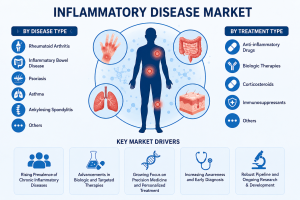
Inflammatory diseases affect millions of people globally and include conditions such as rheumatoid arthritis, inflammatory bowel disease, psoriasis, ankylosing spondylitis, asthma, and multiple sclerosis. These disorders often require long-term treatment, creating sustained demand for innovative therapies that improve patient outcomes while minimizing side effects.
As pharmaceutical companies continue investing in immunology research, next-generation biologics, biosimilars, targeted therapies, and personalized medicine approaches are expected to drive long-term market expansion.
What is the Inflammatory Disease Market Size in 2026?
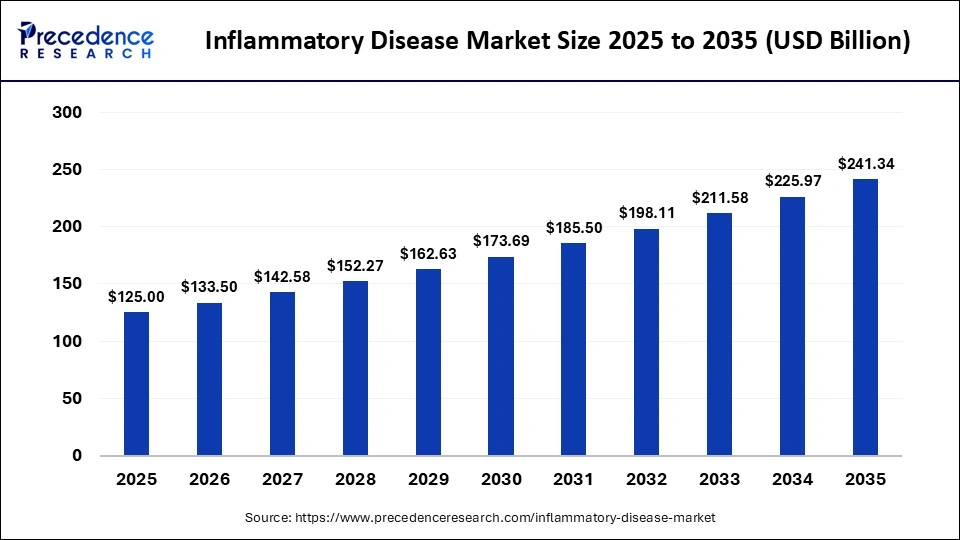
The global inflammatory disease market size accounted for USD 125.00 billion in 2025 and is predicted to increase from USD 133.50 billion in 2026 to approximately USD 241.34 billion by 2035, expanding at a CAGR of 6.80% from 2026 to 2035. The inflammatory disease market is driven by the rising burden of chronic inflammatory disorders and the ongoing need for more effective, targeted therapies.
Market Highlights
- North America dominated the inflammatory disease market with a share of 40% in 2025.
- Asia Pacific is projected to grow at the fastest CAGR of 8.5% between 2026 and 2035.
- By disease type, the rheumatoid arthritis segment held a dominant market share of 30% in 2025.
- By disease type, the inflammatory bowel disease segment is expected to grow at the fastest CAGR of 7.8% between 2026 and 2035.
- By drug class, the biologics (TNF, IL, and JAK inhibitors) segment accounted for a 45% market share in 2025.
- By drug class, the biosimilars segment is expected to grow at the fastest CAGR of 9.5% CAGR between 2026 and 2035.
- By route of administration, the injectable segment held the largest share of 55% in the market in 2025.
- By route of administration, the oral segment is the second-largest shareholder and is expected to grow at a significant CAGR of 6% between 2026 and 2035.
- By distribution channel, the hospital pharmacies segment led the global market with a share of 45% in 2025.
- By distribution channel, the online pharmacies segment is expected to grow at the fastest CAGR of 9% between 2026 and 2035.
- By end-use, the hospitals segment led the global market with a share of 50% in 2025.
- By end-use, the specialty clinics segment is expected to grow at the fastest CAGR of 7.5% between 2026 and 2035.
Understanding Inflammatory Diseases
Inflammatory diseases occur when the body’s immune system triggers excessive or prolonged inflammation, leading to tissue damage and chronic health complications. While inflammation is a natural defense mechanism, uncontrolled immune responses can contribute to autoimmune disorders and chronic inflammatory conditions.
Treatment strategies have evolved significantly over the past decade, moving beyond conventional anti-inflammatory medications toward targeted biologics, monoclonal antibodies, Janus kinase (JAK) inhibitors, and other immune-modulating therapies.
Market Overview
The inflammatory disease market is expanding steadily due to rising disease prevalence, improved diagnostic capabilities, increasing healthcare expenditure, and greater awareness of autoimmune disorders. Healthcare providers are increasingly adopting personalized treatment strategies that focus on disease-specific biomarkers and targeted immune pathways.
Biopharmaceutical companies are strengthening their immunology portfolios through research collaborations, acquisitions, and clinical trials focused on innovative therapeutic approaches.
In addition, favorable regulatory support for biologics and biosimilars is improving patient access to advanced therapies across developed and emerging healthcare markets.
Key Market Drivers
Rising Prevalence of Chronic Inflammatory Disorders
The increasing incidence of autoimmune and chronic inflammatory diseases is one of the strongest drivers of market growth. Lifestyle changes, aging populations, genetic factors, and environmental influences continue to contribute to higher diagnosis rates worldwide.
Growing Adoption of Biologic Therapies
Biologic medicines have transformed the treatment landscape by targeting specific immune pathways responsible for inflammation. These therapies often provide improved efficacy compared to conventional treatment options for many chronic inflammatory diseases.
Expansion of Precision Medicine
Healthcare providers are increasingly utilizing biomarker-based diagnostics to select therapies tailored to individual patients. Precision medicine is improving treatment effectiveness while reducing unnecessary exposure to ineffective medications.
Advancements in Immunology Research
Continuous research into cytokines, immune signaling pathways, and inflammatory mechanisms is leading to the development of novel therapeutic agents with improved safety and efficacy profiles.
Increasing Healthcare Investment
Governments and private healthcare organizations continue investing in research, clinical trials, specialty care, and biologic manufacturing, creating favorable conditions for market expansion.
Emerging Trends
- Growth of Biosimilars: The introduction of biosimilars is improving treatment accessibility by offering cost-effective alternatives to branded biologic drugs while maintaining comparable safety and effectiveness.
- Artificial Intelligence in Drug Discovery: Artificial intelligence is accelerating immunology research by identifying promising drug targets, optimizing clinical trial design, and supporting personalized treatment strategies.
- Personalized Healthcare: Healthcare systems are increasingly focusing on individualized treatment plans based on genetic profiling, biomarkers, and disease progression, improving long-term patient outcomes.
- Expansion of Digital Health: Remote patient monitoring, telemedicine, and digital therapeutics are supporting disease management by enabling continuous monitoring and improving treatment adherence.
Market Challenges
Despite significant growth opportunities, the inflammatory disease market faces several challenges.
The high cost of biologic therapies continues to limit accessibility in many regions. Long regulatory approval processes, complex manufacturing requirements, and reimbursement challenges also affect market expansion.
In addition, treatment resistance, adverse effects, and disease heterogeneity remain ongoing concerns for healthcare providers and pharmaceutical companies.
Opportunities
The market offers considerable opportunities for pharmaceutical manufacturers, biotechnology companies, contract research organizations, and healthcare providers.
Emerging therapies targeting new inflammatory pathways, increasing biosimilar adoption, expansion into emerging economies, and advancements in gene-based therapies are expected to create substantial growth potential over the coming years.
Growing collaboration between academic institutions, biotechnology firms, and pharmaceutical companies is further accelerating innovation in inflammatory disease treatment.
Regional Analysis
North America remains a leading market due to advanced healthcare infrastructure, high biologic adoption, strong research capabilities, and favorable reimbursement policies.
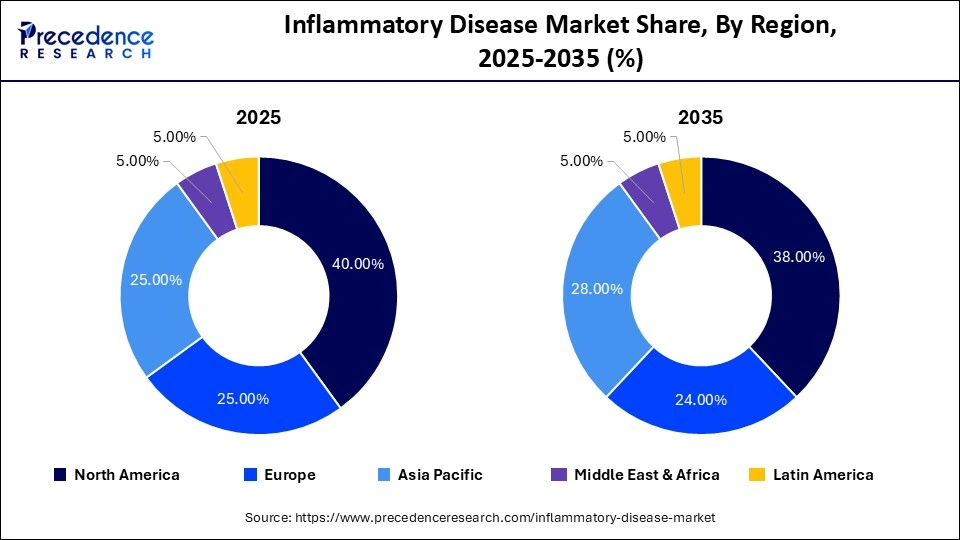
Europe continues to experience robust growth supported by increasing biosimilar utilization, expanding immunology research, and well-established healthcare systems.
Asia Pacific is anticipated to witness the fastest growth owing to rising healthcare expenditure, improving diagnostic capabilities, increasing awareness of autoimmune diseases, and expanding pharmaceutical manufacturing.
Latin America and the Middle East & Africa are gradually strengthening healthcare infrastructure, creating new opportunities for biologic therapies and specialty treatments.
Competitive Landscape
The inflammatory disease market is highly competitive, with pharmaceutical companies continuously investing in research and development, biologic innovation, and strategic collaborations.
Market participants are focusing on:
- Novel biologic therapies
- Biosimilar development
- Monoclonal antibodies
- JAK inhibitors
- Precision medicine
- Clinical trial expansion
- Strategic partnerships and acquisitions
Continuous product innovation remains central to maintaining competitiveness in this rapidly evolving market.
Future Outlook
The future of the inflammatory disease market remains promising as advances in immunology, biologics, precision medicine, and digital healthcare continue to improve disease management. Increasing research into immune mechanisms, broader access to targeted therapies, and ongoing innovation in personalized medicine are expected to support sustained market growth over the coming decade.
As healthcare systems continue prioritizing early diagnosis and individualized treatment approaches, the inflammatory disease market is well positioned to deliver significant clinical and commercial opportunities for stakeholders worldwide.
Get Sample Link : https://www.precedenceresearch.com/sample/8327
Recent Developments
- In April 2026, OSE Immunotherapeutics announced that their abstract on a new FPR2 agonist monoclonal antibody had been chosen to be presented at the 2026 Annual Meeting of the American Association of Immunologists (AAI) in Boston. The FPR2 receptor binding helps to increase the natural resolution of inflammation by the therapy, a shift towards resolution biology in chronic inflammatory disease treatment.
- In November 2025, Animate Biosciences used multi-omics data and generative AI to launch the AnimateIQ™ platform to create peptide therapeutics against inflammatory and fibrotic diseases. The platform seeks to hasten the discovery of specific, well-tolerated therapies for pulmonary, dermatological, and cardiac inflammatory diseases.
Segments Covered in the Report
By Disease Type
- Rheumatoid Arthritis
- Inflammatory Bowel Disease (Crohn’s Disease, Ulcerative Colitis)
- Psoriasis & Psoriatic Arthritis
- Asthma & Chronic Inflammatory Respiratory Diseases
- Multiple Sclerosis & Neuroinflammatory Disorders
By Drug Class
- Biologics (TNF Inhibitors, IL Inhibitors, JAK Inhibitors)
- Nonsteroidal Anti-inflammatory Drugs (NSAIDs)
- Corticosteroids
- Immunosuppressants
- Biosimilars
By Route of Administration
- Injectable (Subcutaneous & Intravenous)
- Oral
- Topical
By Distribution Channel
- Hospital Pharmacies
- Retail Pharmacies
- Online Pharmacies
By End-Use
- Hospitals
- Specialty Clinics
- Homecare Settings
By Region
- North America
- Latin America
- Europe
- Asia-pacific
- Middle and East Africa
Also Read Our Latest Article : Retail Cloud Market

- Cholestatic Pruritus Market: Advancements in Targeted Therapies Are Transforming Patient Care - June 30, 2026
- Inflammatory Disease Market: Biologic Therapies and Precision Medicine Are Reshaping Patient Care - June 30, 2026
- Retail Cloud Market: Driving the Future of Smart, Connected Retail Operations - June 30, 2026