
The global aviation test equipment market is expected to reach USD 14.77 billion by 2035, driven by increasing aircraft production, MRO demand, and advancements in avionics testing systems.
Introduction
The global aviation test equipment market is gaining momentum as the aerospace and defense sectors continue to expand with advanced aircraft technologies and stringent safety requirements. Aviation test equipment plays a crucial role in ensuring the operational reliability, safety, and efficiency of aircraft systems across both commercial and military applications.
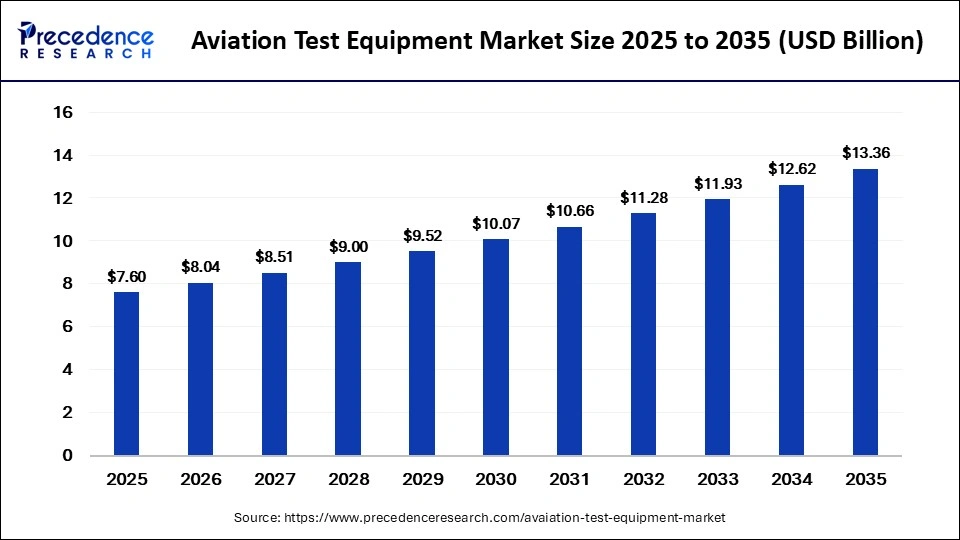
The market is projected to grow from USD 8.63 billion in 2026 to approximately USD 14.77 billion by 2035, registering a CAGR of 6.15%. Growth is primarily driven by increasing aircraft production, rising maintenance, repair, and overhaul (MRO) activities, and the growing complexity of modern avionics systems.
Read Also: Green Commodities Market
What is Aviation Test Equipment?
Aviation test equipment includes specialized tools and systems used to evaluate and maintain aircraft components such as avionics, engines, electrical systems, and communication networks. These systems are essential for ensuring compliance with safety standards and optimizing aircraft performance.
Key categories include:
- Avionics test equipment
- Engine and propulsion testing systems
- Electrical and power system testers
- Communication and navigation testing tools
These tools are widely used across manufacturing, maintenance, and operational stages in aviation.
Key Market Insights
The aviation test equipment market was valued at USD 8.10 billion in 2025 and is expected to reach USD 14.77 billion by 2035, reflecting steady industry growth.
North America leads the market due to strong aerospace infrastructure, high defense budgets, and the presence of major aircraft manufacturers.
Asia Pacific is projected to grow at the fastest rate, driven by expanding aviation fleets, increasing air travel demand, and rising defense investments.
The avionics testing segment holds a dominant share, reflecting the increasing complexity of onboard systems.
MRO applications represent a key revenue contributor due to continuous maintenance and safety compliance requirements.
Role of AI in Aviation Test Equipment
Artificial intelligence is transforming aviation testing by enabling predictive maintenance and real-time diagnostics. AI-powered analytics can process vast amounts of sensor data to detect potential failures before they occur, reducing downtime and maintenance costs.
Additionally, AI supports automated testing and integration with digital twin technologies, allowing engineers to simulate aircraft systems in virtual environments. This improves accuracy, efficiency, and overall operational performance.
Market Growth Drivers
Increasing Aircraft Production
The growing demand for commercial and military aircraft is fueling the need for advanced testing solutions to ensure safety and performance.
Expansion of MRO Activities
The rise in global air traffic and aging aircraft fleets is increasing demand for maintenance and overhaul services, boosting the market.
Advancements in Avionics Systems
Modern aircraft are equipped with sophisticated avionics, requiring advanced testing equipment for accurate diagnostics and performance validation.
Stringent Safety Regulations
Regulatory authorities mandate rigorous testing procedures, driving the adoption of high-quality test equipment.
Opportunities and Trends
Are Portable Testing Solutions Gaining Traction?
Yes, portable and lightweight testing systems are increasingly preferred for their flexibility and efficiency in field operations.
Is Digitalization Reshaping Aircraft Testing?
Digital technologies such as AI, IoT, and cloud computing are enabling smarter and more efficient testing processes.
How are UAVs Influencing Market Growth?
The growing adoption of unmanned aerial vehicles (UAVs) is creating demand for specialized testing equipment tailored to new aviation platforms.
Market Segmentation
By Equipment Type
Avionics test equipment dominates due to increasing system complexity, while engine and electrical testing systems also contribute significantly.
By Application
The MRO segment leads the market, supported by continuous maintenance requirements and safety compliance.
By End-Use
Commercial aviation holds the largest share, while military aviation is expected to grow due to defense modernization initiatives.
Regional Analysis
North America
North America dominates the market due to advanced aerospace infrastructure and strong defense investments.
Europe
Europe holds a significant share, supported by strict safety regulations and technological innovation.
Asia Pacific
Asia Pacific is the fastest-growing region, driven by rapid fleet expansion, rising air passenger traffic, and increasing defense spending.
Competitive Landscape
Key players in the aviation test equipment market include:
- Honeywell International Inc.
- General Electric Company
- Airbus SE
- The Boeing Company
- Lockheed Martin Corporation
- Rolls-Royce Holdings plc
- Safran S.A.
- Teradyne Inc.
- National Instruments Corporation
- Collins Aerospace
These companies are investing in advanced testing technologies, automation, and digital solutions to enhance aircraft performance and safety.
Challenges in the Market
The aviation test equipment market faces challenges such as high equipment costs, complexity of advanced systems, and the need for skilled professionals. Integration with legacy systems and evolving regulatory standards also present hurdles for manufacturers.
Case Study: Predictive Maintenance Transforming Aviation
Airlines implementing AI-powered predictive maintenance systems combined with advanced test equipment have significantly reduced aircraft downtime and maintenance costs. This approach improves operational efficiency and ensures higher safety standards, demonstrating the value of modern testing technologies.
Conclusion
The aviation test equipment market remains a critical component of the global aerospace ecosystem. As aircraft systems become more complex and safety requirements more stringent, the demand for advanced testing solutions will continue to grow.
With steady growth projections, technological advancements, and increasing investments in aviation infrastructure, the market is well-positioned for long-term expansion.
