
Rising adoption of telemedicine, AI-powered diagnostics, and wearable technologies is accelerating market growth at a double-digit CAGR
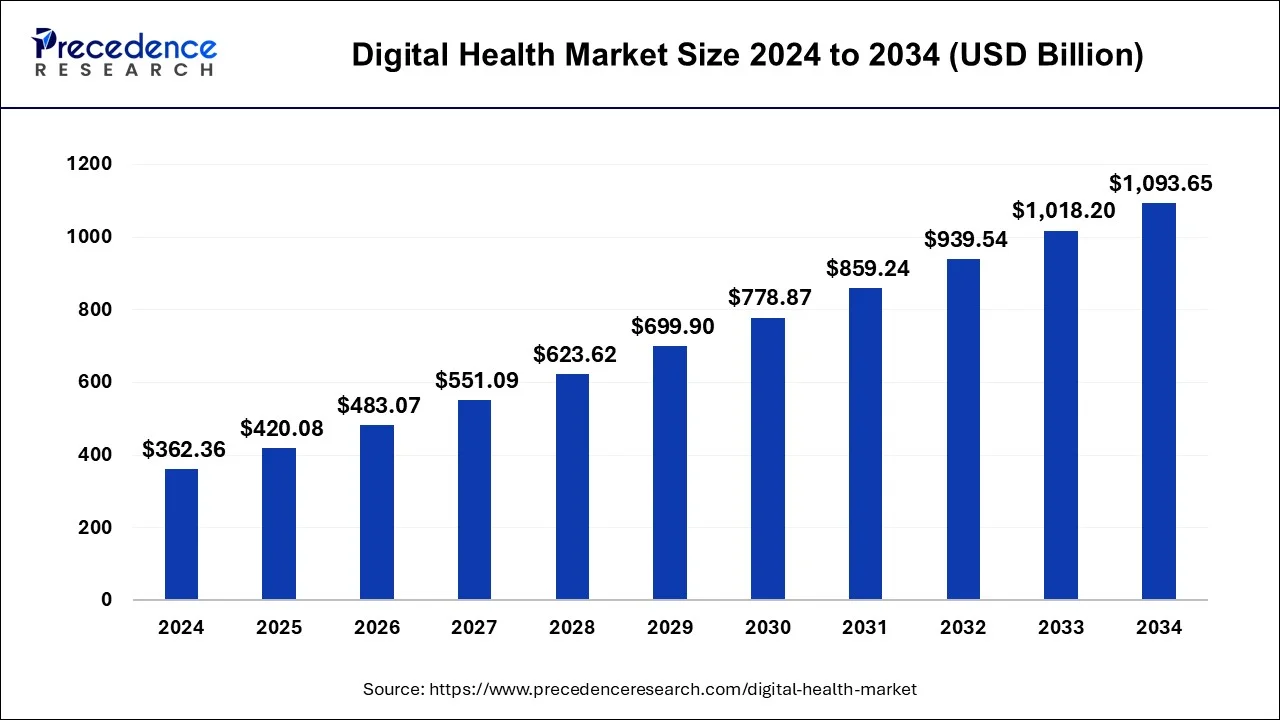
The global digital health market is undergoing a transformative surge, driven by the convergence of advanced technologies, evolving patient expectations, and the growing need for accessible healthcare. The market, valued at approximately USD 350 billion in 2024, is projected to exceed USD 1,200 billion by 2034, expanding at a robust CAGR of over 13% during the forecast period.
The increasing penetration of smartphones, the expansion of telehealth services, and the integration of artificial intelligence (AI) in diagnostics and patient management are key forces propelling this growth. Governments and private players alike are investing heavily in digital infrastructure to enhance healthcare delivery efficiency and reduce operational costs.
Quick Insights: What’s Driving the Digital Health Revolution?
- The digital health market is expected to grow significantly, reaching over USD 1,200 billion by 2034.
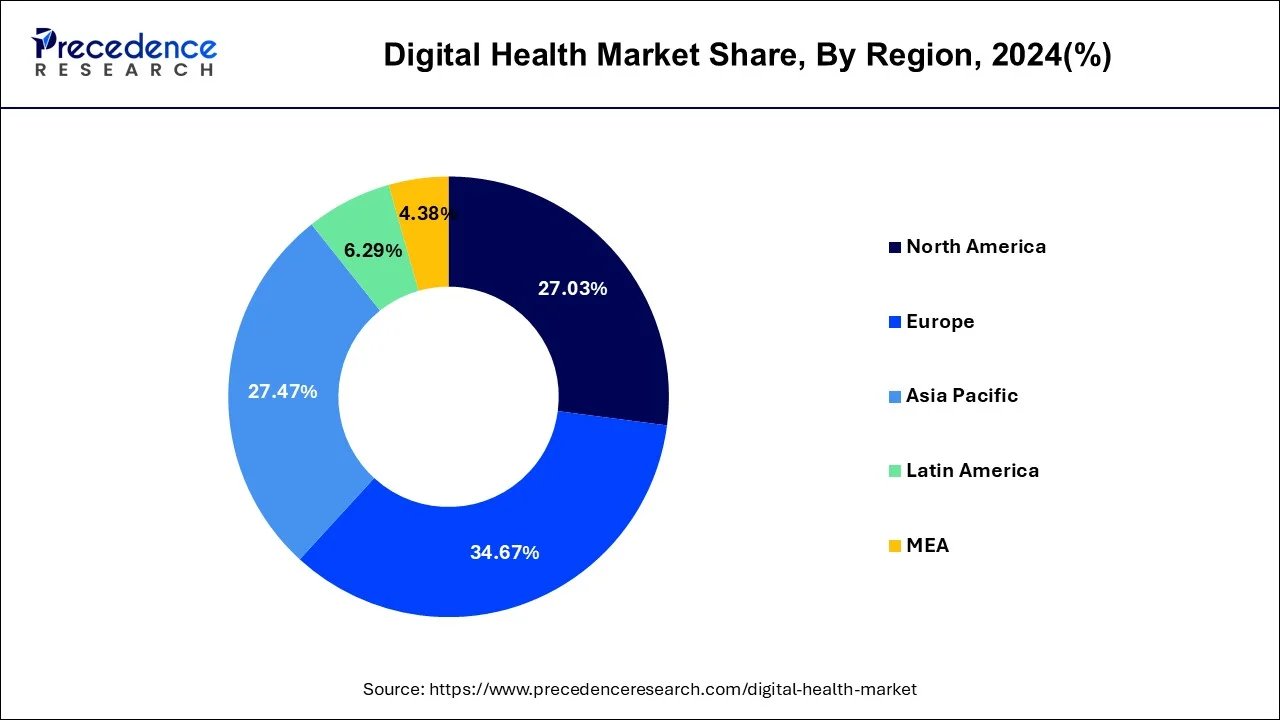
- North America currently dominates the market due to advanced healthcare infrastructure and early technology adoption.
- Asia Pacific is anticipated to grow at the fastest rate due to increasing digital penetration and healthcare investments.
- Telehealth and mobile health (mHealth) segments are leading revenue contributors.
- Major players such as Apple Inc., Google LLC, Philips Healthcare, and Siemens Healthineers are driving innovation in the space.
How Is Artificial Intelligence Transforming the Digital Health Market?
Artificial intelligence is rapidly becoming the backbone of digital health innovation. From predictive analytics to personalized treatment plans, AI is enabling healthcare providers to make faster and more accurate clinical decisions. Machine learning algorithms are being used to detect diseases at early stages, significantly improving patient outcomes.
Moreover, AI-powered virtual assistants and chatbots are revolutionizing patient engagement by providing real-time support, appointment scheduling, and medication reminders. As healthcare systems continue to digitize, AI will play a pivotal role in reducing costs while improving efficiency and accessibility.
Market Scope
| Report Highlights | Details |
| Market Size in 2025 | USD 420.08 Billion |
| Market Size in 2026 | USD 483.07 Billion |
| Market Size by 2035 | USD 1,171.24 Billion |
| Growth Rate From 2026 to 2035 | CAGR of 11.68% |
| Largest Market | Europe |
| Base Year | 2025 |
| Forecast Period | 2026 to 2035 |
| Segments Covered | Components, Technology, and Region |
| Regions Covered | North America, Europe, Asia-Pacific, Latin America, and Middle East & Africa |
What Are the Key Growth Drivers of the Digital Health Market?
The growth of the digital health market is primarily fueled by the increasing demand for remote healthcare services. The COVID-19 pandemic accelerated the adoption of telemedicine, which continues to remain a preferred mode of consultation for many patients.
Additionally, the proliferation of wearable devices such as fitness trackers and smartwatches has empowered individuals to monitor their health in real time. Rising healthcare costs and the need for efficient disease management systems are also pushing healthcare providers toward digital solutions. Government initiatives promoting digital healthcare infrastructure further contribute to market expansion.
What Opportunities and Trends Are Shaping the Future of Digital Health?
Is Telehealth Becoming the New Standard of Care?
Yes, telehealth is increasingly becoming a mainstream healthcare delivery model. Patients prefer virtual consultations due to convenience, reduced travel time, and cost-effectiveness. Healthcare providers are also adopting telehealth platforms to expand their reach and optimize resource utilization.
How Are Wearables and Mobile Apps Changing Patient Behavior?
Wearables and mobile health applications are encouraging proactive health management. These tools provide real-time insights into vital parameters, enabling early detection of potential health issues and fostering preventive care.
Will Data Interoperability Unlock New Possibilities?
Interoperability remains a critical trend, allowing seamless data exchange across healthcare systems. This enhances coordination among providers and improves patient outcomes through integrated care approaches.
Segment Insights
Component Insights
In 2025, the services segment dominated the digital health market, accounting for 65.67% of the total share. This strong performance is largely driven by the increasing need for software upgrades and continuous advancements in both software and hardware technologies. Services such as training, integration, installation, and system upgrades are becoming essential as healthcare providers adopt digital solutions.
Many companies are now focusing heavily on service-based offerings, especially post-installation support like staffing, optimization, and user training. This trend is further fueled by growing investments in digital healthcare infrastructure, particularly in developing countries. Additionally, the rising adoption of platforms like Electronic Health Records (EHRs) is increasing demand for ongoing service support.
The software segment held around 17.03% of the market share and is expected to grow steadily in the coming years. This growth is mainly driven by rising demand for healthcare software, fitness applications, and data analytics platforms. The COVID-19 pandemic accelerated this trend, as healthcare systems relied heavily on digital tools to track cases and manage patient data. Lockdowns also increased the use of personal health apps and fitness solutions, boosting the segment further.
Overall, digital health has become a vital and promising field, helping improve efficiency, reduce costs, and enhance patient care. Companies are increasingly developing digital health and wellness platforms to streamline workflows and deliver better user experiences.
The widespread use of smartphones and tablets is another major factor supporting market growth. A significant portion of the population—especially in developed countries—has already used or is familiar with digital health tools, and adoption is expected to grow further. Innovations such as health-tracking devices, wellness apps, and coaching platforms are expected to continue improving healthcare delivery and overall well-being.
Technology Insights
The telehealthcare segment led the market in 2025, contributing 41.01% of total revenue. This growth is driven by the ongoing digital transformation of healthcare, along with supportive government initiatives promoting the adoption of new technologies.
The increasing availability of smartphones, internet connectivity, and health-related apps has made telehealth services more accessible worldwide. Additionally, the growing prevalence of chronic diseases and advancements in wearable technology are further boosting this segment. Telehealthcare is also expected to experience the fastest growth over the next decade.
Meanwhile, the mHealth (mobile health) segment is projected to expand at the highest rate during the forecast period. Improvements in telecommunications infrastructure and high-speed internet have made it easier to access mHealth solutions, even in remote areas. These technologies allow patients to monitor their health remotely and enable virtual consultations, making healthcare more accessible and personalized—especially for those with chronic conditions or limited mobility.
The COVID-19 pandemic highlighted the urgent need for modern healthcare systems, accelerating the adoption of digital solutions worldwide. Digital health technologies are now reshaping traditional healthcare systems by improving efficiency, accessibility, and patient outcomes.
A fully digital healthcare ecosystem can offer numerous benefits, including better disease monitoring, improved screening programs, increased health awareness, and enhanced patient engagement. While many digital tools currently focus on treatment, there is growing potential for prevention and lifestyle management. By integrating medical knowledge with technology, design, and behavioral science, digital health can help build a healthier society overall.
Regional Insights
Europe
Europe held the largest market share in 2025, accounting for 34.67% of the global digital health market. The market in this region is expected to grow from USD 143.87 billion in 2025 to USD 353.12 billion by 2035, at a CAGR of 9.39%.
This growth is driven by rising healthcare costs, an aging population, technological advancements, and strong government support for digital healthcare initiatives. Wearable devices such as smartwatches and fitness trackers are becoming increasingly popular, enabling individuals to monitor key health metrics like heart rate, activity levels, and sleep patterns.
UK Trends
The UK market is expanding due to strong government backing for digital transformation within the NHS. Increasing demand for remote care, along with the adoption of telehealth and health IT solutions, is driving growth. Factors such as an aging population, rising chronic diseases, and workforce shortages are further accelerating the use of virtual care and AI-driven technologies.
Asia Pacific
The Asia Pacific region is expected to grow at the fastest rate, with a CAGR of 14.39% during the forecast period. Growth is driven by increasing healthcare costs, rising awareness, and supportive government policies.
Healthcare providers in the region are increasingly adopting IT solutions such as hospital information systems (HIS), electronic health records (EHRs), and practice management software. Additionally, AI-driven analytics are helping improve clinical decision-making by processing large volumes of healthcare data.
India Trends
India’s digital health market is growing rapidly due to increasing smartphone usage, better internet connectivity, and rising awareness about healthcare. Government initiatives such as Ayushman Bharat Digital Mission and Digital India are playing a crucial role in promoting digital healthcare adoption.
Efforts like the DISHA initiative aim to regulate digital health data securely at both national and state levels. Other factors driving growth include a large population, shortage of healthcare professionals, and rising cases of chronic diseases, which are increasing the demand for accessible and affordable healthcare solutions.
North America
North America continues to be a strong market due to high adoption of telehealth services and favorable reimbursement policies. The region also faces a growing shortage of healthcare professionals and an aging population, which is increasing demand for remote care solutions.
High smartphone penetration and widespread internet access have made digital healthcare more accessible, enabling virtual consultations and remote monitoring. Healthcare systems are also investing heavily in advanced technologies to improve patient care.
U.S. Trends
The U.S. market is growing rapidly due to strong adoption of telehealth, widespread use of digital devices, and continued investment in healthcare innovation. Rising chronic diseases and an aging population are further increasing demand for remote monitoring and AI-powered healthcare solutions. In 2024, digital health investments remained strong, highlighting continued confidence in the sector.
Digital Health Market Comapnies
- Athenahealth Inc.
- Cisco Systems
- McKesson Corporation
- Koninklijke Philips N.V.:
- AdvancedMD Inc
- Cerner Corporation
- BioTelemetry Inc
- eClinicalWorks
- Allscripts Healthcare Solutions Inc
- iHealth Lab Inc
- AT & T
- Honeywell International Inc
Segments Covered in the Report
By Component
- Software
- Hardware
- Services
By Technology
- Telehealthcare
- Telehealth
- Video Consultation
- LTC Monitoring
- Telecare
- Remote Medication Management
- Activity Monitoring
- Telehealth
- mHealth
- Apps
- Fitness Apps
- Medical Apps
- Wearables
- Glucose Meter
- BP Monitor
- Pulse Oximeter
- Neurological Monitors
- Sleep Apnea Monitor
- Others
- Apps
- Digital Health Systems
- E-prescribing Systems
- Electronic Health Records
- Health Analytics
By Region
- North America
- Europe
- Asia Pacific
- Latin America
- Middle East & Africa
Get Sample Link: https://www.precedenceresearch.com/sample/1145
Also Read : https://www.businesswebwire.com/ai-in-virtual-medical-assistants-market/

- Corporate Wellness Market Surges Toward USD 500.09 Billion by 2035 - April 22, 2026
- Portable Medical Devices Market Surges Toward USD 221.71 Billion by 2035 - April 22, 2026
- Infant Incubator Market Set to Surpass USD 3.27 Billion by 2035 - April 22, 2026