
The US peptide therapeutics market is emerging as one of the most dynamic segments within the pharmaceutical and biotechnology industries. Peptide-based drugs have gained significant attention due to their ability to deliver highly targeted treatments with improved efficacy and reduced side effects compared to traditional therapies. As healthcare providers increasingly focus on precision medicine and personalized treatment approaches, peptide therapeutics are becoming an important component of modern disease management.
The growing burden of chronic diseases, advancements in peptide engineering, and increasing investments in biopharmaceutical research are driving the adoption of peptide-based therapies across the United States. These therapies are playing a vital role in treating conditions such as diabetes, obesity, cancer, cardiovascular disorders, and rare diseases.
US Peptide Therapeutics Market Size and Forecast 2026 to 2035
The US peptide therapeutics market size accounted for USD 21.24 billion in 2025 and is predicted to increase from USD 22.63 billion in 2026 to approximately USD 34.98 billion by 2035, expanding at a CAGR of 5.12% from 2026 to 2035. The market growth is attributed to rising obesity and diabetes prevalence, expanding peptide drug innovation, increasing GLP-1 therapy adoption, and growing investments in advanced peptide manufacturing technologies.
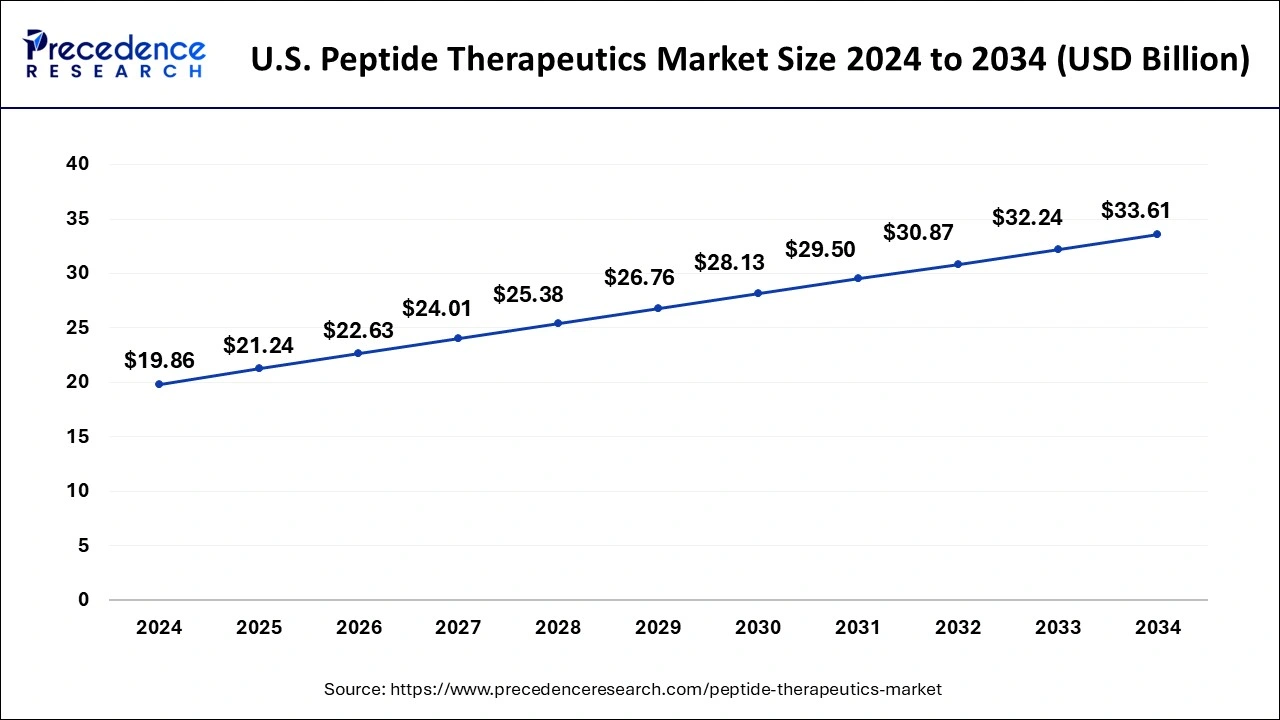
Market Insights
- By application, the metabolic disorder segment held the largest market share in 2025.
- By application, the gastrointestinal disorder segment is expected to expand with the highest CAGR during the forecast period.
- By type, the innovative segment held the largest share of the market in 2025.
- By type, the generic segment is expected to grow with a notable CAGR between 2026 and 2035.
- By route of administration, the parenteral segment held the highest share of the U.S. peptide therapeutics market in 2025.
- By route of administration, the oral segment is expected to grow with the highest CAGR during the forecast period.
- By distribution channel, the hospital pharmacies segment held the highest share of the market in 2025.
- By distribution channel, the online drug stores segment is expected to grow with the highest CAGR during the forecast period.
- By synthesis technology, the liquid phase peptide synthesis (LPPS) segment held the largest share of the market in 2025.
- By synthesis technology, the solid phase peptide synthesis (SPPS) segment is expected to grow with a significant CAGR between 2026 and 2035.
Market Overview
Peptide therapeutics are pharmaceutical compounds composed of short chains of amino acids designed to mimic naturally occurring biological molecules. Their ability to interact precisely with specific receptors and biological pathways makes them highly effective in targeted treatment applications.
Unlike conventional drugs, peptide therapeutics offer greater selectivity and reduced toxicity, making them attractive treatment options for complex diseases. Continuous innovation in drug discovery, peptide synthesis technologies, and advanced delivery systems is accelerating market growth.
Key Factors Driving Market Growth
Rising Prevalence of Chronic Diseases
The increasing incidence of obesity, diabetes, cardiovascular disorders, and cancer continues to create strong demand for innovative treatment options. Peptide therapeutics are proving highly effective in managing several chronic conditions, particularly metabolic disorders.
Growing Demand for Targeted Therapies
Healthcare providers and patients are increasingly seeking therapies that deliver precise treatment while minimizing side effects. Peptide-based drugs offer highly targeted mechanisms of action, making them valuable tools in personalized medicine.
Advancements in Peptide Engineering
Technological breakthroughs in peptide design, synthesis, and stabilization are improving drug performance and expanding therapeutic applications. Researchers are developing next-generation peptide therapies with enhanced efficacy and longer duration of action.
Expanding Biopharmaceutical Research Activities
Pharmaceutical and biotechnology companies are significantly increasing investments in peptide research and development. Strong clinical pipelines and ongoing innovation are contributing to the rapid growth of the market.
Impact of Artificial Intelligence on the Market
Artificial intelligence is transforming peptide drug discovery by accelerating the identification of promising therapeutic candidates. AI-powered platforms can analyze complex biological data, predict molecular interactions, and optimize peptide design with greater speed and accuracy.
Machine learning algorithms help researchers identify novel peptide structures, improve drug stability, and reduce development timelines. AI is also supporting clinical trial optimization and personalized treatment strategies, helping companies bring innovative therapies to market more efficiently.
As the pharmaceutical industry embraces digital transformation, AI is expected to play an increasingly important role in peptide therapeutic development.
Emerging Market Trends
- Growth of Metabolic Disease Therapies: Peptide therapeutics are gaining widespread adoption for the treatment of obesity and diabetes. The success of GLP-1 receptor agonists has significantly increased interest in peptide-based treatments for metabolic disorders.
- Development of Oral Peptide Drugs: Historically, many peptide therapies required injection-based administration. Advances in drug delivery technologies are enabling the development of oral peptide formulations, improving patient convenience and treatment adherence.
- Expansion in Oncology Applications: Researchers are exploring peptide therapeutics for targeted cancer treatment and precision oncology. These therapies offer opportunities to improve treatment outcomes while reducing damage to healthy tissues.
- Increasing Focus on Rare Diseases: Peptide therapeutics are being investigated for various rare and orphan diseases, creating new opportunities for pharmaceutical innovation and specialized treatment development.
Market Scope
| Report Coverage | Details |
| Market Size in 2025 | USD 21.24 Billion |
| Market Size in 2026 | USD 22.63 Billion |
| Market Size by 2035 | USD 34.98 Billion |
| Growth Rate from 2026 to 2035 | CAGR of 5.12% |
| Forecast Period | 2026 to 2035 |
| Segments Covered | Application, Type, Route of Administration, Distribution Channel and Synthesis Technology |
Market Dynamics
Drivers
Rising Prevalence of Obesity and Metabolic Disorders
The rising prevalence of obesity, type 2 diabetes, and related metabolic disorders is projected to accelerate demand for peptide-based therapies across the U.S. The use of peptide therapeutics, such as GLP-1 receptor agonists, has become a focus in the management of weight and glycemic control.
- According to the NIH, by 2025, approximately 36% of adults and 17% of children in the U.S. were estimated to be classified as obese.
Increased use of prescribed peptide medications in healthcare due to the targeted mechanism of action and safe and effective clinical response. The cost of obesity is coupled with the rising expenses for obesity-related complications, which are driving increased implementation of more sophisticated metabolic therapies.
Restraint
High Manufacturing Complexity and Production Costs
High manufacturing complexity and production costs are expected to hinder the market in the coming years. High raw material, quality control, and plant expansion prices put pressure on market players. Furthermore, the limited oral bioavailability of peptide drugs is anticipated to impede broader therapeutic adoption across several treatment areas.
Opportunity
Increasing Adoption of Advanced Drug Delivery Technologies
Increasing adoption of advanced drug delivery technologies is anticipated to improve accessibility and utilization of peptide-based medicines, thus creating immense opportunities for the players competing in the market. New technology platforms for oral delivery, sustained-release, and improved peptide stability are emerging in the development of new peptides. Furthermore, the surging investments in peptide drug research and development are likely to accelerate clinical innovation and pipeline expansion.
Competitive Landscape
The market is characterized by intense research activity, strategic collaborations, product innovation, and clinical development programs. Pharmaceutical and biotechnology companies are focusing on expanding their peptide therapy portfolios and improving drug delivery technologies.
Industry participants are actively pursuing partnerships, acquisitions, and licensing agreements to strengthen their market positions and accelerate commercialization efforts.
U.S. Peptide Therapeutics Market Companies
- AbbVie and GlaxoSmithKline plc.
- Amgen, Inc.
- AstraZeneca plc
- Eli Lilly and Company
- Pfizer, Inc.
Get Sample Link : https://www.precedenceresearch.com/sample/8516
Future Outlook
The future of the US peptide therapeutics market appears highly promising as demand for targeted and personalized treatments continues to rise. Advances in peptide engineering, artificial intelligence, and drug delivery systems are expected to unlock new therapeutic opportunities across multiple disease areas.
As healthcare providers increasingly prioritize precision medicine and patient-centered care, peptide therapeutics will play a growing role in shaping the future of modern healthcare and pharmaceutical innovation.
Segments Covered in the Report
By Application
- Gastrointestinal Disorder
- Metabolic Disorder
- Neurological Disorder
- Cancer
- Others
By Type
- Generic
- Innovative
By Route of Administration
- Oral
- Parenteral
- Pulmonary
- Mucosal
- Others
By Distribution Channel
- Hospital Pharmacies
- Retail Pharmacies
- Online Drug Stores
By Synthesis Technology
- Solid Phase Peptide Synthesis (SPPS)
- Liquid Phase Peptide Synthesis (LPPS)
- Hybrid Technology
Also Read Our Latest Article : US Anesthesia Devices Market

- US Peptide Therapeutics Market: Revolutionizing Targeted Treatment and Precision Medicine - June 25, 2026
- US Anesthesia Devices Market: Advancing Patient Safety and Precision in Surgical Care - June 25, 2026
- US Pathology Laboratories Market: Transforming Diagnostics Through Innovation and Precision Medicine - June 25, 2026