
Read Also: Cleaning Services Market
Tau Protein Targeting Therapeutics Market Overview
The global tau protein targeting therapeutics market is emerging as one of the most promising sectors within neurodegenerative disease treatment. Growing prevalence of Alzheimer’s disease, progressive supranuclear palsy (PSP), frontotemporal dementia (FTD), and other tauopathies is accelerating investments in advanced tau-targeted therapies.
Tau proteins play a critical role in stabilizing neuronal microtubules. However, abnormal tau accumulation and aggregation in the brain contribute significantly to neurodegenerative disorders, especially Alzheimer’s disease. Researchers and pharmaceutical companies are increasingly focusing on tau-directed therapies as next-generation disease-modifying treatments.
The increasing failure rates of amyloid-focused therapies over the past decade have further shifted industry attention toward tau-based therapeutic approaches, including immunotherapies, antisense oligonucleotides (ASOs), aggregation inhibitors, vaccines, and gene therapies.
Why Tau Protein Therapeutics are Gaining Massive Attention
Tau pathology is now recognized as one of the strongest indicators of cognitive decline and neurodegeneration progression.
Unlike amyloid plaques, tau accumulation correlates more directly with neuronal damage and disease severity in Alzheimer’s disease. This has encouraged pharmaceutical companies and biotechnology firms to prioritize tau-targeted drug development programs.
Tau-targeting therapeutics aim to:
- Prevent tau aggregation
- Reduce tau protein expression
- Stabilize microtubules
- Block tau propagation between neurons
- Enhance clearance of pathological tau
- Improve neuronal survival and cognitive outcomes
With growing advancements in biomarker technologies, PET imaging, cerebrospinal fluid analysis, and blood-based diagnostics, researchers are now better equipped to identify appropriate patient populations for tau-targeted clinical trials.
AI Integration Transforming Tau Protein Therapeutics Development
Artificial intelligence is playing an increasingly important role in accelerating tau protein therapeutics research.
AI-driven platforms are helping pharmaceutical companies:
- Identify novel tau biomarkers
- Optimize drug discovery pipelines
- Improve clinical trial patient selection
- Predict therapeutic response
- Analyze neuroimaging data
- Accelerate precision medicine approaches
Machine learning algorithms are increasingly being used to analyze PET imaging, genomic data, and protein aggregation patterns to improve early diagnosis and treatment personalization for neurodegenerative diseases.
AI-powered biomarker-led trial designs are also improving the efficiency of Alzheimer’s and tauopathy clinical studies.
Key Market Trends
Rising Focus on Disease-Modifying Therapies
The neurodegenerative therapeutics industry is shifting from symptomatic treatments toward disease-modifying approaches targeting the underlying causes of neuronal degeneration.
Tau-directed therapeutics are gaining attention because tau pathology closely correlates with disease progression in Alzheimer’s disease and other tauopathies.
Growing Investments in Tau Immunotherapies
Tau immunotherapies currently represent one of the largest categories within the anti-tau drug pipeline.
Several monoclonal antibodies targeting pathological tau proteins are progressing through clinical trials for Alzheimer’s disease and related neurodegenerative disorders. Researchers remain cautiously optimistic about the long-term potential of tau immunotherapies.
Expansion of Biomarker-Led Clinical Trials
Biomarker-driven clinical trial strategies are becoming increasingly important in tau-targeted therapeutics development.
Advanced PET imaging, cerebrospinal fluid biomarkers, and blood-based assays are improving patient selection, monitoring target engagement, and assessing therapeutic efficacy during clinical trials.
Increasing Development of Antisense Oligonucleotide Therapies
Antisense oligonucleotides (ASOs) designed to reduce tau protein production are emerging as promising therapeutic approaches.
Several ASO-based programs are currently being evaluated in clinical trials for Alzheimer’s disease and progressive supranuclear palsy.
Market Dynamics
Driver: Rising Prevalence of Alzheimer’s Disease and Tauopathies
The rapidly increasing global burden of neurodegenerative disorders is a major growth driver for the tau protein targeting therapeutics market.
Aging populations worldwide are contributing to rising incidences of Alzheimer’s disease, frontotemporal dementia, corticobasal degeneration, and progressive supranuclear palsy. These conditions are strongly associated with abnormal tau accumulation in the brain.
The urgent need for effective disease-modifying therapies is significantly accelerating investments in tau-focused drug discovery and clinical research.
Restraint: Complex Biology and Clinical Trial Challenges
Despite strong scientific interest, tau therapeutics development remains highly challenging.
The complexity of tau biology, multiple tau isoforms, blood-brain barrier limitations, and difficulty demonstrating clinical efficacy continue to create barriers for drug developers. Several tau-targeting programs have experienced setbacks during clinical trials.
In addition, neurodegenerative disease trials are typically lengthy, expensive, and operationally complex.
Opportunity: Precision Neurology and Combination Therapies
Precision medicine and combination therapy approaches are expected to create major opportunities in the tau therapeutics market.
Researchers are increasingly exploring therapies that simultaneously target tau pathology, amyloid-beta accumulation, neuroinflammation, and synaptic dysfunction to improve treatment outcomes.
The growing integration of genomics, AI-driven diagnostics, and biomarker-guided therapeutics is expected to accelerate personalized treatment strategies in neurodegenerative medicine.
Clinical Pipeline Insights
According to recent therapeutic landscape reviews, there are approximately 170 tau-targeted therapies currently under development globally.
The development pipeline includes:
- Monoclonal antibodies
- Tau vaccines
- Antisense oligonucleotides
- Small molecule aggregation inhibitors
- Microtubule stabilizers
- Gene therapies
- RNA-targeted therapeutics
Immunotherapies currently account for the largest share of tau-targeting programs under clinical investigation.
Recent Industry Developments
Biogen and Ionis Advance Tau-Targeting Alzheimer’s Therapy
In May 2026, Biogen and Ionis Pharmaceuticals reported mixed but encouraging results from clinical trials evaluating diranersen, a tau-targeting therapy for Alzheimer’s disease.
Although the trial missed its primary endpoint, researchers observed signs of cognitive benefit and significant tau reduction, encouraging the companies to continue registrational testing.
Growing Momentum in Tau Biomarker Development
The expansion of tau PET imaging technologies and fluid biomarkers is significantly improving disease detection and therapeutic monitoring.
Researchers believe biomarker-driven clinical strategies could play a crucial role in accelerating regulatory approvals for future tau-targeted therapies.
Regional Insights
North America Leads Tau Therapeutics Research
North America dominates the tau protein targeting therapeutics market due to strong biotechnology infrastructure, substantial R&D investments, advanced neuroscience research programs, and a high prevalence of Alzheimer’s disease.
The United States remains the largest contributor to market growth because of major pharmaceutical investments and strong clinical trial activity in neurodegenerative diseases.
Europe Emerging as a Major Research Hub
Europe is witnessing strong growth in tau-targeted therapeutics research due to increasing public-private collaborations, neuroscience funding programs, and advancements in precision neurology.
Countries such as Germany, the UK, and Switzerland are actively supporting neurodegenerative disease innovation and biomarker research.
Asia-Pacific Witnessing Rapid Expansion
Asia-Pacific is expected to witness significant growth due to rapidly aging populations, increasing awareness regarding neurodegenerative diseases, and expanding healthcare infrastructure.
Countries such as Japan, China, and South Korea are increasing investments in regenerative medicine, neuroscience research, and precision therapeutics.
Competitive Landscape
Key companies and organizations operating in the tau protein targeting therapeutics market include:
- Biogen
- Ionis Pharmaceuticals
- Novartis
- Bristol Myers Squibb
- Roche
- Eli Lilly and Company
- AbbVie
- AC Immune
These companies are actively investing in monoclonal antibodies, ASOs, biomarker technologies, and AI-driven neuroscience platforms to strengthen their market positions.
Future Outlook
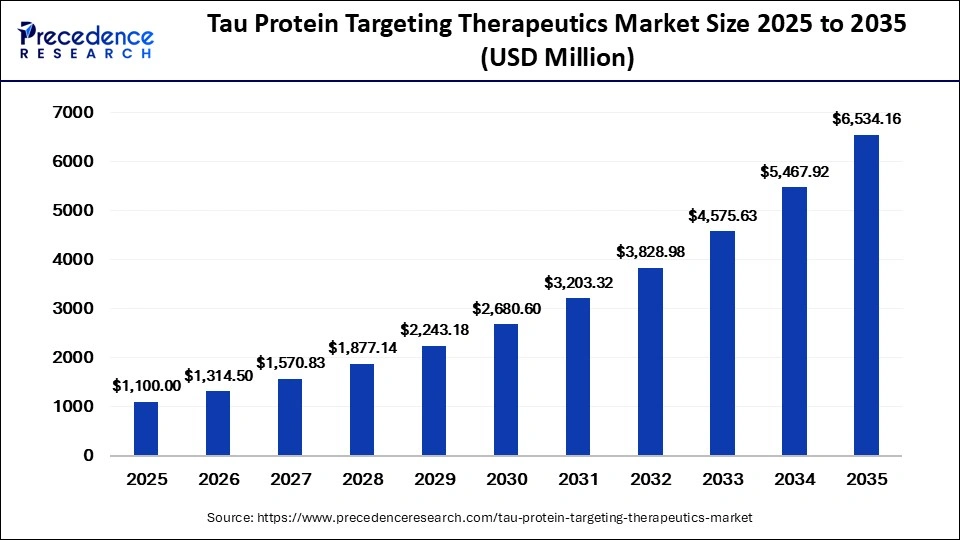
The tau protein targeting therapeutics market is expected to witness significant long-term growth as neuroscience research increasingly shifts toward disease-modifying therapies for Alzheimer’s disease and related tauopathies.
Advancements in AI, biomarker-driven clinical trials, immunotherapies, antisense technologies, and precision neurology are expected to transform the future of neurodegenerative disease treatment.
As global healthcare systems face growing neurological disease burdens, tau-targeted therapeutics could become a critical pillar of next-generation Alzheimer’s and neurodegenerative disorder management.
Get a Sample Copy: https://www.precedenceresearch.com/sample/8423
For inquiries regarding discounts, bulk purchases, or customization requests, please contact us at [email protected]
