
The Polymer Foams Market has witnessed remarkable growth over the past decade, driven by increasing demand for lightweight, durable, and energy-efficient materials across multiple industries. From protecting fragile products during shipping to improving vehicle fuel efficiency and enhancing building insulation, polymer foams have become an indispensable material in modern manufacturing.
As industries continue to focus on sustainability, performance optimization, and cost-effective production, polymer foam manufacturers are developing advanced materials that offer superior insulation, impact resistance, and recyclability. The growing adoption of electric vehicles, expansion of the construction sector, and rising demand for protective packaging are expected to create significant opportunities for the polymer foams market in the coming years.
What is Polymer Foams Market Size?
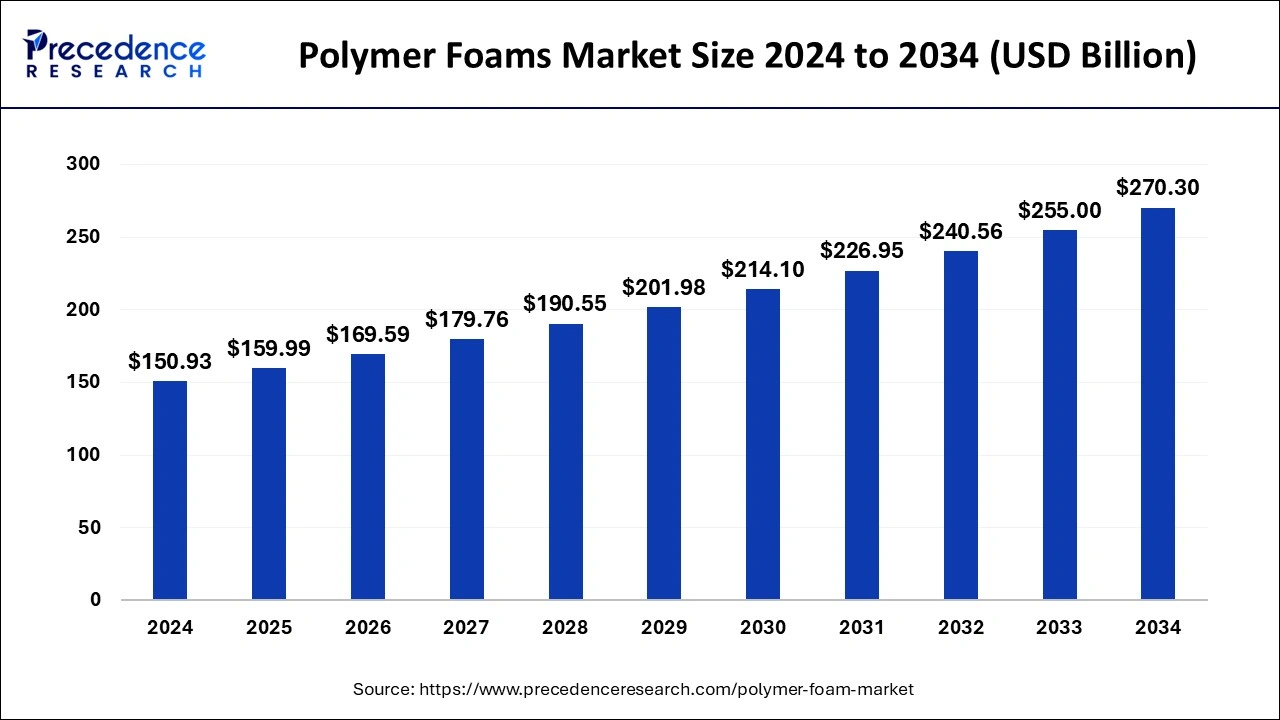
The global polymer foams market size is recorded at USD 159.99 billion in 2025 and is expected to be worth around USD 285.02 billion by 2035, at a CAGR of 5.94% from 2026 to 2035. The rising adoption of polymer foams in the construction, footwear, and automotive sectors and the growing demand for environmental sustainability boost the polymer foams market.
Market Highlights
- Asia Pacific led the global market with the highest market share of 36% in 2025.
- By Type, the polyurethane segment held the largest market share in 2025.
- By application, the construction segment captured the biggest revenue share in 2025.
What Are Polymer Foams?
Polymer foams are lightweight materials made by introducing gas bubbles into polymer matrices, creating a cellular structure with millions of tiny air pockets. This unique structure provides excellent cushioning, thermal insulation, sound absorption, and mechanical strength while significantly reducing material weight.
Polymer foams are available in rigid, flexible, and semi-rigid forms, allowing manufacturers to tailor products for a wide range of industrial and consumer applications.
Why Is the Polymer Foams Market Growing?
Several key factors are driving the global demand for polymer foams.
Increasing Demand from the Construction Industry
Construction companies are increasingly using polymer foams for thermal insulation, roofing systems, wall panels, flooring, and soundproofing applications. Growing investments in green buildings and energy-efficient infrastructure continue to boost product demand.
Expansion of the Automotive Industry
Vehicle manufacturers are replacing heavier materials with lightweight polymer foams to improve fuel efficiency, reduce emissions, and enhance passenger comfort. Polymer foams are widely used in seating, dashboards, door panels, headliners, bumpers, and acoustic insulation.
The rapid adoption of electric vehicles (EVs) is further accelerating demand, as lightweight materials help extend battery range and improve overall vehicle performance.
Rising Need for Protective Packaging
The growth of e-commerce and global logistics has significantly increased demand for packaging materials capable of protecting products during transportation.
Polymer foams offer excellent shock absorption, vibration resistance, and product protection, making them a preferred choice for electronics, appliances, pharmaceuticals, and consumer goods.
Emerging Market Trends
- Sustainable and Bio-Based Polymer Foams: Manufacturers are investing in renewable raw materials and recyclable foam technologies to reduce environmental impact and meet stricter sustainability regulations.
- Lightweight Materials for Electric Vehicles: As EV production expands worldwide, lightweight polymer foams are becoming increasingly important for reducing vehicle weight and improving battery efficiency.
- Advanced Manufacturing Technologies: Innovations in foam processing, material engineering, and additive manufacturing are enabling the production of high-performance foams with improved mechanical properties and lower material waste.
- Circular Economy Initiatives: Companies are focusing on recycling technologies and closed-loop manufacturing processes to reduce landfill waste and improve resource efficiency.
Challenges Facing the Market
Despite strong growth prospects, the industry faces several challenges.
- Environmental Regulations: Growing concerns regarding plastic waste have encouraged governments to introduce stricter regulations governing the production, use, and disposal of polymer-based materials.
- Raw Material Price Volatility: Fluctuating prices of petrochemical feedstocks can affect manufacturing costs and profit margins.
- Recycling Limitations: Some foam materials remain difficult to recycle efficiently, creating opportunities for innovation in sustainable material development.
Market Scope
| Report Highlights | Details |
| Market Size in 2025 | USD 159.99 Billion |
| Market Size in 2026 | USD 169.59 Billion |
| Market Size by 2035 | USD 285.02 Billion |
| Growth Rate from 2026 to 2035 | CAGR of 5.94% |
| Base Year | 2025 |
| Forecast Period | 2026 to 2035 |
| Segments Covered | Type, Application and Region |
| Regional Scope | North America, Europe, Asia Pacific, Latin America, Middle East & Africa (MEA) |
Regional Market Outlook
North America remains a significant market due to strong demand from the construction, automotive, aerospace, and healthcare industries.
Europe continues to adopt sustainable building materials and environmentally friendly manufacturing practices, supporting demand for recyclable and bio-based polymer foams.
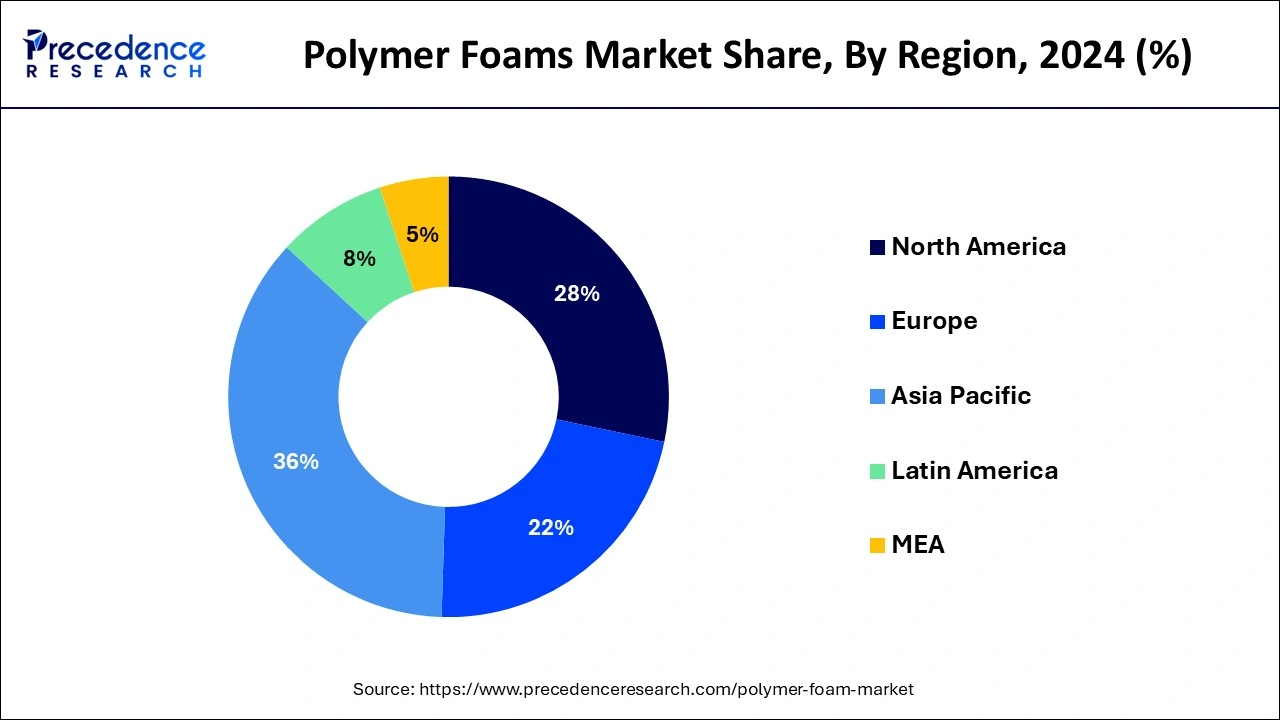
Asia-Pacific is expected to experience the fastest growth, driven by expanding industrialization, rapid urbanization, increasing automotive production, and rising infrastructure investments across China, India, Japan, South Korea, and Southeast Asia.
Competitive Landscape
The Polymer Foams Market is highly competitive, with manufacturers focusing on innovation, sustainability, and advanced material technologies.
Companies continue investing in:
- High-performance foam materials
- Bio-based polymers
- Lightweight automotive solutions
- Sustainable packaging materials
- Smart manufacturing technologies
- Global production expansion
- Strategic partnerships and acquisitions
Future Outlook
The future of the Polymer Foams Market remains highly promising.
Growing demand for lightweight materials, energy-efficient buildings, sustainable packaging, and electric vehicles will continue to support long-term market expansion. Advances in recycling technologies, renewable raw materials, and environmentally responsible manufacturing are expected to reshape the industry while creating new business opportunities.
As industries prioritize performance, sustainability, and cost efficiency, polymer foams will remain an essential material supporting innovation across multiple sectors.
Get Sample Link : https://www.precedenceresearch.com/sample/1241
Polymer Foams Market Segments Covered in the Report
By Type
- Polyurethane (PU)
- Polyethylene (PE)
- Polypropylene (PP)
- Ethylene-Vinyl Acetate (EVA)
- Others
By Application
- Furniture and Bedding
- Transportation
- Packaging
- Construction
- Others
By Region
- North America
- Latin America
- Europe
- Asia-pacific
- Middle and East Africa
Also Read Our Latest Article : Data Center Liquid Cooling Manifolds Market

- Polymer Foams Market: Driving Innovation Across Packaging, Automotive, Construction, and Healthcare - July 7, 2026
- Data Center Liquid Cooling Manifolds Market: Enabling the Future of High-Density AI Computing - July 7, 2026
- Data Center Battery Market: Powering the Future of AI-Driven Digital Infrastructure - July 7, 2026