
The global A2 milk market size is calculated at USD 2.86 billion in 2025 and is predicted to increase from USD 3.19 billion in 2026 to approximately USD 8.35 billion by 2035, at a CAGR of 11.31% from 2026 to 2035. The rising awareness about health and well-being, increasing health consciousness among the population, and growing usage of A2 milk in infant formula are expected to drive the growth of the A2 milk market during the forecast period.
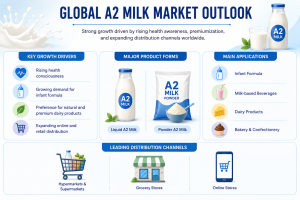
What is A2 Milk?
A2 milk is produced by cows that naturally contain only the A2 type of beta-casein protein. Traditional cow’s milk generally contains both A1 and A2 beta-casein proteins, whereas A2 milk is sourced from selected breeds such as Gir, Sahiwal, Red Sindhi, Guernsey, and Jersey cows that naturally produce only the A2 protein.
During digestion, A1 protein may release a peptide known as beta-casomorphin-7 (BCM-7), which some studies suggest may contribute to digestive discomfort in certain individuals. In contrast, A2 milk does not produce this peptide during digestion, making it a preferred alternative for consumers who experience mild digestive issues with regular milk but are not lactose intolerant. Although scientific research continues to evaluate these benefits, consumer demand for A2 milk has grown rapidly due to its perceived digestive advantages.
Get Sample: https://www.precedenceresearch.com/sample/1232
A2 Milk Market Overview
The A2 milk market has evolved from a niche premium dairy category into one of the fastest-growing segments within the global dairy industry. Consumers are becoming increasingly selective about the nutritional value and origin of the foods they consume. This shift has encouraged dairy companies to develop innovative A2 milk products and expand their production capacities.
The market includes a wide range of products such as fresh liquid milk, milk powder, yogurt, cheese, butter, ghee, flavored milk, ice cream, protein beverages, and infant formula. Increasing investments in dairy infrastructure, organized retail, cold-chain logistics, and digital distribution channels continue to support market expansion.
Market Challenges
Despite strong growth prospects, several challenges continue to affect market expansion.
- Premium Pricing: A2 milk generally costs more than conventional milk because of selective breeding, specialized herd management, and limited production volumes. The higher price can restrict adoption among cost-sensitive consumers.
- Limited Consumer Awareness: Although awareness is increasing, many consumers still do not fully understand the differences between A1 and A2 proteins. Manufacturers must continue investing in consumer education and marketing initiatives.
- Scientific Debate: While many consumers report improved digestion with A2 milk, scientific evidence regarding its health benefits remains under investigation. Companies must ensure that marketing claims comply with regulatory guidelines and are supported by credible research.
- Supply Chain Limitations: Maintaining separate A2 cattle herds, ensuring product traceability, and preserving milk quality throughout transportation require significant investments in dairy infrastructure and cold-chain logistics.
The Role of Technology in A2 Milk Production
Technological advancements are helping dairy farmers identify and breed cows that naturally produce A2 milk. Genetic testing technologies allow farmers to verify the protein profile of cattle and improve herd management practices.
Advanced dairy farming technologies, including automated milking systems, livestock monitoring, and data analytics, are also helping improve productivity and milk quality while reducing operational costs.
Increasing Demand for Premium Dairy Products
Consumers are becoming more willing to pay higher prices for products that offer superior quality, nutritional benefits, and enhanced consumer experiences. This trend has created significant opportunities for premium dairy categories such as A2 milk.
Premiumization is particularly evident among urban consumers, young professionals, and families seeking healthier food options. As disposable incomes continue to rise globally, premium dairy products are expected to experience sustained demand.
Sustainability Trends in the Dairy Industry
Sustainability has become a critical factor influencing consumer purchasing decisions. Many dairy companies are investing in environmentally friendly farming practices, renewable energy solutions, water conservation programs, and sustainable packaging initiatives.
Consumers increasingly prefer brands that demonstrate commitments to reducing environmental impact and improving animal welfare standards. Companies that successfully integrate sustainability into their business strategies are likely to gain a competitive advantage.
Market Segmentation Analysis
By Form
Liquid A2 Milk: The liquid segment held the largest market share in 2025 due to high consumer preference for fresh milk and its daily use in beverages, cereals, and cooking. Liquid A2 milk remains the most commonly consumed product category.
Powder A2 Milk: The powder segment is expected to grow at a significant rate because of its longer shelf life, ease of storage, and increasing use in infant formula and nutritional applications.
By Application
Milk-Based Beverages: This segment accounted for the largest market share due to strong demand for flavored milk, smoothies, coffee, tea, and nutritional drinks made with A2 milk.
Infant Formula: The infant formula segment is anticipated to witness the fastest growth during the forecast period due to increasing parental preference for premium nutrition products.
By Distribution Channel
- Hypermarkets and Supermarkets: These retail channels dominated the market due to high product visibility, wide brand selection, and convenient shopping experiences.
- Online Stores: Online retail is expected to experience rapid growth as consumers increasingly prefer home delivery and subscription-based purchasing options.
Regional Analysis
Asia-Pacific
Asia-Pacific accounted for the largest share of the global A2 milk market in 2025, representing approximately 39% of total revenue. Rising dairy consumption, increasing health awareness, and strong demand for infant nutrition products are driving regional growth. China and India remain key markets due to their large populations and growing middle-class consumer base.
Europe
Europe is expected to witness the fastest growth rate during the forecast period. Advanced dairy infrastructure, increasing demand for premium dairy products, and rising consumer interest in natural food products are supporting market expansion across the region.
North America
North America is experiencing steady growth due to increasing awareness of healthy food choices, growing demand for premium nutrition products, and rising consumer spending on specialty dairy products.
Oceania
Australia and New Zealand continue to play a major role in the global A2 milk industry. The region remains a leading producer and exporter of A2 milk products and has been instrumental in driving global awareness of the category. Strong infant formula demand from Asian markets further supports regional growth.
Read More: Whey Protein Market
Challenges Facing the A2 Milk Market
Despite strong growth prospects, the industry faces several challenges:
- Higher production costs compared to conventional milk
- Premium pricing that may limit consumer adoption
- Limited availability of certified A2-producing cattle
- Competition from plant-based milk alternatives
- Need for greater consumer education regarding A2 milk benefits
Addressing these challenges will be critical for sustaining long-term market growth.
Opportunities for Market Growth
The market presents numerous opportunities for dairy companies and investors:
- Expansion into emerging economies
- Development of new A2 dairy products
- Growth in infant nutrition applications
- Increasing online retail penetration
- Rising consumer demand for functional foods
- Sustainable and organic dairy production
These opportunities are expected to support continued market expansion over the coming decade.
Future of the A2 Milk Market
The future of the A2 milk market looks highly promising as consumers continue to prioritize health, nutrition, and digestive wellness. Increasing awareness of A2 milk benefits, expanding product portfolios, and growing demand for premium infant nutrition products are expected to drive long-term growth.
Advancements in dairy genetics, improvements in global distribution networks, and investments in sustainable farming practices will further strengthen the market. As accessibility and consumer awareness improve, A2 milk is expected to become an increasingly mainstream choice within the global dairy industry.
𝐘𝐨𝐮 𝐜𝐚𝐧 𝐩𝐥𝐚𝐜𝐞 𝐚𝐧 𝐨𝐫𝐝𝐞𝐫 𝐨𝐫 𝐚𝐬𝐤 𝐚𝐧𝐲 𝐪𝐮𝐞𝐬𝐭𝐢𝐨𝐧𝐬, 𝐩𝐥𝐞𝐚𝐬𝐞 𝐟𝐞𝐞𝐥 𝐟𝐫𝐞𝐞 𝐭𝐨 𝐜𝐨𝐧𝐭𝐚𝐜𝐭 𝐮𝐬 𝐚𝐭 𝐬𝐚𝐥𝐞𝐬@𝐩𝐫𝐞𝐜𝐞𝐝𝐞𝐧𝐜𝐞𝐫𝐞𝐬𝐞𝐚𝐫𝐜𝐡.𝐜𝐨𝐦
