
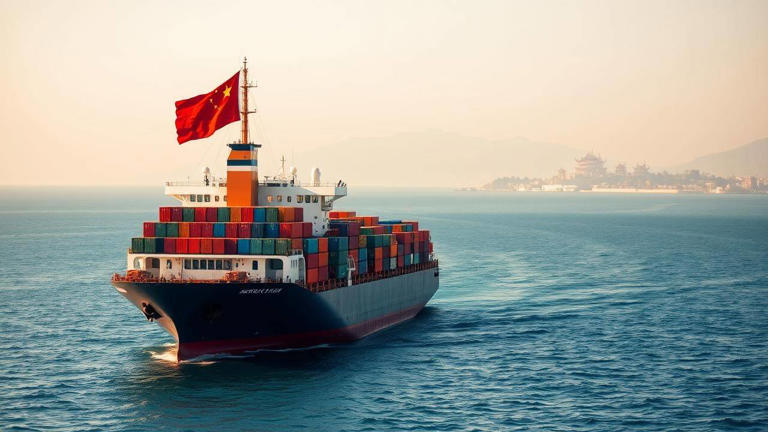
After nearly four years of restrictions, Chinese goods are set to make a comeback in Indian markets as the government resumes processing long-pending import approvals. The move comes amid soaring consumer demand and signs of easing diplomatic tensions between New Delhi and Beijing.
The government has begun fast-tracking applications from Indian companies seeking to import components, raw materials, and finished goods—including electronics parts, footwear, household products, and steel items—from China and other countries. These imports require Bureau of Indian Standards (BIS) certification, which mandates an on-site inspection of overseas manufacturing facilities.
Why the Delay?
Following the 2020 border clashes between India and China, the government had effectively frozen approvals for foreign manufacturers, particularly those based in China. Domestic factories continued to receive timely clearances, while international applications were delayed—creating significant supply chain bottlenecks across multiple sectors.
Demand Spike Triggers Policy Shift
The decision to restart approvals comes as industries struggle to keep up with a surge in demand driven by recent GST rate cuts. Categories such as automobiles, large-screen TVs, refrigerators, dishwashers, and washing machines have seen record sales, depleting inventories faster than anticipated. Manufacturers have been unable to restock quickly due to the import bottleneck, leading to waiting periods for several premium products.
In response, the Department for Promotion of Industry and Internal Trade (DPIIT) has reached out to manufacturers, requesting company-wise data on certification delays. A senior government official confirmed that “licences for suppliers from several countries, including China, will soon be issued and renewed on a case-by-case basis.”
BIS Certification and Localisation Push
Under BIS regulations, any domestic or foreign manufacturer producing items covered under the Quality Control Order must obtain certification. While domestic inspections proceeded unhindered, overseas certifications—especially for Chinese factories—slowed down significantly.
This slowdown was part of India’s strategy to strengthen local manufacturing and encourage import substitution. However, industry experts note that the localisation process varies widely across sectors. For example, only around 50% of components in air conditioners are currently sourced domestically, with the rest still dependent on imports from China.
An industry executive noted, “Relaxing import curbs is a practical step. While localisation remains a long-term goal, immediate shortages were hurting both manufacturers and consumers.”
Easing Diplomatic Tensions
The policy shift also reflects improving India–China trade relations. China recently resumed exports of heavy rare earth magnets to India—vital for the renewable energy, EV, and electronics sectors—after a six-month suspension.
Diplomatic engagement has also improved. Direct flights between the two countries have restarted, and India has resumed issuing business visas for Chinese nationals. This follows Prime Minister Narendra Modi’s August visit to China, where he met President Xi Jinping.
Although Chinese investment inflows are still subject to clearance under Press Note 3, the recent developments mark a cautious but notable thaw in bilateral trade ties suggesting that economic pragmatism may be regaining ground in India’s China policy.
Get More Insights@ PrecedenceResearch.com

- ESG Software Market 2025: Comprehensive Company Ecosystem and Revenue Overview - May 20, 2026
- ESG Software Market Surges Toward USD 31.96 Billion by 2035 as AI-Powered Compliance and Sustainability Reporting Transform Global Enterprises - May 20, 2026
- Hematopoietic Stem Cell Transplantation Market Surges Toward USD 24.32 Billion by 2035 as Precision Medicine and AI Reshape Blood Cancer Treatment - May 20, 2026