
The global Procurement as a Service market is witnessing rapid expansion as enterprises increasingly adopt AI-powered procurement platforms, cloud-based sourcing solutions, and automated supplier management systems to improve operational efficiency and reduce procurement costs. The growing complexity of global supply chains, rising emphasis on sustainability, and increasing digital transformation initiatives are significantly reshaping the procurement landscape worldwide.
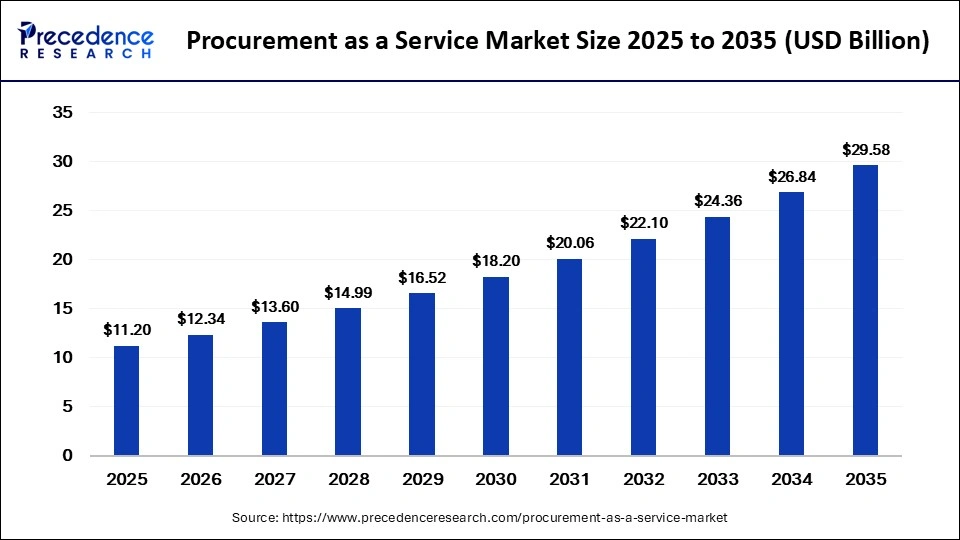
According to industry analysis by Precedence Research, the global procurement as a service market size was valued at USD 11.20 billion in 2025 and is projected to increase from USD 12.34 billion in 2026 to approximately USD 29.58 billion by 2035, expanding at a CAGR of 10.20% during the forecast period.
Organizations across industries are increasingly leveraging procurement outsourcing models to gain access to strategic sourcing expertise, advanced analytics, supplier risk management, and scalable procurement operations without investing heavily in internal infrastructure.
Read Also: Eyewear Market
Quick Insights: What is Driving the Procurement as a Service Market?
- The global procurement as a service market is expected to reach USD 29.58 billion by 2035, growing at a CAGR of 10.20% from 2026 to 2035.
- North America dominated the market with a 40% share in 2025 due to rapid enterprise digitalization and advanced procurement infrastructure.
- Asia Pacific is projected to witness the fastest CAGR of 12.5% owing to growing SME adoption and increasing cloud transformation initiatives.
- The strategic sourcing segment accounted for 22% of market share in 2025 because enterprises are prioritizing value-driven procurement strategies.
- Cloud-based deployment dominated the market with a 78% share due to scalability, flexibility, and real-time collaboration capabilities.
- SMEs are expected to witness the fastest adoption rate with a CAGR of 13% as smaller enterprises increasingly outsource procurement functions to remain globally competitive.
How is Artificial Intelligence Transforming the Procurement as a Service Industry?
Artificial intelligence is rapidly becoming a foundational technology within procurement as a service platforms. AI-powered procurement tools are helping enterprises automate supplier discovery, optimize sourcing decisions, improve spend analysis, and reduce procurement cycle times.
Modern AI-enabled procurement systems can:
- Analyze supplier performance in real time
- Predict procurement risks
- Automate contract management
- Optimize inventory forecasting
- Improve vendor compliance monitoring
- Detect procurement fraud patterns
Machine learning algorithms are also enabling enterprises to identify cost-saving opportunities through predictive spend analytics and dynamic sourcing recommendations. These technologies significantly improve procurement visibility and strategic decision-making.
Additionally, AI-powered chatbots and robotic process automation (RPA) are streamlining repetitive procurement workflows such as purchase order creation, invoice processing, and supplier communication, improving operational efficiency while reducing manual workloads.
What are the Major Growth Drivers of the Procurement as a Service Market?
Why is Cost Optimization Accelerating PaaS Adoption?
Enterprises globally are under constant pressure to reduce procurement expenses while maintaining operational resilience and supplier quality.
Procurement as a service solutions help organizations:
- Lower procurement overhead costs
- Improve supplier negotiations
- Optimize spend visibility
- Streamline sourcing operations
- Enhance procurement efficiency
By outsourcing procurement functions to specialized providers, businesses can access advanced procurement capabilities without maintaining large in-house procurement teams.
How are Complex Supply Chains Increasing Demand for Procurement Services?
Global supply chains have become increasingly fragmented and vulnerable due to:
- Geopolitical tensions
- Trade policy changes
- Inflationary pressures
- Supplier disruptions
- ESG compliance requirements
Organizations are increasingly adopting procurement as a service platforms to improve supplier risk management, maintain supply continuity, and strengthen procurement resilience.
Advanced supplier management systems now provide real-time visibility into procurement operations, helping enterprises respond quickly to disruptions.
Why is Cloud Adoption Supporting Market Expansion?
Cloud-based procurement platforms are rapidly replacing legacy procurement systems due to their:
- Scalability
- Lower infrastructure costs
- Remote accessibility
- Real-time analytics
- Workflow automation
- Multi-location collaboration
Cloud procurement platforms are especially attractive for SMEs seeking affordable and flexible digital procurement solutions without large upfront technology investments.
What Opportunities are Emerging in the Procurement as a Service Market?
Can ESG and Sustainable Procurement Create New Growth Opportunities?
Yes. Environmental, social, and governance (ESG) compliance is becoming a major procurement priority across industries.
Enterprises increasingly require procurement partners capable of:
- Monitoring ethical sourcing
- Tracking carbon emissions
- Managing supplier sustainability performance
- Ensuring regulatory compliance
PaaS providers integrating ESG analytics and sustainable sourcing frameworks are expected to gain strong competitive advantages in the coming years.
Will SMEs Become a Major Growth Engine for PaaS Providers?
Absolutely. Small and medium-sized enterprises are increasingly adopting procurement outsourcing services to compete more effectively in global markets.
Procurement as a service allows SMEs to:
- Access enterprise-grade procurement tools
- Reduce operational complexity
- Improve supplier management
- Minimize technology investment costs
- Scale procurement operations efficiently
The SME segment is projected to witness some of the highest growth rates during the forecast period.
Which Regions are Leading the Global Procurement as a Service Market?
Why Does North America Continue to Dominate the Market?
North America held the largest market share in 2025 due to:
- Strong digital transformation adoption
- Advanced enterprise procurement infrastructure
- High cloud computing penetration
- Presence of leading procurement technology vendors
- Growing focus on operational efficiency
The United States continues leading procurement innovation through heavy investments in AI-powered sourcing platforms and supply chain analytics solutions.
Why is Asia Pacific Emerging as the Fastest-Growing Region?
Asia Pacific is projected to grow at the fastest CAGR of 12.5% during the forecast period because of:
- Expanding SME ecosystems
- Rising cloud adoption
- Growing manufacturing activity
- Increasing digital procurement transformation
- Improving enterprise IT infrastructure
Countries such as India, China, and Japan are witnessing significant growth in procurement automation and cloud-based sourcing adoption.
India, in particular, is expected to witness strong procurement service growth driven by rapid enterprise modernization and increasing adoption of AI-enabled procurement platforms.
Segmentation Analysis of the Procurement as a Service Market
By Service Type
- Strategic Sourcing
- Spend Analysis
- Supplier Management
- Contract Management
- Procurement Operations
- Supplier Risk Management
Strategic sourcing dominated the market with a 22% share in 2025 due to rising demand for data-driven and value-focused procurement strategies.
The contract management segment is expected to witness strong growth because enterprises increasingly automate compliance and supplier agreement processes.
By Deployment Mode
- Cloud-Based
- On-Premise
Cloud-based deployment accounted for 78% of market share in 2025 due to its scalability and real-time collaboration advantages.
By Organization Size
- Large Enterprises
- Small and Medium Enterprises (SMEs)
Large enterprises dominated the market in 2025 because of their complex procurement operations and large supplier ecosystems.
However, SMEs are projected to witness the fastest growth due to rising affordability of cloud procurement solutions.
By End-Use Industry
- BFSI
- Retail and E-commerce
- Manufacturing
- Healthcare
- IT and Telecom
- Energy and Utilities
- Government
The BFSI sector held the dominant share in 2025 owing to stringent compliance requirements and increasing demand for procurement transparency.
Retail and e-commerce are expected to grow rapidly as businesses increasingly rely on AI-driven procurement automation and inventory optimization tools.
Which Companies are Leading Innovation in the Procurement as a Service Market?
Several leading technology and consulting firms are aggressively investing in AI-enabled procurement platforms, cloud sourcing ecosystems, and supply chain analytics solutions.
Major Companies in the Procurement as a Service Market
- Accenture
- Capgemini
- Genpact
- GEP
- IBM Corporation
- Infosys Limited
- Tata Consultancy Services
- Wipro
- HCL Technologies
- WNS Holdings
These companies are heavily focused on:
- AI-driven procurement automation
- Supplier analytics
- Cloud procurement transformation
- ESG compliance solutions
- Robotic process automation
- Strategic sourcing platforms
Recent Breakthroughs and Industry Developments
The procurement as a service market is rapidly evolving through:
- AI-powered spend analytics
- Intelligent contract lifecycle management
- Autonomous sourcing systems
- Supplier risk monitoring tools
- Cloud-native procurement ecosystems
Industry research indicates growing enterprise adoption of generative AI within procurement workflows, helping organizations improve sourcing accuracy, automate supplier communication, and increase operational productivity.
Several enterprises are also integrating embedded AI tools directly into procurement platforms to modernize procurement operations without significant infrastructure investments.
What Challenges are Affecting the Procurement as a Service Market?
Why Do Data Security Concerns Remain a Major Challenge?
As procurement systems increasingly move to cloud environments, concerns regarding:
- Data privacy
- Cybersecurity
- Vendor data exposure
- Regulatory compliance
continue creating adoption barriers for highly regulated industries.
Organizations handling sensitive supplier and financial data often require strict governance frameworks before outsourcing procurement operations.
How Does Organizational Resistance Impact Market Adoption?
Many enterprises still rely on legacy procurement systems and manual sourcing processes.
Internal resistance to digital transformation, lack of procurement modernization expertise, and integration challenges with existing ERP systems continue slowing procurement outsourcing adoption across some organizations.
Case Study: How AI-Powered Procurement Reduced Operational Costs
Several enterprises implementing AI-driven procurement as a service platforms reported substantial improvements in:
- Supplier onboarding efficiency
- Procurement cycle times
- Spend visibility
- Vendor compliance
- Cost savings
Companies leveraging automated spend analytics and supplier management tools experienced improved procurement accuracy while significantly reducing manual administrative workloads.
These successful implementations are accelerating enterprise investments in AI-enabled procurement transformation globally.
Get Sample Copy: https://www.precedenceresearch.com/sample/8417
