
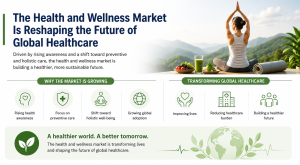
Driven by increasing consumer focus on preventive healthcare, fitness, nutrition, and mental well-being, the global health and wellness market is projected to expand significantly over the coming decade. The market is anticipated to rise from USD 5.02 trillion in 2026 to approximately USD 7.76 trillion by 2035, growing at a CAGR of 4.94%, after being valued at USD 4.79 trillion in 2025.
Health and Wellness Market Overview
Health and wellness encompasses a broad range of industries, including nutrition, fitness, preventive healthcare, wellness tourism, personal care, mental wellness, telemedicine, wearable devices, and personalized medicine. The market has evolved beyond traditional healthcare, focusing on proactive approaches that help individuals maintain healthier lifestyles and prevent diseases before they occur.
Consumers today are investing more in wellness solutions that support long-term health, improve quality of life, and enhance overall well-being. This shift is creating significant opportunities for businesses across healthcare, technology, nutrition, and lifestyle sectors.
The Evolution of the Health and Wellness Industry
Over the past two decades, healthcare has undergone a significant paradigm shift. Traditionally, healthcare systems focused on diagnosing and treating diseases. However, modern consumers increasingly recognize that long-term health outcomes depend on daily lifestyle choices.
The World Health Organization (WHO) estimates that non-communicable diseases (NCDs), including cardiovascular diseases, diabetes, cancer, and chronic respiratory disorders, account for nearly 74% of all global deaths. Many of these conditions are linked to lifestyle factors such as poor diet, physical inactivity, smoking, and excessive alcohol consumption.
Get Sample: https://www.precedenceresearch.com/sample/1352
Major Drivers Accelerating Market Growth
Rising Prevalence of Chronic Diseases
The growing burden of chronic illnesses remains one of the strongest growth drivers for the wellness industry.
According to the International Diabetes Federation, more than 640 million adults worldwide could be living with diabetes by 2030 if current trends continue. Similarly, cardiovascular diseases remain the leading cause of death globally.
Preventive wellness solutions such as fitness programs, nutritional counseling, health monitoring devices, and stress management services are increasingly viewed as effective tools for reducing disease risk.
Consumers are becoming more willing to invest in wellness products that help them maintain long-term health and avoid expensive medical treatments later in life.
Growing Aging Population
The world’s population is aging rapidly. According to the United Nations, people aged 65 years and older are expected to double globally by 2050.
This demographic shift is creating substantial demand for:
- Healthy aging products
- Mobility and rehabilitation services
- Nutritional supplements
- Cognitive health solutions
- Personalized healthcare programs
Older consumers are increasingly seeking wellness solutions that help them remain active, independent, and healthy for longer periods.
Rising Disposable Income
Economic development in emerging markets has significantly increased consumer spending power. Middle-class populations across Asia-Pacific, Latin America, and parts of Africa are investing more in wellness services, premium nutrition products, fitness memberships, and preventive healthcare solutions.
This trend is expanding the customer base for health and wellness companies worldwide.
Digital Transformation is Revolutionizing Wellness
The Rise of Wearable Health Technologies
Wearable devices have fundamentally changed how individuals monitor and manage their health.
Modern wearable devices can track:
- Heart rate variability
- Sleep cycles
- Blood oxygen levels
- Stress indicators
- Daily physical activity
- Caloric expenditure
These technologies provide real-time insights that encourage healthier behaviors and enable early detection of potential health concerns.
Industry leaders continue integrating artificial intelligence and machine learning capabilities into wearables, allowing for increasingly sophisticated health analysis and predictive insights.
Regional Market Analysis
North America currently holds the largest share of the global health and wellness market. High healthcare spending, strong consumer awareness, advanced healthcare infrastructure, and widespread adoption of digital health technologies contribute to regional dominance. The region accounted for approximately 38% of global revenue in 2025.
Europe benefits from strong public health systems, growing wellness tourism, and increasing demand for preventive healthcare services. Countries across the region are emphasizing healthy aging and lifestyle management.
Asia Pacific is expected to experience the fastest growth throughout the forecast period. Rapid urbanization, rising disposable income, growing middle-class populations, and increasing health awareness are driving demand across countries such as China, India, Japan, and South Korea.
These regions are witnessing increasing investments in healthcare infrastructure and wellness services. Growing awareness regarding preventive healthcare is expected to create substantial growth opportunities over the coming years.
How Is Technology Transforming the Health and Wellness Industry?
Technology is revolutionizing the health and wellness industry by making healthcare more accessible, personalized, and data-driven. Digital innovations are empowering consumers to take greater control of their health through real-time monitoring, preventive care, and customized wellness solutions.
Wearable devices such as smartwatches and fitness trackers continuously monitor vital health metrics, including heart rate, sleep quality, physical activity, blood oxygen levels, and stress indicators. These devices provide actionable insights that help users make informed lifestyle decisions and identify potential health concerns before they become serious.
Telemedicine platforms have transformed healthcare delivery by enabling virtual consultations, remote diagnostics, and follow-up care. Patients can now access healthcare professionals from virtually anywhere, reducing travel time, improving convenience, and expanding healthcare access to underserved populations.
Emerging Trends Shaping the Future
Several trends are expected to define the next generation of wellness:
- Biohacking and Longevity: Consumers are increasingly focused on extending healthy life expectancy through advanced nutrition, supplementation, sleep optimization, and health monitoring.
- Digital Therapeutics: Software-based treatments are gaining recognition for managing chronic diseases and mental health conditions.
- Smart Health Ecosystems: Integration between wearables, mobile applications, telemedicine, and AI platforms will create seamless health management experiences.
- Holistic Wellness Models: Future wellness solutions will increasingly combine physical health, emotional well-being, nutrition, fitness, and social connection into a unified approach.
- Precision Nutrition; Advances in genomics and microbiome science will allow highly personalized dietary recommendations.
Read Also: Implantable Sensor Orthopedic Market
Competitive Landscape
Major companies operating in the health and wellness industry include:
- Amway Corp.
- Bayer AG
- Danone
- Herbalife Nutrition Ltd.
- Nestlé SA
- Procter & Gamble
- Unilever Plc
These organizations continue investing in innovation, digital health solutions, personalized wellness products, and strategic partnerships to strengthen their market positions.
Conclusion
The global health and wellness market is undergoing a significant transformation driven by preventive healthcare, digital innovation, personalized wellness, and increasing consumer awareness. As people prioritize healthier lifestyles and proactive health management, demand for wellness products and services will continue to accelerate.
From wearable technologies and AI-powered health platforms to wellness tourism and precision nutrition, the industry is creating unprecedented opportunities for businesses, healthcare providers, and consumers. With the market projected to surpass USD 7.76 trillion by 2035, health and wellness will remain one of the most influential sectors shaping the future of global healthcare and consumer behavior.
𝐘𝐨𝐮 𝐜𝐚𝐧 𝐩𝐥𝐚𝐜𝐞 𝐚𝐧 𝐨𝐫𝐝𝐞𝐫 𝐨𝐫 𝐚𝐬𝐤 𝐚𝐧𝐲 𝐪𝐮𝐞𝐬𝐭𝐢𝐨𝐧𝐬, 𝐩𝐥𝐞𝐚𝐬𝐞 𝐟𝐞𝐞𝐥 𝐟𝐫𝐞𝐞 𝐭𝐨 𝐜𝐨𝐧𝐭𝐚𝐜𝐭 𝐮𝐬 𝐚𝐭 𝐬𝐚𝐥𝐞𝐬@𝐩𝐫𝐞𝐜𝐞𝐝𝐞𝐧𝐜𝐞𝐫𝐞𝐬𝐞𝐚𝐫𝐜𝐡.𝐜𝐨𝐦
