
The global energy management software market is experiencing strong growth as organizations increasingly prioritize energy efficiency, sustainability, and digital transformation. The market was valued at USD 12.60 billion in 2025 and is projected to grow from USD 14.29 billion in 2026 to USD 44.31 billion by 2035, expanding at a CAGR of 13.40% during the forecast period.
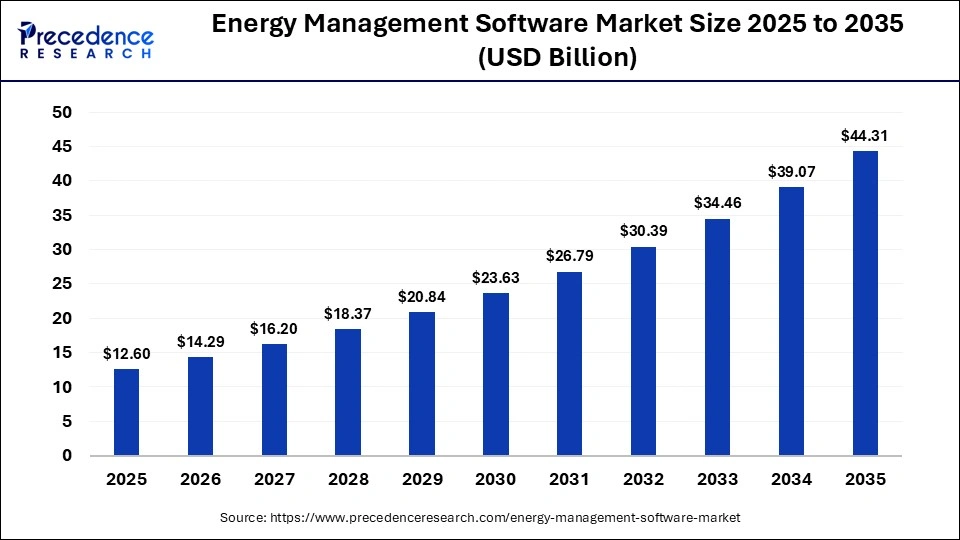
The growing need to optimize energy consumption, reduce operational costs, and meet stringent environmental regulations is driving widespread adoption of energy management software across industries. These solutions integrate AI, IoT, and cloud technologies to provide real-time monitoring, predictive analytics, and automated energy optimization.
Read also: Multichannel Order Management Market
Quick Insights
The energy management software market generated USD 12.60 billion in 2025 and is expected to reach USD 44.31 billion by 2035, growing at a CAGR of 13.40%. North America dominated the market with a 35% share in 2025, while Asia Pacific is projected to grow at the fastest CAGR of 16.5%. Energy monitoring & analytics software held the largest share at 30%, cloud-based deployment accounted for 60%, and industrial & manufacturing led the end-use segment with 30% share.
How is Artificial Intelligence Transforming Energy Management Software?
Artificial intelligence is revolutionizing energy management software by enabling real-time monitoring, predictive analytics, and automated optimization of energy consumption. AI-powered systems analyze vast datasets to forecast energy demand, optimize load distribution, and reduce energy waste across operations.
Additionally, AI-driven platforms enhance operational efficiency by enabling predictive maintenance, detecting anomalies, and improving system performance. This shift toward intelligent energy systems is helping organizations achieve sustainability goals while reducing costs and improving overall energy efficiency.
What are the Key Growth Drivers of the Energy Management Software Market?
The primary driver is the increasing global focus on energy efficiency and sustainability. Organizations are adopting energy management solutions to reduce carbon emissions, comply with regulatory mandates, and optimize resource utilization.
Another key factor is the rapid digitalization of energy infrastructure. The integration of smart grids, IoT-enabled devices, and cloud-based platforms is enabling real-time energy monitoring and management, driving market growth across industries.
What Opportunities and Trends are Shaping the Market?
Is Digitalization of Energy Infrastructure Accelerating Market Growth?
Yes, the rapid digital transformation of power systems is driving the adoption of intelligent energy management solutions across industrial, commercial, and residential sectors.
Are ESG and Carbon Reporting Requirements Creating New Opportunities?
Absolutely. Increasing pressure to meet ESG goals and carbon neutrality targets is boosting demand for carbon tracking and sustainability management software.
Is AI-Driven Automation Transforming Energy Systems?
Yes, AI-powered energy management systems are enabling automated decision-making, real-time optimization, and improved energy efficiency, making them a key trend in the market.
Regional Analysis
North America dominated the energy management software market in 2025, accounting for 35% share, driven by advanced digital infrastructure, strong adoption of smart grid technologies, and significant investments in energy optimization solutions.
Asia Pacific is expected to witness the fastest growth due to rapid industrialization, urbanization, and increasing investments in smart city initiatives and digital energy infrastructure in countries such as China and India.
Europe also represents a significant market, supported by strict environmental regulations and strong focus on carbon neutrality and sustainability initiatives.
Segmental Analysis
By Software Type
| Software Type | 2025 Share | 2035 Share | CAGR |
|---|---|---|---|
| Energy Monitoring & Analytics | 30% | 28% | 11.5% |
| Utility Bill Management | 15% | 13% | 9.0% |
| Carbon & Sustainability Management | 20% | 25% | 18.5% |
| Demand Response Management | 15% | 14% | 12.0% |
| DER Management Software | 20% | 20% | 16.0% |
Energy monitoring & analytics software dominates due to demand for real-time visibility, while carbon & sustainability management software is the fastest-growing segment due to ESG mandates.
By Deployment Mode
| Deployment Mode | 2025 Share | 2035 Share |
|---|---|---|
| Cloud-Based | 60% | 65% |
| On-Premise | 25% | 20% |
| Hybrid | 15% | 15% |
Cloud-based solutions dominate due to scalability and real-time integration capabilities, while hybrid models are gaining traction for flexibility.
By End-Use Industry
| End-Use Industry | 2025 Share | 2035 Share |
|---|---|---|
| Industrial & Manufacturing | 30% | 28% |
| Commercial Buildings | 20% | 19% |
| Energy & Utilities | 20% | 21% |
| Residential | 10% | 12% |
| IT & Data Centers | 10% | 11% |
| Government | 5% | 5.5% |
| Healthcare | 5% | 3.5% |
Industrial & manufacturing dominates due to high energy consumption, while the residential segment is expected to grow fastest due to smart home adoption.
By Application
| Application | 2025 Share | Growth Trend |
|---|---|---|
| Energy Consumption Optimization | 35% | Dominant |
| Carbon Footprint Tracking | 20% | Fastest Growing |
| Predictive Maintenance & Forecasting | 15% | Growing |
| Grid & Load Management | 15% | Steady |
| Cost Optimization & Billing | 15% | Moderate |
Energy consumption optimization leads due to cost-saving benefits, while carbon tracking is rapidly growing due to sustainability initiatives.
Competitive Landscape and Key Companies
The energy management software market is highly competitive, with leading players focusing on AI-driven optimization, cloud platforms, and sustainability solutions. Key companies include:
- Schneider Electric
- Siemens AG
- Honeywell International Inc.
- IBM Corporation
- Oracle Corporation
- Johnson Controls
- ABB Ltd.
- General Electric
Recent developments include AI-powered energy optimization platforms and smart grid integration solutions aimed at improving efficiency and reducing carbon emissions.
What Challenges are Impacting Market Growth?
Are High Implementation Costs Limiting Adoption?
Yes, high initial costs and integration complexities remain major barriers, particularly for small and medium enterprises.
Is Integration with Legacy Systems a Challenge?
Integrating energy management software with existing infrastructure can be complex, requiring significant investment and technical expertise.
Case Study: Smart Energy Optimization in Industrial Facilities
Industrial organizations implementing AI-driven energy management software have significantly reduced energy consumption and operational costs. By leveraging real-time monitoring and predictive analytics, these systems optimize energy usage and improve overall efficiency, demonstrating the value of digital energy transformation.
Conclusion
The energy management software market is becoming a critical component of modern digital infrastructure. With increasing emphasis on sustainability, energy efficiency, and AI-driven optimization, the market is poised for strong growth through 2035.
Get Sample Copy: https://www.precedenceresearch.com/sample/8351
For inquiries regarding discounts, bulk purchases, or customization requests, please contact us at [email protected]
