
Endoscopy Devices Market Size and Growth Outlook
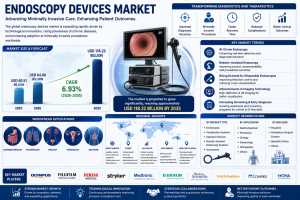
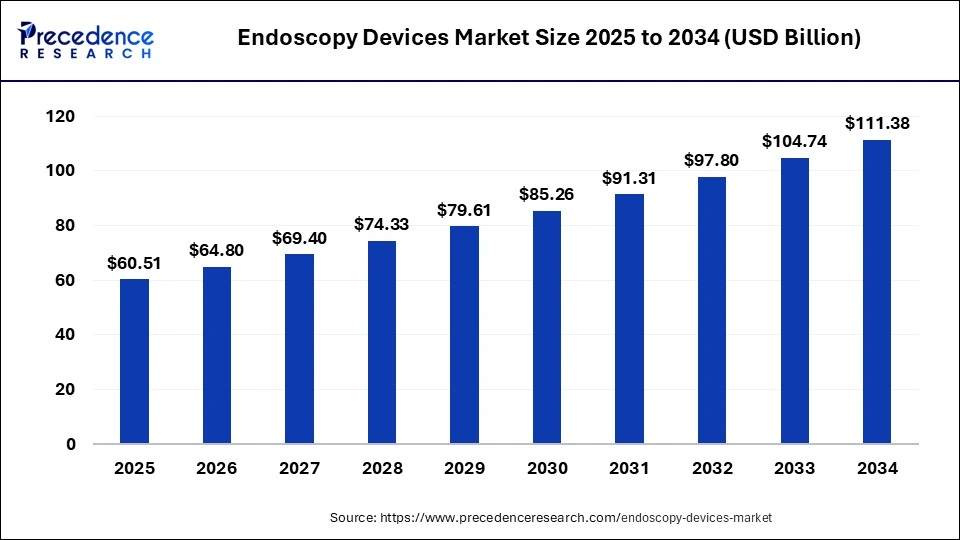
The global endoscopy devices market was valued at USD 60.51 billion in 2025 and is expected to reach USD 64.80 billion in 2026. The market is projected to grow significantly, reaching approximately USD 118.22 billion by 2035, at a CAGR of 6.93% during the forecast period from 2026 to 2035. The market expansion is driven by the increasing prevalence of gastrointestinal disorders, growing preference for minimally invasive procedures, technological advancements in endoscopic imaging systems, and rising healthcare investments worldwide.
Key Highlights
- By product, the endoscopy visualization systems segment dominated the market and contributed nearly 37% of total revenue in 2025, supported by growing demand for high-definition imaging and advanced diagnostic capabilities.
- By end user, the hospitals segment emerged as the leading category, accounting for approximately 48% of the market revenue in 2025, owing to the high volume of endoscopic procedures performed in hospital settings.
- By application, the gastrointestinal (GI) endoscopy segment held the largest market share of around 55.2% in 2025, driven by increasing cases of digestive disorders and expanding colorectal cancer screening programs.
- The urology endoscopy segment is anticipated to witness notable growth throughout the forecast period due to the rising incidence of urological conditions and the growing adoption of minimally invasive treatment procedures.
- North America maintained its position as the largest regional market, capturing approximately 43% of global revenue in 2025, supported by advanced healthcare infrastructure and strong adoption of innovative endoscopic technologies.
- Asia Pacific is expected to register the fastest growth over the forecast period, driven by expanding healthcare access, increasing medical tourism, and rising investments in healthcare infrastructure across emerging economies.
Market Overview
The Endoscopy Devices Market is witnessing substantial growth as healthcare providers increasingly adopt minimally invasive procedures for diagnosis, treatment, and surgical interventions. Endoscopy devices enable physicians to visualize internal organs and body structures with precision, reducing the need for traditional open surgeries and improving patient outcomes.
Endoscopy has become an essential tool across multiple medical specialties, including gastroenterology, pulmonology, urology, gynecology, orthopedics, and general surgery. The growing prevalence of gastrointestinal disorders, cancer, respiratory diseases, and chronic conditions is significantly driving demand for advanced endoscopic procedures worldwide.
Technological advancements in imaging systems, flexible endoscopes, robotic-assisted endoscopy, and high-definition visualization platforms are enhancing procedural accuracy and expanding the applications of endoscopic techniques. Additionally, rising healthcare expenditure, increasing awareness of preventive healthcare, and the growing preference for outpatient procedures continue to support market expansion.
As healthcare systems focus on improving clinical efficiency and reducing patient recovery times, endoscopy devices are expected to remain a critical component of modern medical practice.
AI Impact on the Endoscopy Devices Market
Artificial Intelligence (AI) is revolutionizing endoscopy by enhancing diagnostic accuracy, workflow efficiency, and clinical decision-making.
AI-powered image analysis systems can identify abnormalities such as polyps, tumors, lesions, and early-stage cancers with greater precision during endoscopic procedures. These technologies assist physicians by providing real-time detection and characterization of suspicious findings, improving diagnostic confidence and reducing the likelihood of missed lesions.
Machine learning algorithms are also helping healthcare providers automate documentation, optimize procedure workflows, and improve patient management. AI-driven predictive analytics can support risk assessment and treatment planning by analyzing large volumes of patient and procedural data.
In addition, AI is accelerating the development of smart endoscopy platforms that integrate advanced imaging, computer vision, and robotic navigation capabilities. These innovations are expected to enhance procedural outcomes while improving efficiency in hospitals and ambulatory surgical centers.
As AI adoption continues to grow, its integration into endoscopy devices will play a major role in advancing precision medicine and improving patient care.
Market Trends
- Rising Adoption of Minimally Invasive Procedures: Patients and healthcare providers increasingly prefer minimally invasive techniques due to shorter recovery times, reduced complications, lower hospitalization rates, and improved clinical outcomes.
- Growth of AI-Assisted Endoscopy: The integration of artificial intelligence into endoscopic imaging systems is improving lesion detection, diagnostic accuracy, and procedural efficiency across various medical specialties.
- Expansion of Robotic Endoscopy Technologies: Robotic-assisted endoscopy systems are gaining popularity as they enhance maneuverability, precision, and access to difficult anatomical regions during complex procedures.
- Increasing Demand for Disposable Endoscopes: Healthcare facilities are adopting single-use endoscopes to reduce the risk of cross-contamination, improve infection control, and minimize device reprocessing requirements.
- Advancements in High-Definition Imaging: The development of high-definition, 4K, and advanced imaging technologies is enabling physicians to visualize tissue structures more clearly, supporting early disease detection and improved procedural outcomes.
- Growing Use in Cancer Screening Programs: National screening initiatives for colorectal, gastric, and other cancers are driving demand for endoscopy procedures and advanced visualization systems.
Market Scope
| Report Coverage | Details |
| Market Size in 2025 | USD 60.51 Billion |
| Market Size in 2026 | USD 64.80 Billion |
| Market Size by 2035 | USD 118.22 Billion |
| Growth Rate from 2026 to 2035 | CAGR of 6.93% |
| Largest Market | North America |
| Base Year | 2025 |
| Forecast Period | 2026 to 2035 |
| Segments Covered | Product, Application, Hygiene, End User, Regions |
| Regions Covered | North America, Europe, Asia-Pacific, Latin America, and Middle East & Africa |
Segment Insights
By Product Type
Endoscopes represent the largest segment due to their essential role in diagnostic and therapeutic procedures. Flexible endoscopes continue to dominate because of their versatility and broad clinical applications.
Visualization Systems are witnessing strong adoption as healthcare providers invest in high-definition imaging technologies that improve procedural accuracy and diagnostic confidence.
Operative Devices such as forceps, snares, biopsy instruments, and retrieval devices remain critical components of endoscopic interventions.
Robotic-Assisted Endoscopy Systems are emerging as a rapidly growing segment, supported by technological innovation and increasing demand for precision-guided procedures.
By Application
Gastrointestinal Endoscopy accounts for a significant share of the market due to the high prevalence of digestive disorders and increasing colorectal cancer screening programs.
Pulmonary Endoscopy is expanding as respiratory diseases and lung cancer cases continue to rise globally.
Urology Endoscopy remains an important segment driven by growing demand for minimally invasive treatment of urinary tract conditions.
Gynecology and Orthopedic Endoscopy are also experiencing growth as physicians increasingly utilize minimally invasive approaches for diagnosis and treatment.
By End User
Hospitals remain the largest end users due to their extensive procedural volumes, advanced infrastructure, and access to specialized healthcare professionals.
Ambulatory Surgical Centers (ASCs) are witnessing rapid growth as more endoscopic procedures shift toward outpatient settings.
Specialty Clinics continue to expand their adoption of advanced endoscopy systems to improve diagnostic and treatment capabilities.
Regional Insights
North America remains a leading market for endoscopy devices due to advanced healthcare infrastructure, widespread adoption of innovative technologies, and high awareness of preventive healthcare. Strong investments in AI-enabled diagnostic tools and cancer screening programs continue to drive regional growth.
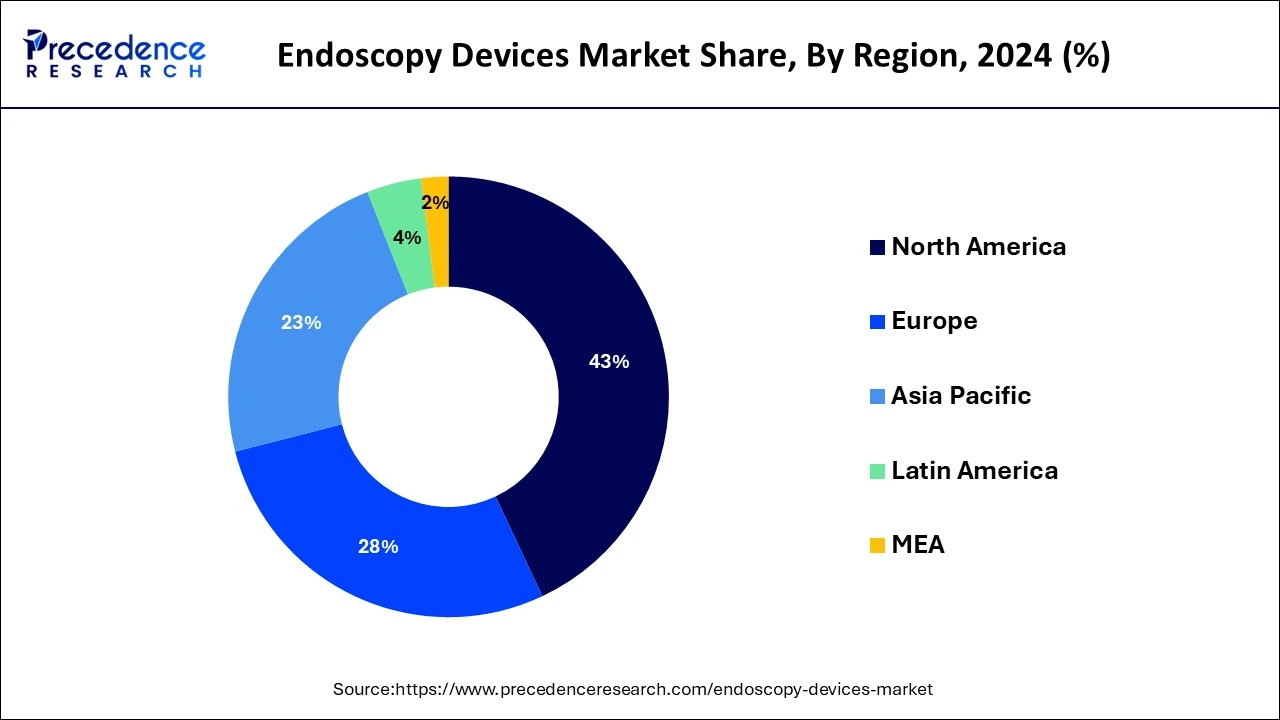
Europe represents a significant market supported by increasing healthcare expenditure, growing adoption of minimally invasive procedures, and strong government initiatives focused on early disease detection. Technological advancements and favorable reimbursement policies further contribute to market expansion.
Asia Pacific is expected to experience the fastest growth during the forecast period. Rapid healthcare infrastructure development, increasing healthcare spending, a large patient population, and rising awareness of minimally invasive procedures are fueling demand across countries such as China, India, Japan, and South Korea.
The market in Latin America is growing steadily due to improvements in healthcare accessibility, increasing investments in medical technologies, and expanding diagnostic capabilities within healthcare institutions.
The Middle East & Africa region is witnessing gradual growth as governments continue investing in healthcare modernization, hospital expansion projects, and advanced diagnostic technologies. Increasing awareness of early disease detection is further supporting market development.
Conclusion
The Endoscopy Devices Market is evolving rapidly as healthcare providers increasingly adopt minimally invasive diagnostic and therapeutic procedures. Technological advancements in imaging systems, artificial intelligence, robotic-assisted platforms, and disposable endoscopes are transforming the industry and improving patient outcomes. As demand for early disease detection, precision medicine, and efficient healthcare delivery continues to grow, the market is expected to experience sustained expansion across both developed and emerging healthcare markets worldwide.
Endoscopy Devices Market Key Players
- Karl Storz GmbH & Co. KG: A global leader in endoscopes, medical instruments, and visualization equipment.
- Richard Wolf GmbH: A major provider of products for endoscopy and extracorporeal shock wave treatment.
- PENTAX Medical: A leading global provider of endoscopic imaging solutions, particularly in the gastrointestinal (GI) and pulmonology fields
- Medtronic Plc (Covidien): While Medtronic is a massive global medical technology company with a diverse portfolio, its acquisition of Covidien significantly expanded its presence in surgical instruments and technologies.
- Machida Endoscope Co., Ltd.: Historically, Machida was a significant Japanese manufacturer of flexible and rigid endoscopes.
- Olympus Corporation: Olympus Corporation provides a comprehensive portfolio aimed at pulmonology, gastroenterology, and surgical endoscopy. It offers advanced imaging systems, flexible and rigid endoscopes, AI-powered software, system integration solutions, and endotherapy devices.
Get Sample Link : https://www.precedenceresearch.com/sample/1095
Also Read : Home Healthcare Market

- Farm Management Software Market: Digital Agriculture Driving Smarter and More Sustainable Farming - July 9, 2026
- AI in CGT Manufacturing Market: Artificial Intelligence Accelerating the Future of Cell and Gene Therapy Production - July 9, 2026
- 3T MRI System Market: Advanced Imaging Technology Transforming Modern Diagnostics - July 9, 2026