
The healthcare industry is undergoing a significant transformation as healthcare services increasingly move beyond traditional hospital settings and into patients’ homes. The home healthcare market has emerged as a vital component of modern healthcare systems, driven by the growing need for personalized care, aging populations, rising chronic disease prevalence, and advancements in digital health technologies.
Home healthcare encompasses a broad range of medical and non-medical services delivered in a patient’s residence, including skilled nursing care, rehabilitation therapies, chronic disease management, remote patient monitoring, and personal care assistance. As healthcare providers focus on improving patient outcomes while reducing healthcare costs, home-based care models are becoming an increasingly preferred solution worldwide.
What is Home Healthcare Market Size in 2026?
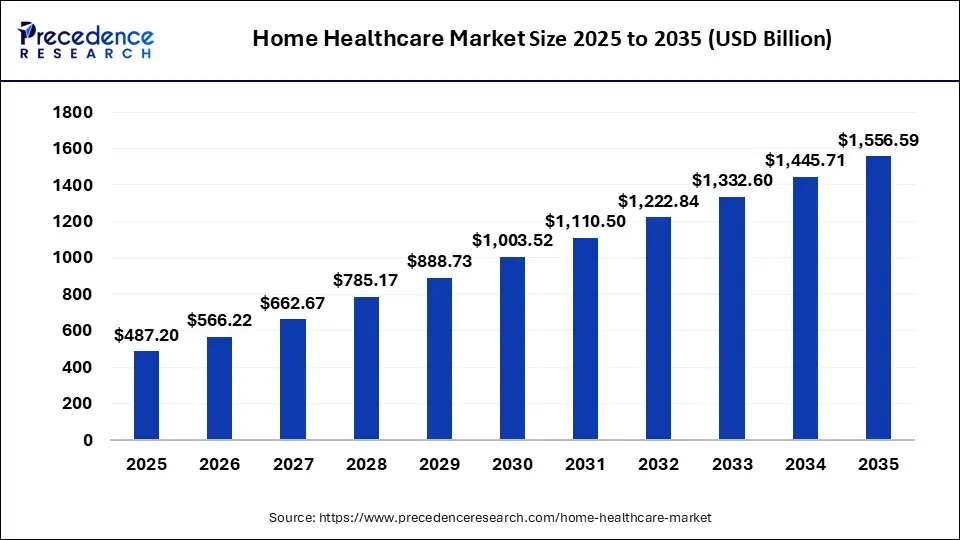
The global home healthcare market size accounted for USD 487.2 billion in 2025 and is expected to be worth around USD 1,556.59 billion by 2035, at a CAGR of 12.32% from 2026 to 2035.
Market Highlights
- North America led the global market with the highest market share of 50.21% in 2025.
- By type, the services segment registered a maximum market share of 85.0% in 2025.
- By device, the home mobility assist devices segment captured the biggest revenue share of 37.91% in 2025.
- By service, the rehabilitation segment has held the largest market share of 49.77% in 2025.
Market Overview
The home healthcare market is experiencing rapid expansion as healthcare systems prioritize patient-centered care and seek alternatives to costly hospital admissions and long-term institutional care. Home healthcare services provide patients with the opportunity to receive medical attention, rehabilitation, and ongoing monitoring in a familiar and comfortable environment.
Several factors are contributing to the growing adoption of home healthcare services. The increasing incidence of chronic conditions such as cardiovascular diseases, diabetes, respiratory disorders, neurological conditions, and cancer has created a greater need for long-term care management. Simultaneously, the global aging population is increasing demand for services that allow elderly individuals to maintain independence while receiving necessary healthcare support.
Healthcare providers and payers are also recognizing the benefits of home healthcare in reducing hospital readmissions, improving treatment adherence, and enhancing patient satisfaction. Advances in telehealth, connected medical devices, and remote monitoring technologies have further strengthened the ability of healthcare professionals to deliver high-quality care outside traditional clinical settings.
As healthcare systems continue to evolve, home healthcare is becoming a critical element in addressing workforce shortages, healthcare accessibility challenges, and rising healthcare expenditures.
AI Impact on the Home Healthcare Market
Artificial intelligence is playing a transformative role in the evolution of home healthcare by enabling more personalized, predictive, and proactive patient care. AI-powered technologies are helping healthcare providers monitor patients remotely, identify health risks earlier, and optimize treatment plans based on real-time data.
AI algorithms can analyze information from wearable devices, remote monitoring systems, electronic health records, and patient-reported outcomes to detect subtle changes in health conditions before they become critical. This capability enables earlier intervention and helps prevent hospitalizations.
Virtual health assistants and AI-driven chatbots are also improving patient engagement by providing medication reminders, symptom assessments, appointment scheduling, and health education. These digital tools enhance communication between patients and healthcare providers while reducing administrative burdens.
Predictive analytics powered by AI is enabling healthcare organizations to forecast disease progression, identify high-risk patients, and allocate healthcare resources more efficiently. In chronic disease management, AI supports continuous monitoring and personalized treatment adjustments that improve long-term outcomes.
Additionally, AI-enhanced robotics and smart home technologies are assisting elderly and mobility-impaired individuals with daily activities, medication management, and safety monitoring, supporting independent living and improving quality of life.
Growth Factors Driving the Home Healthcare Market
Rising Aging Population
The growing elderly population is one of the primary drivers of the home healthcare market. Older adults often require ongoing medical care, rehabilitation services, and assistance with daily activities. Home healthcare offers a convenient and cost-effective alternative to long-term hospital stays and nursing facilities.
Increasing Prevalence of Chronic Diseases
Chronic illnesses require continuous monitoring and long-term treatment management. Home healthcare services provide patients with access to skilled care while minimizing disruptions to their daily lives. This approach improves treatment adherence and helps manage complex health conditions more effectively.
Advancements in Telehealth and Remote Monitoring
The widespread adoption of telemedicine platforms, wearable health devices, and connected monitoring systems has expanded the capabilities of home healthcare providers. Patients can now receive virtual consultations, remote diagnostics, and continuous health monitoring without frequent visits to healthcare facilities.
Growing Preference for Personalized Care
Patients increasingly prefer receiving care in the comfort of their homes, where treatment plans can be tailored to individual needs and lifestyles. Personalized care models often result in higher patient satisfaction, improved outcomes, and stronger caregiver involvement.
Healthcare Cost Optimization
Healthcare systems worldwide are seeking ways to reduce costs while maintaining quality care. Home healthcare helps lower expenses associated with hospital admissions, emergency visits, and long-term institutional care, making it an attractive option for healthcare providers and payers.
Expanding Digital Health Ecosystem
The integration of cloud-based healthcare platforms, electronic health records, mobile health applications, and smart medical devices is improving care coordination and enabling seamless communication among patients, caregivers, and healthcare professionals.
Market Scope
| Report Highlights | Details |
| Market Size in 2025 | USD 487.2 Billion |
| Market Size in 2026 | USD 566.22 Billion |
| Market Size by 2035 | USD 1,556.59 Billion |
| Growth Rate from 2026 to 2035 | CAGR of 12.32% |
| Largest Market | North America |
| Fastest Growing Market | Asia Pacific |
| Base Year | 2025 |
| Forecast Period | 2026 to 2035 |
| Segments Covered | Type, Device, Services, and Region |
| Regions Covered | North America, Europe, Asia-Pacific, Latin America, and Middle East & Africa |
Regional Insights
North America remains a key market for home healthcare due to its advanced healthcare infrastructure, widespread adoption of digital health technologies, and strong emphasis on value-based care. The region continues to witness growing demand for remote patient monitoring, telehealth services, and home-based chronic disease management programs. Supportive reimbursement frameworks and increasing investments in healthcare innovation further strengthen market growth.
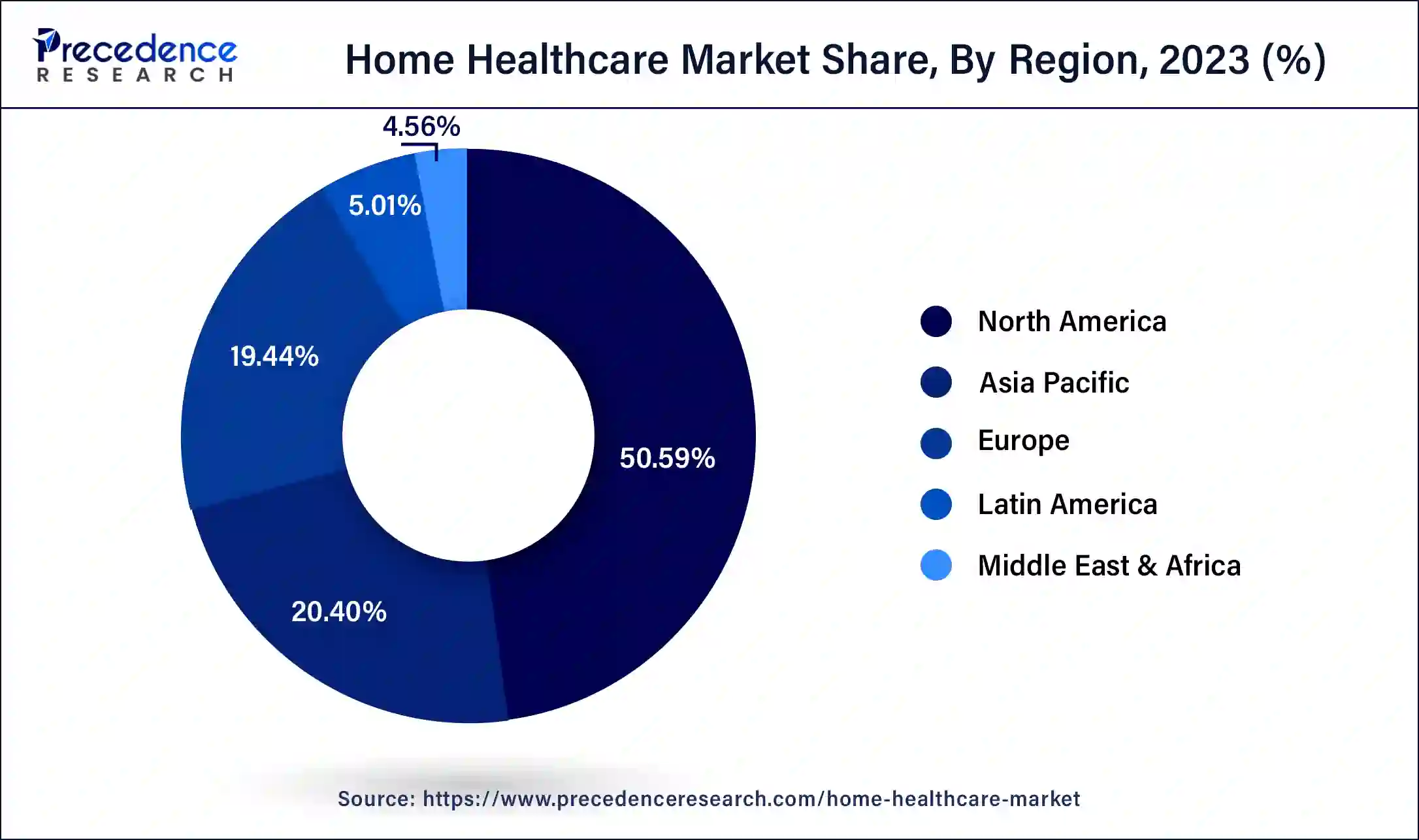
Europe is experiencing substantial growth in home healthcare services as healthcare systems focus on improving care delivery efficiency and supporting aging populations. Many countries are investing in community-based care models, digital health solutions, and integrated healthcare networks to reduce pressure on hospitals and enhance patient outcomes. The increasing use of remote care technologies is further expanding home healthcare accessibility across the region.
Asia-Pacific is emerging as one of the most dynamic regions for home healthcare adoption. Rapid urbanization, growing healthcare awareness, rising disposable incomes, and increasing prevalence of chronic diseases are driving demand for home-based healthcare services. Governments and healthcare providers are investing heavily in telemedicine infrastructure, digital health platforms, and community healthcare programs to improve healthcare access, particularly in rural and underserved areas.
The home healthcare market in Latin America is gaining momentum as healthcare systems seek cost-effective solutions to address growing healthcare demands. Expanding access to telehealth services, improving healthcare infrastructure, and increasing awareness of home-based care options are supporting market development across the region.
The Middle East and Africa region is witnessing gradual adoption of home healthcare services driven by healthcare modernization initiatives and growing investments in digital health technologies. Governments are focusing on expanding healthcare accessibility, improving chronic disease management, and enhancing patient care delivery through innovative home-based healthcare solutions.
Conclusion
The home healthcare market is reshaping the future of healthcare delivery by enabling accessible, patient-centered, and technology-driven care outside traditional clinical environments. Rising chronic disease prevalence, aging populations, and increasing demand for personalized healthcare services continue to drive market expansion worldwide.
Artificial intelligence, remote monitoring technologies, telehealth platforms, and connected healthcare ecosystems are accelerating the transition toward proactive and data-driven home healthcare models. As healthcare systems increasingly prioritize convenience, efficiency, and improved patient outcomes, home healthcare is expected to become an integral component of modern healthcare delivery and long-term care strategies.
Get Sample Link : https://www.precedenceresearch.com/sample/1190
Recent Developments
- In July 2024, Allied Insurance Company and Star Health expanded their services to include home healthcare services across more than 50 Indian cities. This initiative focuses on ensuring expedited and convenient claims settlement and delivering healthcare solutions directly to customers’ homes.
- In April 2024, the U.S. Food and Drug Administration (FDA) announced the launch of a new initiative, Home as a Health Care Hub. The aim behind this initiative was to help reimagine the home environment as an integral part of the healthcare system and to advance health equity for all people in the U.S.
- In May 2024, LG Electronics announced the launch of a new venture, Primefocus Health, which will develop a provider-facing healthcare-delivery platform that leverages technologies and therapies to aid in remote patient monitoring and give patients access to new therapies through technology applications. It also allows patients to track progress, communicate with patients, and collect patient data.
Segments Covered in the Report
By Type
- Device
- Services
By Device
- Diagnostic & Monitoring Devices
- Therapeutic Devices
- Home Mobility Assist Devices
By Services
- Rehabilitation
- Telehealth
- Respiratory Therapy
- Infusion Therapy
- Unskilled Homecare
By Region
- North America
- Latin America
- Europe
- Asia-pacific
- Middle and East Africa
Also Read Our Latest Article : Open Banking Systems Market Companies

- Farm Management Software Market: Digital Agriculture Driving Smarter and More Sustainable Farming - July 9, 2026
- AI in CGT Manufacturing Market: Artificial Intelligence Accelerating the Future of Cell and Gene Therapy Production - July 9, 2026
- 3T MRI System Market: Advanced Imaging Technology Transforming Modern Diagnostics - July 9, 2026