
The Oat Milk Market is experiencing rapid expansion as consumers increasingly seek sustainable, plant-based, and health-conscious alternatives to traditional dairy products. Innovation in production technologies, growing environmental awareness, and evolving consumer preferences are driving market growth worldwide.
What is the Oat Milk Market Size in 2026?
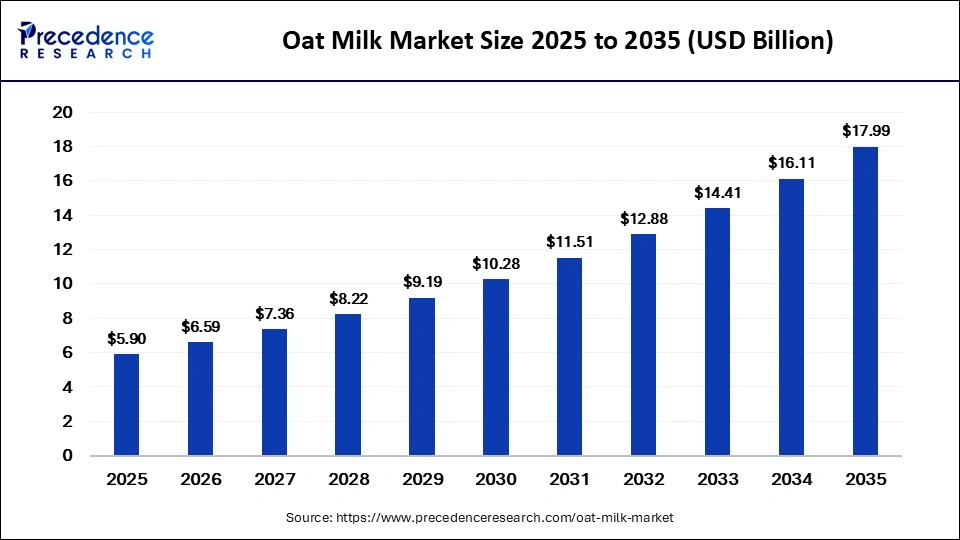
The global oat milk market size accounted for USD 5.90 billion in 2025 and is predicted to increase from USD 6.59 billion in 2026 to approximately USD 17.99 billion by 2035, expanding at a CAGR of 11.80% from 2026 to 2035. The market is significantly expanding due to the increasing production of dairy-free products, rising health awareness, eco-friendly approach, and adoption of vegan beverages, and high rates of lactose-intolerant population on a global scale.
Key Takeaways
- North America held the largest oat milk market share of 36% in 2025.
- Asia-Pacific is expected to grow at the fastest CAGR of 16.5% during the foreseeable period.
- By product type, the plain oat milk segment held the largest market share of 34% in 2025.
- By product type, the flavored oat milk segment held the second-largest market share of 20% in 2025 and is expected to grow at a CAGR of 13.5% during the foreseeable period.
- By formulation, the unsweetened segment held the largest market share of 58% in 2025.
- By formulation, the sweetened segment held the second-largest oat milk market share of 42% in 2025 and is expected to grow at a CAGR of 8.5% between 2026 and 2035.
- By packaging type, the cartons segment held the largest market share of 68% in 2025.
- By packaging type, the bottles segment held the second-largest market share of 24% in 2025 and is expected to grow at the fastest CAGR of 14% during the forecast period.
- By distribution channel, the supermarkets and hypermarkets segment held the largest market share of 42% in 2025.
- By distribution channel, the online retail segment held the second-largest market share of 18% in 2025 and is expected to grow at the highest CAGR of 18.5% during the foreseeable period.
- By end-use, the household consumption segment held the largest market share of 48% in 2025.
- By end-use, the cafes & coffee chains segment held the second-largest market share of 22% in 2025 and is expected to grow at a CAGR of 15.8% during the foreseeable period.
Market Overview
The oat milk market has emerged as one of the most dynamic segments within the global plant-based beverage industry. As consumers become increasingly health-conscious and environmentally aware, oat milk is gaining popularity as a dairy alternative that offers a balanced combination of nutrition, taste, and sustainability.
Produced from oats and water, oat milk is widely appreciated for its creamy texture, neutral flavor profile, and versatility in beverages, cooking, and food applications. It has become particularly popular among consumers seeking lactose-free, vegan, and allergen-friendly alternatives to conventional dairy products.
The market is benefiting from growing interest in plant-based diets, increasing concerns about animal welfare, and rising awareness of the environmental impact associated with traditional dairy farming. Retailers, foodservice operators, coffee chains, and beverage manufacturers are expanding their oat milk offerings to meet changing consumer preferences.
In addition to its use in household consumption, oat milk is increasingly being incorporated into ready-to-drink beverages, coffee formulations, desserts, bakery products, and nutritional food applications. Continuous product innovation and expanding distribution channels are further supporting market growth across developed and emerging economies.
AI Impact on the Oat Milk Market
Artificial intelligence is transforming the oat milk industry by improving efficiency across production, supply chain management, product development, and consumer engagement.
Food and beverage manufacturers are utilizing AI-powered analytics to better understand consumer preferences, identify emerging flavor trends, and optimize product formulations. By analyzing purchasing patterns and market demand, companies can develop innovative oat milk products that align with evolving consumer expectations.
AI is also enhancing agricultural operations by helping oat farmers improve crop yields, monitor soil health, predict weather patterns, and optimize resource utilization. These technologies support sustainable farming practices while ensuring a consistent supply of high-quality raw materials.
In manufacturing facilities, AI-driven automation improves production efficiency, quality control, and inventory management. Intelligent systems can detect production anomalies, reduce waste, and optimize energy consumption, contributing to cost savings and sustainability goals.
Additionally, AI-powered demand forecasting enables companies to manage supply chains more effectively, reducing inventory shortages and improving product availability across retail and foodservice channels.
Market Scope
| Report Coverage | Details |
| Market Size in 2025 | USD 5.90 Billion |
| Market Size in 2026 | USD 6.59 Billion |
| Market Size by 2035 | USD 17.99 Billion |
| Market Growth Rate from 2026 to 2035 | CAGR of 11.80% |
| Dominating Region | North America |
| Fastest Growing Region | Asia Pacific |
| Base Year | 2025 |
| Forecast Period | 2026 to 2035 |
| Segments Covered | Product Type, Formulation, Packaging Type, Distribution Channel, End-use, and Region |
| Regions Covered | North America, Europe, Asia-Pacific, Latin America, and Middle East & Africa |
Growth Factors Driving the Oat Milk Market
Growing Consumer Preference for Plant-Based Diets
Consumers are increasingly adopting plant-based lifestyles due to health, ethical, and environmental considerations. Oat milk has become a preferred choice among individuals seeking dairy-free alternatives without compromising taste or functionality.
Rising Focus on Sustainability
Environmental sustainability is a major factor driving demand for oat milk. Compared to traditional dairy production, oat cultivation generally requires fewer natural resources and generates a lower environmental footprint, making it attractive to environmentally conscious consumers.
Expanding Coffee Culture and Foodservice Adoption
The growing popularity of specialty coffee beverages has significantly contributed to oat milk demand. Its creamy consistency and ability to blend well with coffee make it a preferred option for baristas and coffee enthusiasts worldwide.
Product Innovation and Premiumization
Manufacturers continue introducing fortified, flavored, organic, gluten-free, and functional oat milk products to attract a broader consumer base. Continuous innovation is helping brands differentiate themselves in an increasingly competitive marketplace.
Increasing Availability Across Distribution Channels
The expansion of supermarkets, online retail platforms, convenience stores, and foodservice outlets has improved product accessibility and consumer awareness, supporting market expansion.
Growing Health and Wellness Awareness
Consumers are paying closer attention to nutrition and wellness. Oat milk is often perceived as a healthier alternative due to its plant-based origin and compatibility with various dietary preferences.
Emerging Trends in the Oat Milk Market
One of the most significant trends shaping the industry is the growing emphasis on regenerative agriculture and sustainable sourcing. Manufacturers are increasingly partnering with farmers who implement environmentally responsible cultivation practices that improve soil health and biodiversity.
Another major trend is the rise of clean-label products. Consumers are actively seeking beverages made with simple, recognizable ingredients and minimal processing. This has encouraged companies to develop oat milk products with transparent ingredient lists and natural formulations.
The market is also witnessing increased demand for fortified oat milk products enriched with vitamins, minerals, and functional ingredients that support overall health and wellness. Functional beverages designed to address specific nutritional needs are becoming increasingly popular among health-conscious consumers.
Furthermore, brands are investing heavily in sustainable packaging solutions, including recyclable, renewable, and low-carbon packaging materials that align with broader environmental goals.
Regional Insights
North America continues to experience strong demand for oat milk due to growing consumer awareness of plant-based nutrition and sustainability. The region’s mature retail infrastructure, expanding vegan population, and strong presence of innovative food and beverage companies support ongoing market development. Coffee chains and foodservice operators are playing a significant role in increasing oat milk adoption among mainstream consumers.
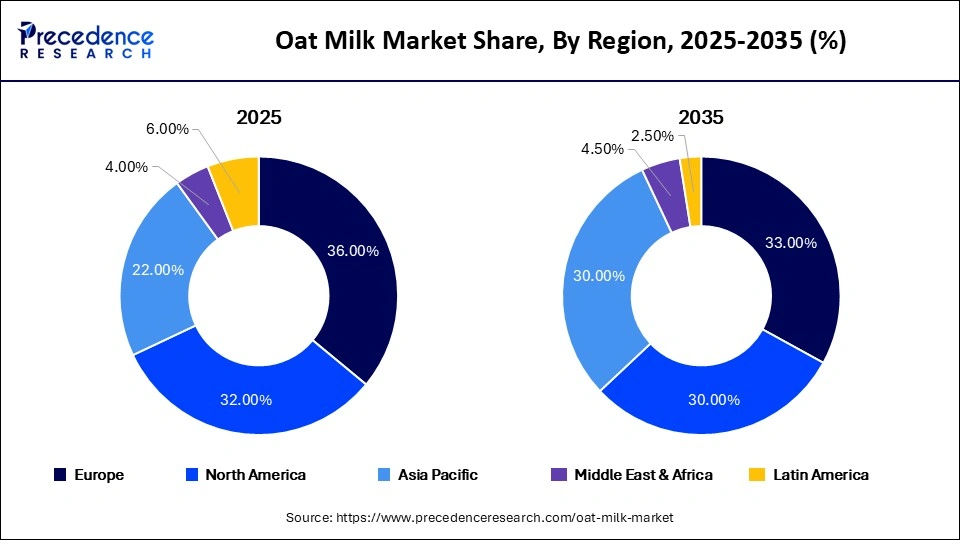
Europe remains a leading hub for plant-based food innovation and sustainable agriculture. Consumers across the region increasingly prioritize environmentally responsible products, driving demand for oat milk and other dairy alternatives. Supportive sustainability initiatives and strong consumer interest in ethical food choices continue to encourage market expansion.
Asia-Pacific is emerging as one of the most promising regions for oat milk adoption. Rapid urbanization, changing dietary habits, growing disposable incomes, and increasing awareness of lactose intolerance are contributing to rising demand for plant-based beverages. Expanding retail networks and growing investments in alternative protein products are further supporting regional growth.
The oat milk market in Latin America is gaining momentum as consumers become more health-conscious and open to plant-based nutrition. Growing awareness of sustainability, expanding retail availability, and increasing product innovation are creating new opportunities for market participants across the region.
The Middle East and Africa are witnessing gradual growth in demand for plant-based beverages. Increasing urbanization, changing consumer lifestyles, and rising interest in health and wellness are contributing to market development. The growing presence of international food and beverage brands is also helping increase consumer awareness and product accessibility.
Conclusion
The oat milk market is rapidly evolving as consumers seek healthier, more sustainable, and ethically produced food and beverage options. Driven by changing dietary preferences, environmental awareness, product innovation, and expanding distribution channels, oat milk has become one of the most successful categories within the plant-based beverage industry.
Artificial intelligence is further accelerating industry transformation by optimizing farming practices, improving manufacturing efficiency, enhancing product development, and strengthening supply chain management. As sustainability and wellness continue to shape consumer purchasing decisions, the oat milk market is expected to play an increasingly important role in the future of global food systems.
Companies that focus on innovation, sustainable sourcing, clean-label products, and consumer-centric strategies will be well-positioned to capitalize on the growing demand for plant-based dairy alternatives worldwide.
Get Sample Link : https://www.precedenceresearch.com/sample/8437
Recent Developments
- In November 2025, Oatly unveiled the new product called Baristamatic oat milk, which is specially designed for automated coffee machines in the UK. The milk alternative was presented to optimize coffee machine performance by minimizing the possibility of sedimentation in milk containers.
- In October 2025, Minor Figures, a well-known plant-based milk brand, introduced a new product called barista-standard oat milk that is gluten-free, fortified with vitamins and minerals.
Segments Covered in the Report
By Product Type
- Plain Oat Milk
- Flavoured Oat Milk
- Chocolate
- Vanilla
- Coffee
- Others
- Organic Oat Milk
- Fortified Oat Milk
- Barista Oat Milk
By Formulation
- Sweetened
- Unsweetened
By Packaging Type
- Cartons
- Bottles
- Cans
By Distribution Channel
- Supermarkets & Hypermarkets
- Convenience Stores
- Specialty Stores
- Online Retail
- Foodservice Channels
By End-Use
- Household Consumption
- Cafés & Coffee Chains
- Bakery & Confectionery
- Smoothies & Beverage
- Food Processing Industry
By Region
- North America
- Latin America
- Europe
- Asia-pacific
- Middle and East Africa
Also Read Our Latest Article : Open Banking Systems Market

- Farm Management Software Market: Digital Agriculture Driving Smarter and More Sustainable Farming - July 9, 2026
- AI in CGT Manufacturing Market: Artificial Intelligence Accelerating the Future of Cell and Gene Therapy Production - July 9, 2026
- 3T MRI System Market: Advanced Imaging Technology Transforming Modern Diagnostics - July 9, 2026