
Rising Demand for Personal Care Products to Propel Market at a Robust CAGR Through 2034
The global cosmetic chemicals market is witnessing strong momentum, driven by evolving consumer preferences, premium beauty trends, and increasing demand for personal care products worldwide. According to Precedence Research, the market is projected to grow significantly over the forecast period, fueled by rapid urbanization, rising disposable incomes, and innovation in sustainable and multifunctional ingredients.
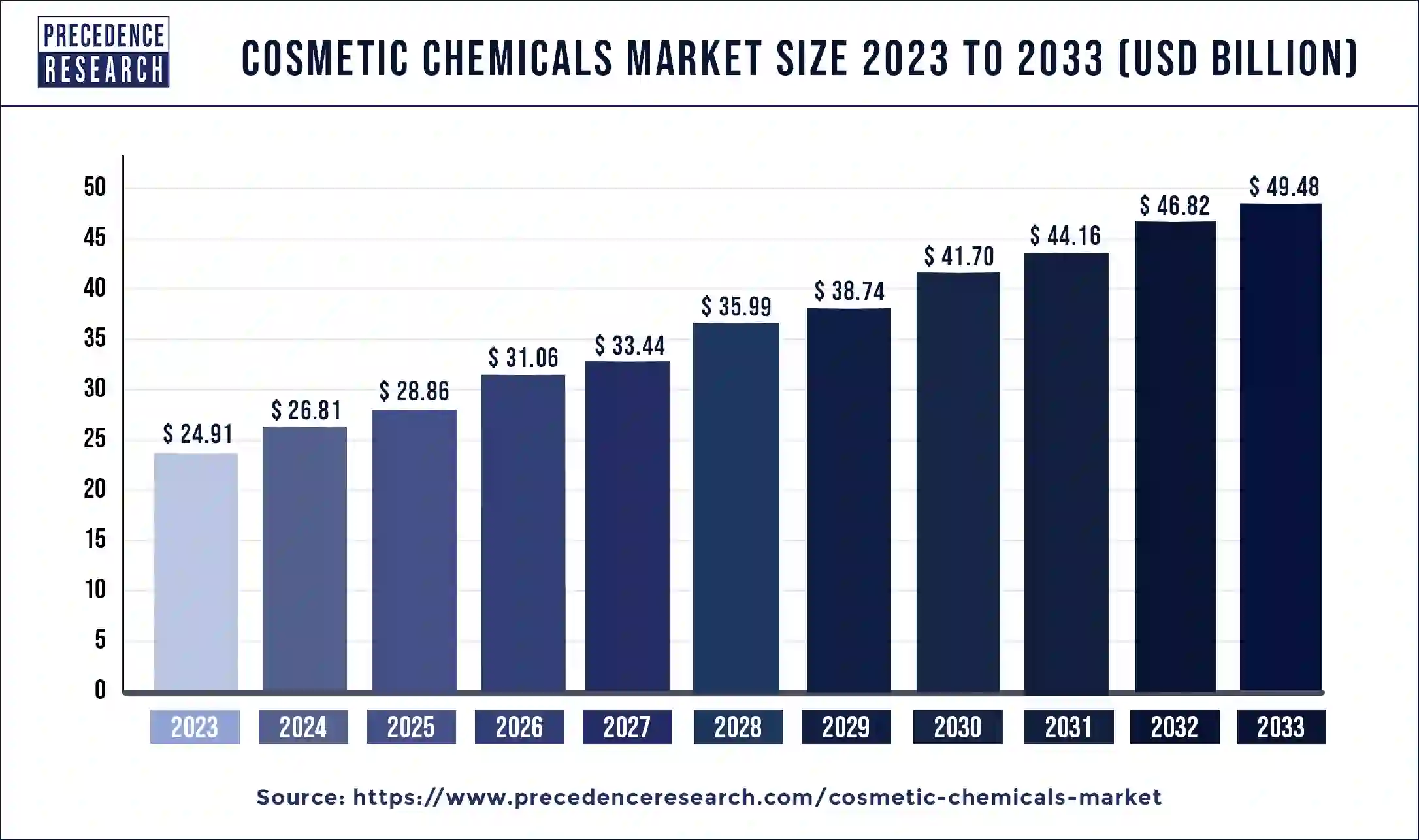
The market is expected to expand at a notable CAGR, supported by growing awareness around skincare, haircare, and organic formulations. The increasing inclination toward clean-label cosmetics and technologically advanced formulations is reshaping the competitive landscape and opening new avenues for manufacturers.
Quick Insights: What’s Driving the Cosmetic Chemicals Market?
The cosmetic chemicals market was valued at approximately USD 24.5 billion in 2024 and is projected to surpass USD 40 billion by 2034, growing at a CAGR of around 5%.
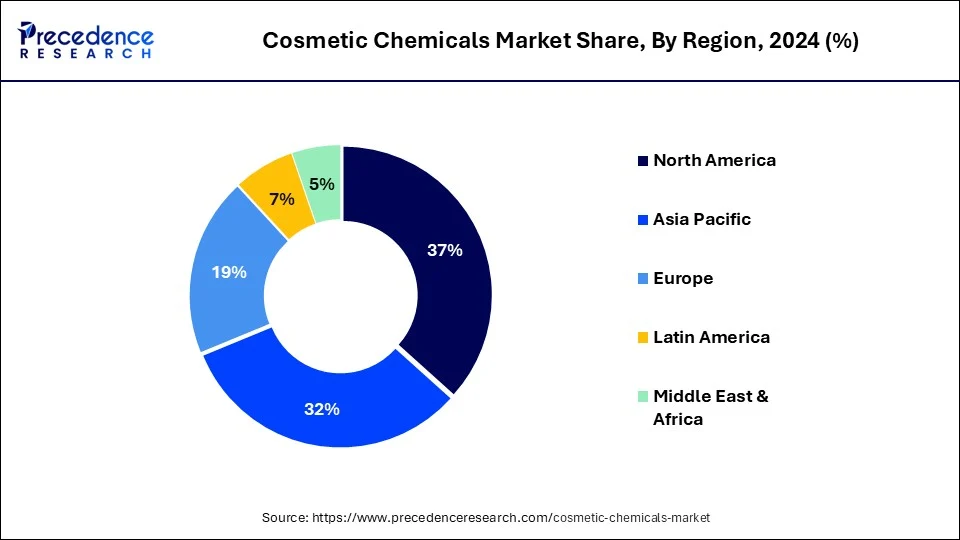
Asia Pacific dominates the global market due to strong manufacturing capabilities and high consumer demand in countries like China and India.
Surfactants emerged as the leading product segment, owing to their widespread use in skincare and haircare products.
Major players in the market include BASF SE, Dow Inc., Evonik Industries, Ashland Global Holdings, and Solvay.
The skincare application segment holds the largest share, driven by increasing demand for anti-aging and sun protection products.
How Is Artificial Intelligence Transforming the Cosmetic Chemicals Market?
Artificial Intelligence (AI) is playing an increasingly pivotal role in reshaping the cosmetic chemicals industry. Companies are leveraging AI-driven analytics to predict consumer preferences, enabling faster development of personalized beauty products. AI tools are also streamlining ingredient discovery, reducing research timelines, and improving formulation efficiency.
Additionally, AI-powered virtual testing and simulation technologies are minimizing the need for animal testing, aligning with global ethical standards. This not only accelerates product approvals but also enhances brand credibility among environmentally conscious consumers.
What Are the Key Growth Factors Fueling Market Expansion?
The growth of the cosmetic chemicals market is largely driven by the rising global demand for personal care and beauty products. Increasing awareness about skincare routines, especially among younger consumers, is boosting the consumption of cosmetic formulations.
Furthermore, the surge in demand for natural and organic ingredients is encouraging manufacturers to innovate with plant-based and sustainable chemicals. The expansion of e-commerce platforms has also significantly contributed to market growth by improving product accessibility and consumer reach.
Cosmetic Chemicals Market Report Scope
| Report Coverage | Details |
| Market Size in 2025 | USD 26.81 Billion |
| Market Size in 2026 | USD 28.86 Billion |
| Market Size by 2035 | USD 52.14 Billion |
| Growth Rate from 2025 to 2034 | CAGR of 6.88% |
| Dominating Region | North America |
| Fastest Growing Region | Asia Pacific |
| Base Year | 2025 |
| Forecast Period | 2026 to 2035 |
| Segments Covered | Product Type, Application, Geography |
| Regions Covered | North America, Europe, Asia-Pacific, Latin America, and Middle East & Africa |
What Opportunities and Trends Are Shaping the Future of This Market?
Is the Shift Toward Natural Ingredients Creating New Growth Opportunities?
Yes, the growing consumer preference for clean beauty and organic products is opening significant opportunities for manufacturers. Companies are investing in bio-based cosmetic chemicals to cater to environmentally conscious consumers.
Are Emerging Markets Driving Industry Expansion?
Absolutely. Rapid urbanization and rising disposable incomes in emerging economies are boosting demand for premium personal care products, thereby accelerating market growth.
How Are Multifunctional Ingredients Changing Product Development?
Manufacturers are increasingly focusing on multifunctional cosmetic chemicals that offer multiple benefits, such as hydration, UV protection, and anti-aging, in a single formulation. This trend is improving product efficiency and reducing formulation complexity.
Regional Analysis: Where Is the Market Growing the Fastest?
Asia Pacific leads the global cosmetic chemicals market, driven by strong manufacturing infrastructure and increasing consumer spending on personal care products. Countries like China, India, and South Korea are at the forefront of innovation and consumption.
North America holds a significant share due to high demand for premium and organic cosmetic products, along with strong R&D investments. Europe follows closely, supported by stringent regulations promoting safe and sustainable ingredients.
Meanwhile, Latin America and the Middle East & Africa are emerging as promising markets due to growing urban populations and increasing awareness of personal grooming.
Segmental Insights: Which Segments Are Dominating?
By product type, surfactants dominate the market due to their essential role in cleansing and foaming applications. Emollients and conditioning polymers are also witnessing strong demand.
In terms of application, skincare leads the segment, driven by rising demand for anti-aging and sun protection products. Haircare and color cosmetics are also contributing significantly to overall market growth.
What Are the Latest Developments by Key Market Players?
Leading companies such as BASF SE, Dow Inc., Evonik Industries, Solvay, Clariant AG, and Ashland are actively investing in sustainable product lines and expanding their global footprint.
Recent innovations include the development of biodegradable surfactants, plant-based emollients, and high-performance active ingredients designed for sensitive skin. Strategic partnerships and acquisitions are also shaping the competitive landscape.
What Challenges Are Impacting Market Growth?
Despite strong growth prospects, the cosmetic chemicals market faces challenges such as fluctuating raw material prices and stringent regulatory frameworks. Compliance with environmental and safety standards increases production costs and may limit market entry for smaller players.
Additionally, the shift toward natural ingredients poses formulation challenges, as maintaining product stability and performance remains a key concern.
Segment Insights
Product Type Insights
In 2025, emollients and moisturizers dominated the cosmetic chemicals market, largely due to increasing consumer focus on skin hydration and anti-aging benefits. A notable example came in February 2025, when Olay introduced its Super Cream with SPF 30 in a premium glass jar, offering multiple benefits like hydration, firming, brightening, and sun protection.
On the other hand, the preservatives segment is expected to grow at the fastest pace between 2026 and 2035. This growth reflects rising demand for longer shelf life and product safety, even as clean beauty trends evolve. For instance, in May 2023, TARAMAR, an Iceland-based brand, launched a range of natural, preservative-free skincare products made from organic, handpicked ingredients.
From 2022 to 2024, emollients and moisturizers consistently led the market in value, followed closely by surfactants. Other segments like film-formers, pigments, and emulsifiers also showed steady growth.
Application Insights
The skincare segment saw strong growth in 2025, driven by rising awareness of skin health and wellness. In April 2025, Croda Beauty Actives introduced Zenakine, a biotech-based ingredient designed to improve both skin quality and overall well-being.
Meanwhile, the haircare segment is expected to gain significant momentum from 2026 to 2035. Supporting this trend, Suave Brands Company launched 34 new products across hair, body, and men’s care in March 2025.
Between 2022 and 2024, skincare remained the largest application segment, followed by haircare, makeup, oral care, and fragrances—all of which showed consistent growth.
Regional Insights
North America (U.S.)
North America, particularly the United States, is expected to remain the largest market. The U.S. cosmetic chemicals market was valued at USD 7.83 billion in 2025 and is projected to reach approximately USD 15.57 billion by 2035, growing at a CAGR of 7.12%.
This growth is fueled by strong consumer demand, rapid innovation, and the integration of biotechnology and pharmaceutical ingredients into beauty products. Consumers are increasingly favoring organic, vegan, and dermatologically tested formulations. Additionally, the rise of indie beauty brands and e-commerce platforms continues to strengthen the market.
Asia-Pacific
Asia-Pacific is expected to grow at the fastest rate during the forecast period. Countries like China and India are driving demand due to rising disposable incomes and increasing interest in skincare.
China, in particular, stands out due to its large consumer base and fast-changing beauty trends, especially in areas like anti-aging, whitening, and anti-pollution skincare. The region also benefits from digital beauty platforms and expanding domestic brands.
Europe
Europe is projected to grow steadily at a CAGR of 5.28% from 2026 to 2035. Growth is supported by strong consumer demand for sustainable, natural, and transparent ingredients.
Countries like Germany lead the region due to advanced chemical manufacturing and strong R&D capabilities. Consumers increasingly prefer eco-friendly, dermatologically tested, and high-quality formulations, which encourages innovation in green chemistry.
Latin America
Latin America is emerging as a fast-growing market, driven by increasing beauty awareness and demand for affordable personal care products. Urbanization and growing interest in skincare and haircare are boosting the use of cosmetic chemicals.
Brazil leads the region, supported by a strong beauty culture and high demand for products like sunscreens, conditioners, and skin treatments.
Middle East & Africa
This region is witnessing notable growth due to rising disposable incomes and increasing influence of global beauty trends. There is strong demand for products suited to harsh climates, such as moisturizers and sun protection solutions.
The UAE is a key growth market, driven by demand for premium, halal, and high-performance beauty products, along with its role as a regional beauty hub.
Value Chain Analysis
Raw Material Sourcing:
Companies focus on sourcing high-quality, safe ingredients such as oils, pigments, and active compounds. Key players include BASF, Evonik, and Lonza.
Manufacturing:
Ingredients are carefully formulated under controlled conditions to ensure safety and effectiveness. Major companies involved include Croda, Ashland, and Clariant.
Distribution:
Finished products are packaged and delivered to retailers or directly to consumers. Key players include Brenntag, Unilever, and Univar Solutions.
Cosmetic Chemicals Market Companies
- SOLVAY SA
- Croda International PLC
- Evonik Industries AG
- Stepan Company
- Symrise
- Ashland Inc
- Dow
- Givaudan
- Eastman Chemical Company
- Lonza Group
- Lanxess
- The Dow Chemical Company
- BASF SE
- P&G Chemicals
- Bayer AG.
- Cargill Incorporated
Segments Covered in the Report
By Product type
- Surfactants
- Emollients & Moisturizers
- Film-Formers
- Colorants & Pigments
- Preservatives
- Emulsifying & Thickening Agents
- Single-Use Additives
- Others
By Application
- Skin Care
- Hair Care
- Makeup
- Oral Care
- Fragrances
- Others
By Region
- North America
- Europe
- Asia-Pacific
- Latin America
- Middle East & Africa
Get Sample Link: https://www.precedenceresearch.com/sample/2490
Also Read :https://www.businesswebwire.com/dental-services-organization-market/

- Corporate Wellness Market Surges Toward USD 500.09 Billion by 2035 - April 22, 2026
- Portable Medical Devices Market Surges Toward USD 221.71 Billion by 2035 - April 22, 2026
- Infant Incubator Market Set to Surpass USD 3.27 Billion by 2035 - April 22, 2026