
Active Pharmaceutical Ingredient Market Surges Toward Robust Expansion Amid Rising Drug Demand and Innovation
The global Active Pharmaceutical Ingredient (API) market is poised for significant growth over the coming years, driven by the increasing demand for generic drugs, rising prevalence of chronic diseases, and the rapid expansion of pharmaceutical manufacturing capabilities worldwide. According to Precedence Research, the market is projected to grow at a notable CAGR over the forecast period, supported by technological advancements in drug synthesis and increasing outsourcing trends among pharmaceutical companies.
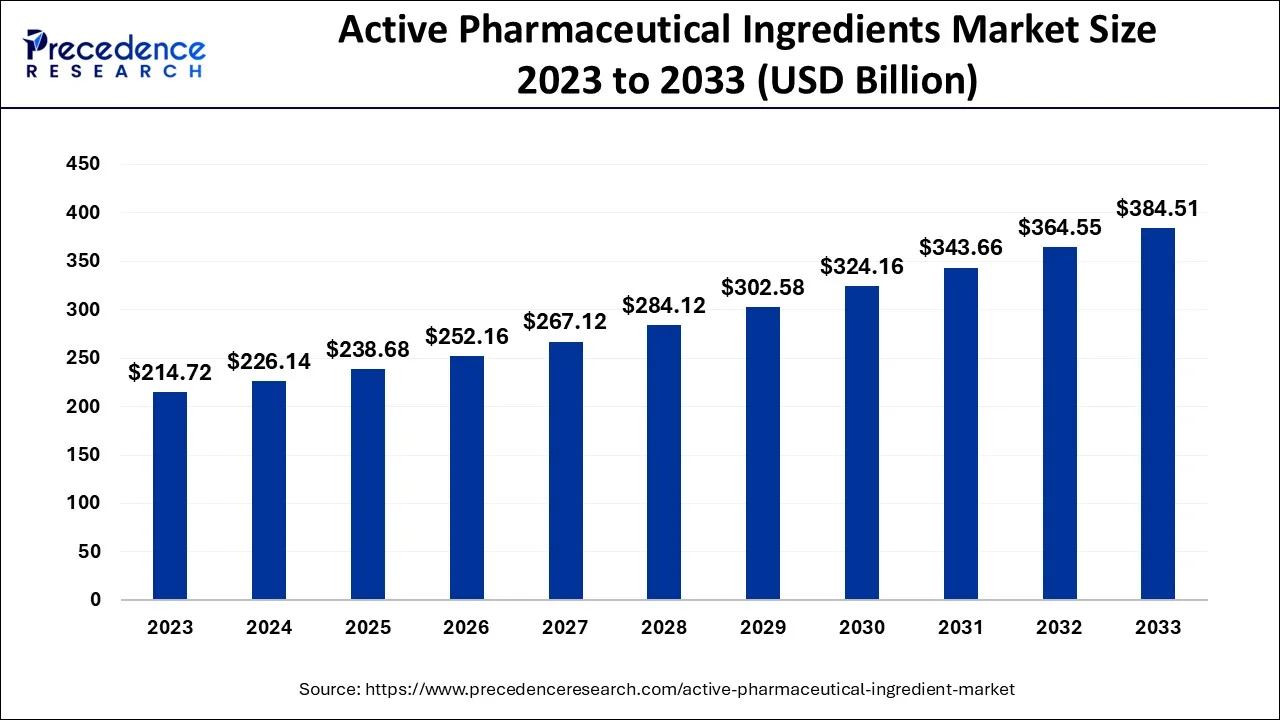
The surge in demand for high-quality and cost-effective medicines, combined with strong regulatory support and investments in research and development, is shaping a dynamic and competitive landscape for API manufacturers globally.
Quick Insights: Market at a Glance
The global API market was valued at over USD 200 billion in 2024 and is projected to surpass USD 350 billion by 2034, growing at a steady CAGR.
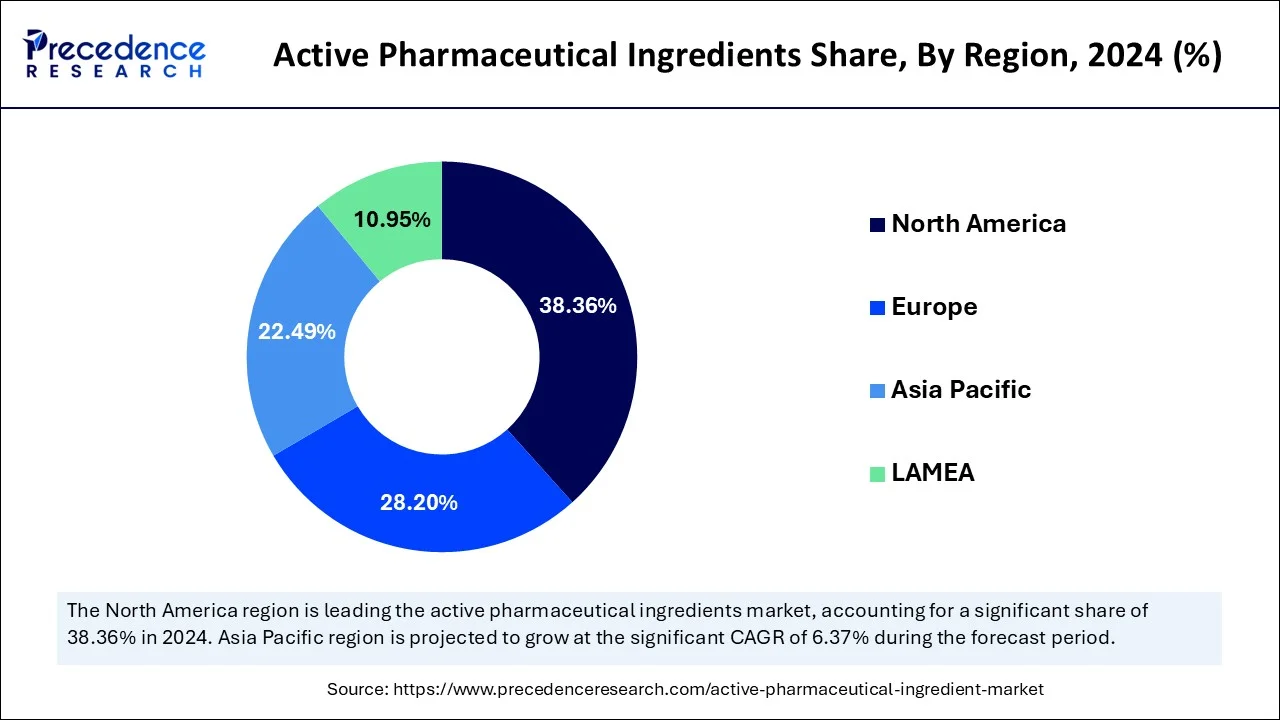
North America dominated the market, driven by strong pharmaceutical R&D infrastructure and high drug consumption.
Asia Pacific is the fastest-growing region, fueled by cost-efficient manufacturing hubs like India and China.
Synthetic APIs accounted for the largest market share, owing to scalability and cost advantages.
Leading players include Pfizer Inc., Novartis AG, Teva Pharmaceutical Industries Ltd., Merck & Co., Inc., and Sanofi.
How is AI Transforming the Active Pharmaceutical Ingredient Market?
Artificial Intelligence (AI) is playing an increasingly pivotal role in revolutionizing API development and manufacturing processes. AI-powered tools are enabling faster drug discovery by predicting molecular behavior, optimizing chemical synthesis pathways, and reducing the time required for clinical development. This significantly lowers costs and enhances efficiency across the pharmaceutical value chain.
Additionally, AI is streamlining manufacturing operations by enabling predictive maintenance, real-time quality monitoring, and process optimization. These advancements are particularly beneficial for large-scale API production, where precision and compliance are critical. As a result, companies adopting AI-driven solutions are gaining a competitive edge through improved productivity and reduced operational risks.
Active Pharmaceutical Ingredient Market Scope
| Report Coverage | Details |
| Market Size in 2025 | USD 238.68 Billion |
| Market Size in 2026 | USD 252.16 Billion |
| Market Size by 2036 | USD 425.26 Billion |
| Growth Rate from 2026 to 2035 | CAGR of 5.95% |
| Dominant Region | North America |
| Fastest Growing Region | Asia Pacific |
| Base Year | 2025 |
| Forecast Period | 2026 to 2035 |
| Segments Covered | Type of Synthesis, Type of Manufacturer, Application, Type and Region |
| Regions Covered | North America, Europe, Asia-Pacific, Latin America, and Middle East & Africa |
What are the Key Growth Drivers of the API Market?
The growth of the API market is primarily driven by the increasing burden of chronic diseases such as cardiovascular conditions, cancer, and diabetes. This has led to a surge in demand for both branded and generic drugs, directly impacting API production volumes.
Another major factor is the rising trend of outsourcing API manufacturing to contract development and manufacturing organizations (CDMOs). Pharmaceutical companies are increasingly focusing on core competencies like drug discovery and marketing, while outsourcing complex manufacturing processes to specialized firms.
Furthermore, patent expirations of blockbuster drugs are encouraging the production of generic alternatives, significantly boosting API demand globally. The expansion of biopharmaceuticals and personalized medicine is also contributing to market growth.
What Opportunities and Trends are Shaping the Market?
Is Outsourcing API Manufacturing Becoming the New Norm?
Yes, outsourcing has become a dominant trend in the API market. Companies are leveraging cost advantages and technical expertise offered by manufacturers in emerging economies, particularly in Asia Pacific.
Are Biotech APIs Gaining Momentum?
Absolutely. The increasing adoption of biologics and biosimilars is driving demand for biotech APIs. These APIs are more complex but offer targeted therapeutic benefits, making them highly valuable in modern medicine.
Is Sustainability Influencing API Production?
Yes, green chemistry and sustainable manufacturing practices are gaining traction. Companies are focusing on reducing waste, energy consumption, and environmental impact while maintaining regulatory compliance.
Active Pharmaceutical Ingredients (API) Market Insights
Type of Synthesis Insights
Synthetic APIs currently dominate the market and hold the largest share. This is mainly because chemical synthesis is more cost-effective and scalable. These APIs are widely used in treating chronic diseases and are often preferred for outsourcing and contract manufacturing. Their affordability and efficiency make them a major contributor to overall market revenue.
On the other hand, biotech APIs are the fastest-growing segment. Rapid advancements in biotechnology and biopharmaceutical research are driving this growth. Increasing demand for advanced treatments—such as biologics and antibody-drug conjugates—has boosted their adoption. Biotech APIs are especially valuable in treating complex conditions like cancer and autoimmune diseases, attracting significant investment.
Type Insights (Generic vs Innovative APIs)
Generic APIs are experiencing the fastest growth due to the expiration of patents on major drugs and the rising adoption of biosimilars. They offer cost-effective alternatives to branded medications, making them especially important in developing economies where affordability is critical.
Innovative APIs, however, still account for a larger share of revenue due to their use in advanced and patented therapies.
Type of Manufacturer Insights
The captive API segment (in-house production) dominates the market. Pharmaceutical companies prefer manufacturing APIs internally to maintain control over quality, pricing, and supply chains. Advances in chemical synthesis and AI-driven manufacturing are further supporting this trend.
Meanwhile, the merchant API segment (outsourced production) is growing the fastest. Rising outsourcing trends and the expansion of contract manufacturing organizations (CMOs/CDMOs) are driving this growth. Companies increasingly rely on third-party manufacturers for cost efficiency and scalability.
Governments are also supporting domestic API production. For example, India has introduced financial incentives and production-linked schemes to reduce dependency on imports and boost local manufacturing.
Application Insights
The cardiology segment holds the largest share of the API market. This is due to the high global prevalence of cardiovascular diseases (CVDs), which continue to be the leading cause of death worldwide. The demand for medications such as antihypertensives and cholesterol-lowering drugs ensures steady API demand.
In contrast, oncology is the fastest-growing segment. Rising cancer cases and advancements in targeted therapies and biologics are fueling growth. Increased investment in cancer drug development and faster regulatory approvals are further accelerating demand for oncology-related APIs.
Drug Type Insights
Prescription drugs dominate the API market, primarily due to the growing burden of chronic diseases and the need for specialized treatments such as biologics and targeted therapies.
However, the over-the-counter (OTC) segment is expanding rapidly. Growing awareness of preventive healthcare and increasing consumer preference for self-medication, supplements, and nutraceuticals are driving this trend.
Regional Insights
North America leads the global API market, driven by high healthcare spending, strong demand for biologics, and advanced pharmaceutical infrastructure. The United States accounts for the largest share in the region.
Asia-Pacific is the fastest-growing region. Countries like China and India are becoming global API manufacturing hubs due to:
Lower production costs
Availability of raw materials
Expanding contract manufacturing industries
Supportive government policies
India, in particular, is strengthening its position as a major supplier of generic drugs and APIs, supported by policy initiatives and increased domestic production.
Active Pharmaceutical Ingredient (API) Market Companies
- Albemarle Corporation
- AurobindoPharma
- Reddy’s Laboratories Ltd.
- AbbVieInc
- Teva Pharmaceutical Industries Ltd.
- Mylan N.V.
- CiplaInc
- BoehringerIngelheim International GmbH
- Merck & Co., Inc
- Sun Pharmaceutical Industries Ltd
- Bristol-Myers Squibb Company
Segments Covered in the Report
By Type of Synthesis
- Biotech
- Monoclonal Antibodies
- Recombinant Proteins
- Vaccines
- Synthetic
By Type of Manufacturer
- Captive APIs
- Merchant APIs
- Generic APIs
- Innovative APIs
By Type
- Generic APIs
- Innovative APIs
By Application
- Cardiovascular Diseases
- Oncology
- CNS & Neurological Disorders
- Orthopedic Disorders
- Endocrinology
- Pulmonology
- Gastrointestinal Disorders
- Nephrology
- Ophthalmology
- Others
By Regional Outlook
- North America
- U.S.
- Canada
- Europe
- U.K.
- Germany
- France
- Asia Pacific
- China
- India
- Japan
- South Korea
- Middle East & Africa
- Latin America
Get Sample Link:https://www.precedenceresearch.com/sample/1035
Also Read : https://www.businesswebwire.com/veterinary-eye-care-market/

- Corporate Wellness Market Surges Toward USD 500.09 Billion by 2035 - April 22, 2026
- Portable Medical Devices Market Surges Toward USD 221.71 Billion by 2035 - April 22, 2026
- Infant Incubator Market Set to Surpass USD 3.27 Billion by 2035 - April 22, 2026