
Global fitness hubs witness surging consumer demand for holistic wellness, tech-integrated workouts, and hybrid training ecosystems
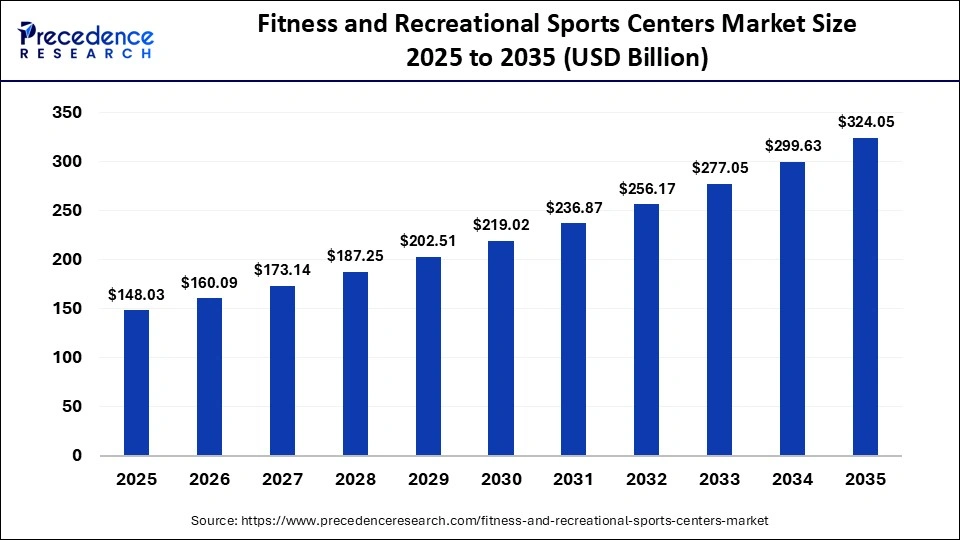
The global Fitness and Recreational Sports Centers Market is poised for robust expansion, projected to climb from USD 148.03 billion in 2025 to USD 324.05 billion by 2035, registering a compelling compound annual growth rate (CAGR) of 8.15% between 2026 and 2035. This growth trajectory is fueled by surging health consciousness, expanding fitness service portfolios, and the integration of cutting-edge digital solutions that elevate customer engagement and improve outcomes.
Fitness and Recreational Sports Centers Market Key Insights
-
The global market value was estimated at USD 148.03 billion in 2025 and is forecast to reach USD 324.05 billion by 2035 at a CAGR of 8.15%.
-
North America led the market in 2025 with roughly 38.4% share and remains a key revenue hub.
-
The Asia Pacific region is anticipated to register the fastest growth over the forecast period.
-
Gymnasiums and health clubs dominated by facility type, holding about 41.2% share in 2025.
-
Among end users, adults (35-54) represented the largest segment, while kids & children emerged as the fastest-growing group.
-
Membership services accounted for over 91% of total revenue, with personal training surging as the fastest growing service type.
-
Younger adults (≤35 years) dominated participation, yet fitness adoption among 55+ age groups is rapidly rising.
Market Size, Forecast (2025–2035)
| Year | Market Size (USD Billion) |
|---|---|
| 2025 | 148.03 |
| 2026 | 160.09 |
| 2035 | 324.05 |
The Role of AI in Transforming Fitness Experiences
Technological innovation remains a catalyst for market evolution. AI-enabled fitness platforms now offer personalized exercise regimens and nutrition plans by analyzing individual body metrics, activity patterns, and lifestyle data. These intelligent systems enhance member engagement by tailoring recommendations based on real-time performance and progress feedback, augmenting the overall effectiveness of health programs.
Wearable sensors synchronized with gym infrastructure also drive predictive insights—alerting trainers and users about fatigue patterns, optimizing workout schedules, and minimizing injury risk. The integration of virtual and hybrid fitness programs has expanded service delivery, enabling gyms to offer flexible, at-home workouts with digital tracking tied back to traditional fitness center subscriptions.
Fitness and Recreational Sports Centers Market Growth Drivers
-
Health and Wellness Awareness: Rising global interest in preventive healthcare and active lifestyles is expanding fitness center penetration.
-
Digital Integration: Wearables and fitness apps increase user retention and measurable performance tracking.
-
Specialized Service Offerings: Boutique studios, yoga, Pilates, and personalized training experiences are driving demand.
-
Hybrid Fitness Models: Combined online/offline workout experiences create flexible participation options.
-
Youth & Senior Engagement: Expanded programs tailor fitness to younger and older age groups.
What Trends Are Shaping the Future of Fitness Centers?
How is consumer behavior influencing market evolution?
Increasing demand for personalized and holistic wellness solutions is prompting centers to adopt advanced technologies, offer hybrid service models, and introduce specialized classes like HIIT, yoga, and Pilates to appeal to diverse demographics.
Is fitness market growth uniform across regions?
North America leads in value and infrastructure, the Asia Pacific region is rapidly expanding due to urbanization, rising disposable incomes, and growing health consciousness, especially in countries like India.
Segmental Insights: Fitness and Recreational Sports Centers Market
Facility Type Insight
Gymnasiums and health clubs led the global market in 2025, driven by rising demand for structured fitness environments, increasing obesity rates, and growing adoption of AI-driven workout plans. Consumers are increasingly seeking high-intensity training, personalized routines, and holistic wellness solutions under expert supervision.
These facilities offer diverse workout programs supported by professional trainers, enabling customized fitness plans based on BMI and individual health goals. This personalization significantly enhances outcomes, strengthening demand across urban and semi-urban regions.
Yoga and Pilates studios are projected to be the fastest-growing facility segment during the forecast period. Demand is fueled by preference for low-impact, result-oriented workouts focused on flexibility, posture, and mental well-being.
These studios are particularly popular among female consumers and wellness-focused individuals seeking holistic health benefits. The integration of digital classes and wearable-based performance tracking further accelerates segment growth.
End User Insight
Adults accounted for approximately 46.3% of the market share in 2025, supported by increasing lifestyle-related health issues such as obesity, diabetes, and cardiovascular conditions. Working professionals are major contributors, seeking fitness routines that combine physical health with stress management.
Rising participation in gyms, training programs, and community fitness initiatives continues to support segment dominance. Demand for low-intensity yet effective workout formats also drives adoption among this group.
The kids and children segment is expected to register the highest CAGR over the forecast period. Growth is driven by rising childhood obesity, increasing parental awareness, and emphasis on early-age fitness.
Gamified fitness programs, youth sports coaching, and indoor recreational activities are gaining traction. A growing focus on proactive wellness and physical development among children further strengthens market expansion.
Service Type Insight
Membership services dominated the market in 2025, accounting for approximately 91.4% share. Growth is supported by increasing enrollment across gyms, boutique fitness studios, yoga centers, Pilates studios, and HIIT facilities.
The rising popularity of hybrid workout models—combining in-person and digital sessions—enhances routine flexibility and member retention across all age groups.
Personal training and instruction services are expected to grow at the fastest pace during the forecast period. These services appeal to individuals with specific health goals, medical conditions, or time-bound fitness objectives.
Customized workout and diet plans, along with tech-enabled performance tracking, make this segment especially attractive to health-conscious consumers seeking efficient and measurable results.
Age Group Insight
Consumers aged 35 and younger held approximately 48.6% market share in 2025. High engagement in structured fitness routines, HIIT programs, and holistic wellness activities drives dominance.
Social media influence, appearance-focused lifestyles, and strong participation from Gen Z and millennials significantly contribute to sustained demand for diverse workout formats.
The aged 55 and older segment is projected to witness the highest CAGR during the forecast period. Growth is driven by an expanding aging population and increasing awareness of fitness for longevity and chronic disease management.
Rising demand for low-impact and mobility-focused programs—such as chair yoga, aqua aerobics, Tai Chi, and swimming—continues to support growth in senior-friendly fitness services.
Fitness and Recreational Sports Centers Market Regional Insights
North America ruled the global landscape in 2025, driven by entrenched fitness culture, strong consumer spending power, and holistic wellness adoption.
Fitness growth in Europe reflects heightened health awareness and established boutique fitness ecosystems in key nations.
Asia Pacific is poised for sharp expansion, propelled by urban population growth, lifestyle changes, and government initiatives encouraging physical activity.
Emerging markets here show rising investments in fitness infrastructure, particularly in urban hubs with expanding middle-class populations.
Leading Players in the Fitness and Recreational Sports Centers Market
Key market players maximizing footprint and consumer reach include (but are not limited to):
-
Planet Fitness, Inc.
-
Life Time Fitness, Inc.
-
Anytime Fitness (Self Esteem Brands)
-
24 Hour Fitness USA, LLC
-
Equinox Holdings, Inc.
-
Gold’s Gym (RSG Group)
-
LA Fitness (Fitness International, LLC)
-
Orangetheory Fitness
-
F45 Training
-
PureGym
-
David Lloyd Leisure
-
Basic-Fit
-
CrossFit, LLC
-
Virgin Active
Case Study: Tech-Driven Gym Engagement
A leading fitness club chain implemented AI-based analytics to personalize member workouts. Within six months, member retention increased by 22% and upsell conversions for personal training grew by 15%. This demonstrates how data insights and customization significantly boost customer loyalty and revenue streams.
Get this report to explore global market size, share, CAGR, and trends, featuring detailed segmental analysis and an insightful competitive landscape overview @ https://www.precedenceresearch.com/sample/7560
You can place an order or ask any questions. Please feel free to contact us at [email protected] |+1 804 441 9344

- ESG Software Market 2025: Comprehensive Company Ecosystem and Revenue Overview - May 20, 2026
- ESG Software Market Surges Toward USD 31.96 Billion by 2035 as AI-Powered Compliance and Sustainability Reporting Transform Global Enterprises - May 20, 2026
- Hematopoietic Stem Cell Transplantation Market Surges Toward USD 24.32 Billion by 2035 as Precision Medicine and AI Reshape Blood Cancer Treatment - May 20, 2026