
Dynamic Expansion Fueled by AI, Distributed Resources, and Smart Grids
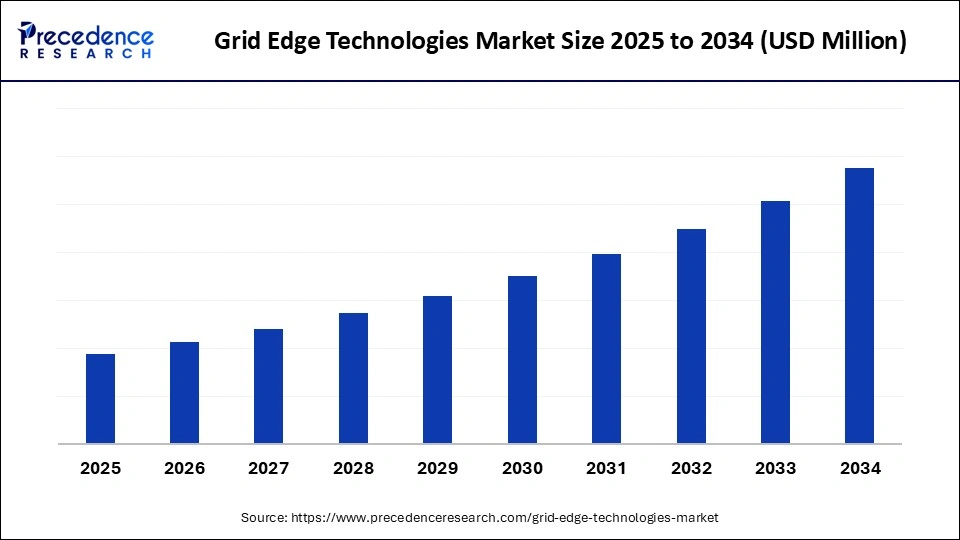
The global grid edge technologies market is set for explosive growth, driven by surging investments in advanced metering, distributed energy resource (DER) management, and cutting-edge grid-edge analytics. According to Precedence Research, the market is anticipated to surge at a robust CAGR from 2025 to 2034, anchored by intensifying electrification and a widespread push toward grid modernization.
Get this report to explore global market size, share, CAGR, and trends, featuring detailed segmental analysis and an insightful competitive landscape overview @ https://www.precedenceresearch.com/sample/7018
Introduction: Powering the Next-Gen Grid
The grid edge technologies market is undergoing a profound transformation. Powered by the rapid deployment of distributed energy resources, smart grid solutions, and sophisticated energy management systems, the industry is witnessing stronger efficiency, reliability, and sustainability than ever. This evolution is creating a future-ready energy infrastructure, championed by partnerships and regulatory support around the globe.
Grid Edge Technologies Market Key Points
-
The global grid edge technologies market is poised for rapid expansion, underpinned by investments in advanced metering infrastructure and DER management.
-
North America leads the market, credited to aggressive grid modernization and early adoption of smart grid initiatives, while Asia Pacific is the fastest-growing region due to electrification and significant infrastructure investments.
-
The hardware segment accounts for a dominant 43% market share in 2024, while software, powered by AI and analytics, is the fastest-growth segment.
-
The behind-the-meter segment commands 50% of the market by enabling real-time management of local energy generation/storage.
-
Key end-users include utilities and distribution system operators (40% share), with commercial and industrial entities emerging rapidly.
-
Battery energy storage solutions hold a 30% share, crucial for peak shaving and renewable integration.
Revenue Breakdowns and Market Leaders
-
Hardware: 43% market share (2024)
-
Behind-the-meter: 50% market share (2024)
-
Utilities & Distribution System Operators: 40% market share (2024)
-
Battery Energy Storage: 30% market share (2024)
-
Leading regions: North America (dominant), Asia Pacific (fastest-growing)
How Is AI Reshaping Grid Edge Technologies?
Artificial intelligence is transforming the grid edge landscape by making energy management predictive, autonomous, and highly responsive. AI-powered analytics and machine learning (ML) are now embedded in grid operations, enabling predictive maintenance, anomaly detection, and automated grid optimization. This powerful data-driven approach equips utilities and commercial operators with the ability to anticipate disruptions, optimize energy flows, and ensure grid reliability in real time.
Furthermore, cloud-based AI platforms are accelerating decision-making for distributed energy resources management. These platforms reduce operational costs and allow for dynamic, adaptable control of grids—a necessity as renewable adoption and grid complexities rise globally.
Grid Edge Technologies Market Growth Factors: What’s Driving the Market?
-
Rising adoption of distributed energy resources requiring real-time analytics and control
-
Massive investments in smart grid technologies and edge computing
-
Pressure to modernize outdated grid infrastructure for higher resilience and lower energy losses
-
Growing integration of renewables and regulatory mandates for cleaner energy
What Opportunities and Trends Define This Market?
Leveraging Edge Computing for Real-Time Control: What’s the Potential?
Edge computing enables localized data processing, drastically improving latency and empowering real-time grid operations. This shift not only heightens grid resilience but also reduces bandwidth and accelerates distributed system responses for improved operational effectiveness.
How Are Blockchain and Peer-to-Peer Energy Models Changing the Industry?
Blockchain technology unlocks transparent, secure, and automated energy transactions. As decentralized energy markets flourish, this innovation enhances trust and propels new prosumer-driven business models, facilitating regional energy communities and peer-to-peer trading schemes.
What’s Driving Regional Expansion?
North America maintains a stronghold through advanced grid modernization programs and regulatory momentum, while Asia-Pacific emerges as a hotbed for grid edge investments, thanks to electrification, smart grid rollouts, and collaborative public-private initiatives.
Grid Edge Technologies Market Regional & Segmentation Analysis
-
By Offering: Hardware (dominant); software is the fastest-growing
-
By Deployment Type: Behind-the-meter leads (50% share), while aggregated/hybrid grows swiftly
-
By End-User: Utilities & distribution (40%); commercial/industrial users are gaining pace
-
By Application: Grid reliability and resilience top applications; energy trading is a notable growth area
-
By Technology: Battery energy storage dominates; AI/ML sees fastest growth
Top Grid Edge Technologies Market Companies
- Siemens: Siemens is a global pioneer in grid edge innovation, delivering digitalized and decentralized energy management systems through its Siemens Xcelerator and Grid Edge Suite. The company enables real-time data analytics, DER (Distributed Energy Resource) orchestration, and AI-based grid automation, helping utilities and businesses transition toward a low-carbon, flexible energy future.
- Schneider Electric: Schneider Electric leads in digital energy management and grid automation, integrating IoT and AI within its EcoStruxure Grid platform. Its solutions focus on real-time grid optimization, prosumer integration, and microgrid management, supporting a smarter, more resilient decentralized energy network.
- ABB: ABB’s Ability™ Energy and Asset Manager platform enables data-driven grid operation, predictive maintenance, and distributed asset optimization. The company’s strength lies in AI-enabled grid edge automation and storage integration, empowering utilities to balance renewable generation with demand-side management.
- Hitachi Energy: Hitachi Energy (formerly ABB Power Grids) provides cutting-edge grid edge control systems, hybrid microgrids, and DER integration technologies. Its Lumada Energy Platform uses AI and advanced analytics to forecast energy loads, stabilize renewable variability, and optimize distributed generation in real time.
- GE Grid Solutions: GE Grid Solutions offers advanced digital substations, distribution automation, and energy orchestration platforms to enhance grid flexibility and reliability. Its GridOS™ software suite combines cloud analytics, predictive grid modeling, and DER management to enable utilities to manage grid edge assets more efficiently.
Other Companies in the Grid Edge Technologies Market
- Landis+Gyr: Specializes in smart metering and energy data management, enabling utilities to optimize grid performance and customer energy efficiency.
- Itron: Offers IoT-enabled smart grid, metering, and demand response solutions, empowering utilities to manage distributed resources and improve grid flexibility.
- Enphase Energy: A pioneer in microinverter and energy management systems, Enphase connects solar, storage, and EV assets at the grid edge for optimized performance.
- SolarEdge Technologies: Provides smart inverters, energy optimizers, and grid-interactive software, supporting distributed renewable integration and grid balancing.
- SMA Solar Technology: Focuses on solar and storage inverters with grid-stabilization capabilities, enabling seamless renewable energy integration.
- Tesla: Integrates grid-scale battery storage (Megapack) and home energy systems (Powerwall, Powerhub) for decentralized grid resilience and virtual power plant (VPP) operations.
- Eaton: Offers smart switchgear, power management, and grid modernization technologies, enhancing energy efficiency and resilience across grid-edge systems.
- Honeywell: Develops AI-driven energy optimization and grid automation platforms, supporting digital twin technologies for predictive grid management.
- Panasonic: Provides distributed energy management and smart energy storage solutions, integrating solar, EV charging, and battery technologies for grid-edge ecosystems.
- Mitsubishi Electric: Delivers advanced grid control systems, power electronics, and renewable integration solutions, driving next-generation smart grid evolution.
Grid Edge Technologies Market Challenges and Cost Pressures
Regulatory uncertainties remain a barrier—complex, region-specific standards, and shifting energy policies can delay deployments and raise compliance costs. Operational risks associated with rapid tech integration and high up-front investment requirements also present notable challenges for utilities and new entrants.
Case Study: Edge Tech in Action
In North America, utilities leveraging smart meters and battery energy storage systems during peak wind/solar production have slashed outage rates and lowered curtailment events, thanks to advanced grid edge analytics, a model rapidly being emulated worldwide.
Read Also: AI in Data Analytics Market
You can place an order or ask any questions. Please feel free to contact us at sales@precedenceresearch.com |+1 804 441 9344