| Report Coverage |
Details |
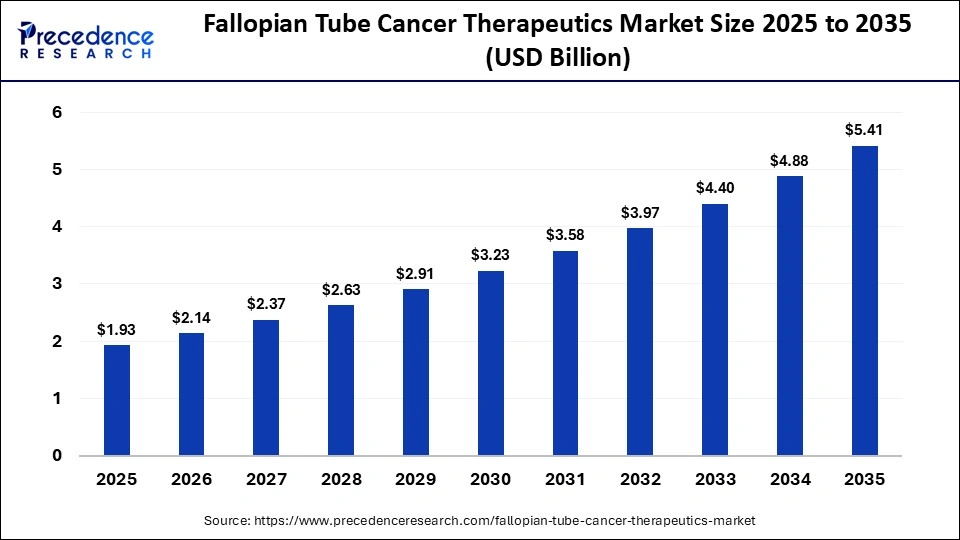
| Market Size in 2025 |
USD 1.93 Billion |
| Market Size in 2026 |
USD 2.14 Billion |
| Market Size by 2035 |
USD 5.41 Billion |
| Market Growth Rate from 2026 to 2035 |
CAGR of 10.86% |
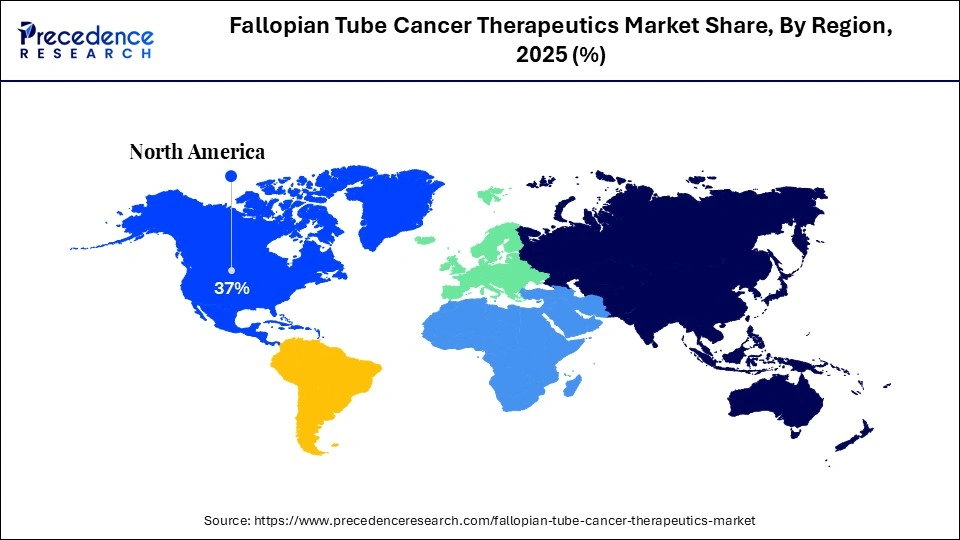
| Dominating Region |
North America |
| Fastest Growing Region |
Asia Pacific |
| Base Year |
2025 |
| Forecast Period |
2026 to 2035 |
| Segments Covered |
Treatment Type, Stage, End-User, and region |
| Regions Covered |
North America, Europe, Asia-Pacific, Latin America, and Middle East & Africa |
Regional Insights
North America leads the fallopian tube cancer therapeutics market due to advanced healthcare infrastructure, strong oncology research, and high adoption of targeted therapies and immunotherapies. The presence of leading pharmaceutical companies and increasing focus on rare cancer research are driving innovation. Additionally, growing awareness, availability of genetic testing, and access to personalized treatment options are supporting market growth in the region.
Europe holds a significant share in the market, supported by well-established healthcare systems and increasing investments in cancer research. Countries such as Germany, the UK, and France are focusing on early diagnosis and advanced treatment approaches, including precision medicine and biologics. Government initiatives and funding for oncology research are further contributing to the growth of the market.
Asia-Pacific is expected to witness the fastest growth, driven by improving healthcare infrastructure, rising awareness of gynecological cancers, and increasing access to advanced treatments. Countries like China, India, and Japan are investing in oncology care and expanding access to diagnostic and therapeutic solutions. The growing patient population and rising healthcare expenditure are key factors driving market expansion.
Latin America is experiencing gradual growth, supported by improving access to healthcare services and increasing awareness of cancer treatment options. The adoption of advanced therapies is growing, particularly in urban centers. However, limited access to specialized oncology care in some regions may restrict market growth.
The Middle East & Africa region is witnessing moderate growth, driven by increasing investments in healthcare infrastructure and rising awareness of cancer diagnosis and treatment. Governments and private organizations are working to improve access to oncology services. However, challenges such as limited availability of advanced therapies and uneven healthcare access may impact growth in certain areas.