
Rising demand for temperature-sensitive goods and AI-driven logistics propels a 12.97% CAGR through 2035
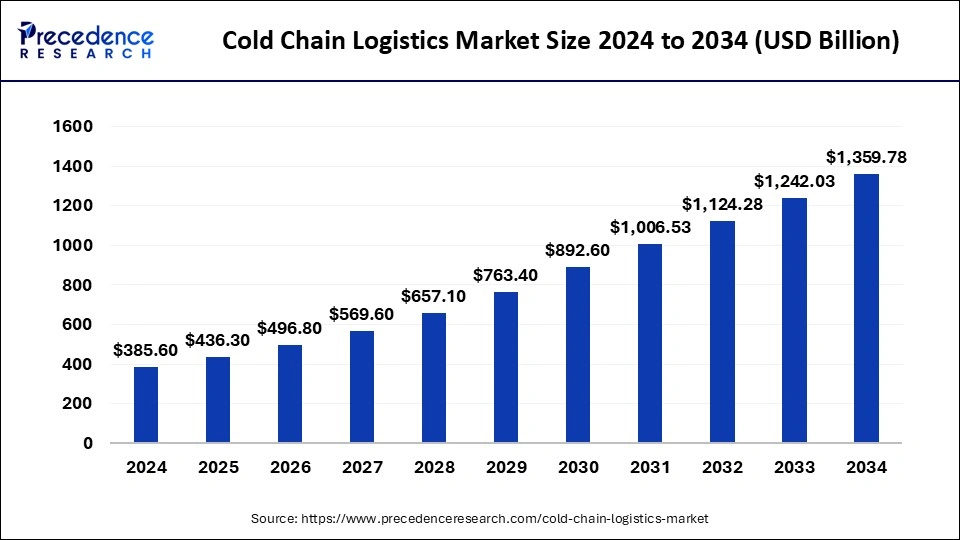
The global cold chain logistics market is entering a transformative decade, fueled by the convergence of food security demands, pharmaceutical innovation, and digital supply chain modernization. According to Precedence Research, the market size was valued at USD 436.30 billion in 2025 and is projected to reach USD 1,477.53 billion by 2035, expanding at a CAGR of 12.97% from 2026 to 2035.
What is Driving the Rapid Expansion of the Cold Chain Logistics Market?
The accelerating need to preserve product integrity across global supply chains is a primary catalyst. From biologics and vaccines to fresh food and e-commerce groceries, temperature-controlled logistics has become mission-critical.
Urbanization, rising disposable incomes, and increased consumption of perishable goods are further strengthening the market. Additionally, the globalization of pharmaceutical distribution—especially biologics and mRNA-based therapies—has intensified demand for ultra-low temperature logistics solutions.
Key Market Highlights in Focus
The cold chain logistics market stood at USD 436.30 billion in 2025 and is forecasted to reach USD 1,477.53 billion by 2035, registering a CAGR of 12.97%.
Asia Pacific is expected to witness the fastest growth, expanding at an estimated 14.3% CAGR during the forecast period.
The dairy and frozen desserts segment dominated applications with a 36.10% revenue share in 2025, reflecting strong consumer demand for frozen and processed foods.
Pre-cooling facilities emerged as a leading process segment, valued at USD 204.4 billion in 2025, due to their role in extending shelf life of perishables.
Refrigerated warehouses accounted for USD 238.29 billion in 2025, highlighting the growing infrastructure backbone of cold chain networks.
How is Artificial Intelligence Transforming Cold Chain Logistics?
Artificial intelligence is rapidly redefining cold chain logistics by enabling predictive monitoring, route optimization, and real-time temperature tracking. AI-powered IoT sensors and cloud-based platforms ensure continuous visibility across supply chains, minimizing spoilage and regulatory risks.
Moreover, machine learning algorithms are being used to forecast demand fluctuations, optimize warehouse operations, and reduce energy consumption. This digital transformation is particularly crucial for pharmaceutical logistics, where even minor temperature deviations can compromise product efficacy.
What Are the Key Growth Factors Accelerating Market Expansion?
The growth trajectory of the cold chain logistics market is underpinned by several structural drivers. The surge in global trade of perishable goods, including dairy, meat, seafood, and fresh produce, has significantly increased reliance on refrigerated transportation and storage.
Simultaneously, the expansion of the pharmaceutical and biotechnology sectors—where over 90% of vaccines and most biologics require temperature control—has created high-value logistics opportunities. Additionally, the rapid rise of e-commerce grocery platforms and last-mile delivery services is reshaping cold chain infrastructure investments worldwide.
Market Scope
| Report Coverage | Details |
| Market Size in 2025 | USD 436.30 Billion |
| Market Size in 2026 | USD 496.80 Billion |
| Market Size by 2035 | USD 1,477.53 Billion |
| Growth Rate from 2026 to 2035 | CAGR of 12.97% |
| Base Year | 2025 |
| Forecast Period | 2026 to 2035 |
| Segments Covered | Type, Temperature Type, Technology, Process, Application, and Region |
| Regions Covered | North America, Europe, Asia-Pacific, Latin America, and Middle East & Africa |
What Opportunities and Trends Are Shaping the Future of the Market?
How is sustainability influencing cold chain logistics?
Companies are investing in electric refrigerated fleets and solar-powered cold storage systems to reduce carbon emissions and operational costs.
Why is pharmaceutical logistics becoming a high-growth segment?
The increasing adoption of biologics, gene therapies, and mRNA vaccines requires ultra-cold storage, driving demand for specialized logistics solutions.
What role does e-commerce play in market expansion?
Online grocery and food delivery platforms are accelerating demand for efficient last-mile cold chain networks and real-time tracking systems.
Cold Chain Logistics Market Insights
By Type
In April 2025, SCGC introduced CHILLOX, an energy-efficient solution designed for cold storage warehouses in the logistics sector. This system helps maintain consistent temperatures and offers backup cooling during emergencies, ensuring that stored goods remain safe and high in quality.
In the refrigerated transport segment, a notable development occurred in January 2025 when SeaCube Containers partnered with Greensee. Their collaboration focuses on launching sustainable solutions powered by AI-driven CO₂ emissions tracking, aiming to make refrigerated transport more environmentally friendly.
In terms of market size, refrigerated warehouses continue to dominate, growing from USD 211.26 billion in 2023 to USD 270.41 billion in 2025. Refrigerated transport is also expanding steadily, reaching USD 165.88 billion in 2025.
By Temperature Type
The frozen segment held a significant share of the market in 2025. This category includes various storage ranges—from room temperature (15°C–25°C) to deep freezing (-20°C). Frozen products, when stored continuously at 0°F or below, can last indefinitely in terms of safety.
Meanwhile, the chilled segment is expected to grow the fastest between 2026 and 2035. Chilled products are typically stored between 0°C and 5°C to maintain freshness and safety throughout their lifecycle.
Technology Trends
Dry ice emerged as the leading technology in cold chain logistics due to its superior cooling capability and ability to sublimate directly into gas without leaving residue. This makes it especially useful for transporting frozen foods, pharmaceuticals, and biological materials.
However, gel packs are expected to grow the fastest in the coming years. Advances in materials and design have made them more durable, reusable, and environmentally friendly.
Refrigerated vehicles accounted for the largest share (38.5%) in 2025. These include insulated vans, reefer containers, and refrigerated trucks, all of which play a crucial role in maintaining product freshness during transit.
Additionally, telematics and IoT solutions are rapidly transforming the industry, growing at a CAGR of 16%. These technologies improve transparency, efficiency, and product safety by enabling real-time monitoring. Tools like data loggers, cloud platforms, and RFID systems are becoming increasingly popular.
Process Insights
Pre-cooling facilities dominated the market in 2025. These facilities help reduce spoilage by slowing microbial growth, lowering respiration rates, and quickly bringing products to optimal storage temperatures.
Gel packs are also gaining traction in logistics processes due to their flexibility and ease of use, especially for transporting pharmaceuticals, seafood, and medical samples.
Application Insights
The dairy and frozen desserts segment led the market in 2025, driven by high demand for frozen foods and perishable goods.
The pharmaceutical segment is expected to grow rapidly, as maintaining strict temperature control is critical for preserving the effectiveness of medicines and vaccines.
By 2025, revenue from pharmaceuticals reached USD 104.2 billion, while dairy and frozen desserts climbed to USD 166.1 billion.
Service Type Insights
Transportation held the largest market share (36.1%) in 2025. It plays a vital role in ensuring temperature control and safe delivery of sensitive goods through various modes like road, rail, air, and sea.
Warehousing and storage are also growing steadily, with a projected CAGR of 15%. These facilities ensure proper storage conditions, backup power, and safe handling of perishable goods.
Temperature Range Insights
The frozen temperature range (-18°C to -25°C) dominated the market with a 41.3% share in 2025, as it is essential for preserving food and pharmaceutical products.
The deep-frozen segment (< -25°C) is expected to grow significantly, driven by the need for stricter temperature control for highly sensitive products.
End-User Industry Insights
Food manufacturers accounted for the largest share (33.8%) in 2025. The growing demand for ready-to-eat and packaged foods has significantly boosted cold chain logistics.
The e-commerce grocery segment is also expanding quickly, with a CAGR of 15.7%. Companies are investing in smaller, localized warehouses to ensure faster and fresher deliveries to consumers.
Regional Insights
The Asia Pacific region led the market in 2025 and is expected to grow the fastest through 2035. The market is projected to increase from USD 192.2 billion in 2025 to USD 724.17 billion by 2035, at a CAGR of 14.18%.
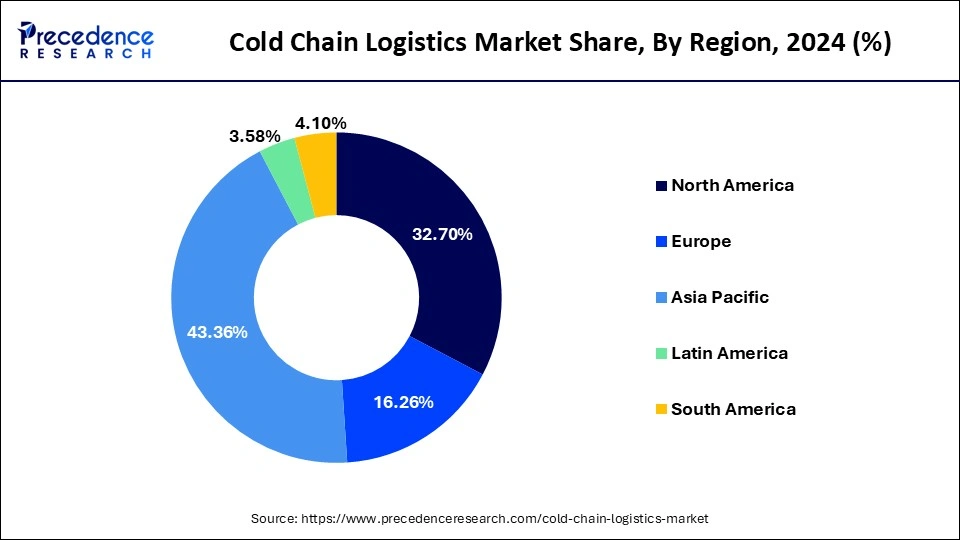
Growth in countries like India, China, Japan, and South Korea is driven by rising demand for processed foods, increasing pharmaceutical production, and strong government investments in infrastructure.
For example, in May 2025, DP World launched a large, sustainable cold storage facility in Navi Mumbai. This warehouse supports multiple temperature zones and is designed to improve logistics efficiency for industries like pharmaceuticals and FMCG.
India’s Cold Chain Development
India is making significant investments in strengthening its cold chain and food processing infrastructure. Around ₹3,100 crores has been allocated to develop 101 projects across the country.
₹838 crores from the government
₹2,262 crores from private investments
Overall, these developments are strengthening India’s position in the global cold chain logistics market.
Cold Chain Logistics Market Companies
- Lineage Logistics Holdings LLC
- Snowman Logistics Ltd.
- AmeriCold Logistics LLC
- Nichirei Corporation
- Preferred Freezer Services Inc.
Segments Covered in The Report
By Service Type
- Transportation
- Road Transportation
- Rail Transportation
- Sea Transportation
- Air Transportation
- Warehousing & Storage
- Refrigerated Warehousing
- Frozen Warehousing
- Chilled Warehousing
- Value-Added Services
- Packaging & Labeling
- Kitting & Assembly
- Order Fulfillment
- Cross Docking
- Monitoring & Telemetry
- Real-Time Temperature Monitoring
- Location Tracking (GPS, RFID)
- Automated Alerts & Reporting
- Installation & Maintenance of Equipment
- Refrigeration Units
- Temperature Sensors
- Warehouse Infrastructure
By Temperature Range
- Chilled (2°C to 8°C)
- Frozen (-18°C to -25°C)
- Deep-Frozen (< -25°C)
- Ambient Controlled (8°C to 15°C or 15°C to 25°C)
By Technology
- Refrigerated Vehicles
- Insulated Vans
- Refrigerated Trucks (Small, Medium, Large)
- Reefer Containers
- Refrigeration Equipment
- Compressors
- Evaporators
- Condensers
- Storage Technologies
- Blast Freezers
- Cold Rooms
- Modular Cold Storage
- Telematics and IoT Solutions
- RFID & Barcode Scanners
- Data Loggers
- Cloud-Based Visibility Platforms
- Automation and Robotics
- ASRS (Automated Storage & Retrieval)
- Automated Guided Vehicles (AGVs)
- Warehouse Management Systems (WMS)
By End User Industry
- Pharmaceutical & Biotechnology Companies
- Food Manufacturers
- Retail Chains & Supermarkets
- E-commerce Grocery Platforms
- Hospitals & Clinics
- Diagnostic Labs
- Chemical Manufacturers
- Government / Defence / NGOs
By Region
- North America
- Europe
- Asia Pacific
- Latin America
- Middle East and Africa
Get Sample Link: https://www.precedenceresearch.com/sample/1873
Also Read : https://www.businesswebwire.com/electric-vehicle-market/