
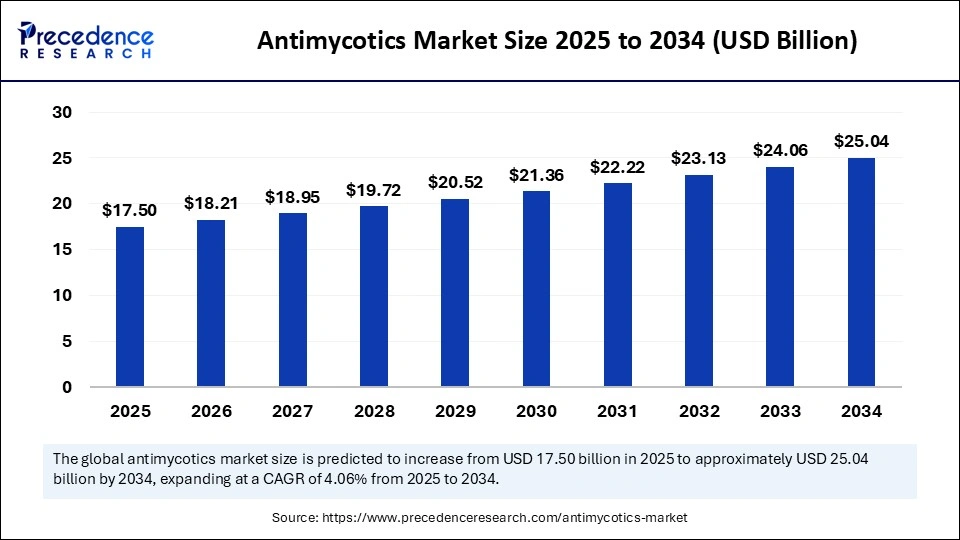
The global antimycotics market size is projected to reach around USD 25.04 billion by 2034, reflecting a steady CAGR of 4.06% from its 2025 baseline value of USD 17.50 billion. This surge is fueled by the mounting prevalence of invasive and superficial fungal infections, rising R&D investments, the launch of advanced antifungal product formats, and technological innovations in diagnostic and treatment pathways.
Introduction: Market Valuation and Drivers
With fungal infections afflicting millions globally, especially immunocompromised and aging populations, the need for fast-acting, safe, and effective antifungal drugs is more urgent than ever. The antimycotics market is witnessing high demand due to increasing hospital-acquired fungal infections, a greater propensity for drug resistance, and an influx of novel therapies, both oral and injectable.
North America maintains leadership with over 43% market share in 2024, while Europe is poised for the fastest CAGR of 4.3% through the forecast window.
Antimycotics Market Key Insights
-
The global market reached USD 17.50 billion in 2025 and will hit USD 25.04 billion by 2034.
-
CAGR from 2025 to 2034 is approximately 4.06%.
-
North America leads, while Europe is the fastest-growing region.
-
Azoles are the top-selling drug class, capturing 40.5% market share.
-
The hospitals segment is the largest end-user, with a 45.5% share.
-
Systemic infections account for the majority (65.5%) of treatment, but superficial infections will grow fastest.
-
Top companies: Pfizer, Merck, Novartis, Bayer, Johnson & Johnson, Gilead, Sanofi, AbbVie, Bristol-Myers Squibb, GSK, Astellas, Eli Lilly, Mylan, Teva.
Antimycotics Market Market Scope
| Report Coverage | Details |
| Market Size in 2025 | USD 17.50 Billion |
| Market Size in 2026 | USD 18.21 Billion |
| Market Size by 2034 | USD 25.04 Billion |
| Market Growth Rate from 2025 to 2034 | CAGR of 4.06% |
| Dominating Region | North America |
| Fastest Growing Region | Asia Pacific |
| Base Year | 2024 |
| Forecast Period | 2025 to 2034 |
| Segments Covered | Drug Class, Infection Type, Indication, Route of Administration, End-User, and Region |
| Regions Covered | North America, Europe, Asia-Pacific, Latin America, and Middle East & Africa |
How Is Artificial Intelligence Shaping the Antimycotics Market?
Rapid advances in AI are redefining both diagnostics and drug development for fungal infections. Hospitals increasingly implement AI-powered molecular diagnostic assays and infection surveillance platforms, enabling faster and more precise detection of fungal pathogens, particularly resistant strains. These tools are crucial for preventing severe outbreaks and tailoring treatments in real time.
Secondly, AI is transforming antifungal R&D through computational drug discovery. Machine learning algorithms now predict new compound efficacy, optimize dosage forms, and analyze resistance patterns. This is accelerating the approval pipeline for next-gen antifungal therapies and supporting clinical departments in deploying targeted combination treatments.
What Are the Growth Factors Fueling Market Expansion?
-
Aging populations and higher rates of immunosuppression globally.
-
Greater incidence of hospital-acquired and chronic fungal infections.
-
Strong pharmaceutical pipeline for both generic and novel antifungals.
-
Adoption of advanced formulation technologies (extended-release, lipid-based).
-
Government-driven campaigns and public health initiatives promoting early diagnosis and treatment.
What Are the Current Trends and Opportunities in the Sector?
Is The Rise of Topical Antifungal Innovations Changing Clinical Practice?
There is a major shift towards introducing topical combinations and extended-release antifungal formulations, directly improving patient compliance and therapeutic efficacy. OTC products, such as Propedix’s Dryello, are providing new convenience in athlete’s foot care, while dermatology clinics increasingly prescribe tailored topical regimens.
How Are Companies Targeting Resistance and Sustainability?
With antifungal resistance looming, biotech firms and multinationals are intensifying R&D for green chemistry and lower toxicity drugs. Strategic partnerships, rapid approvals, and sustainable waste management are innovative solutions ensuring global access and post-infection care, especially in developing regions.
Is Venture Funding Driving New Antifungal Discovery?
Tech-centered biotech startups like F2G and Zero Candida are revitalizing the competitive landscape. They leverage venture backing to pioneer biological therapies and immunomodulators, essential for addresssing invasive or drug-resistant infections not covered by legacy drugs.
Antimycotics Market Regional Insights
-
North America: USD 5.9 billion (2025); dominant due to robust healthcare, R&D, and reimbursement structures. U.S. leads FDA approvals for new therapies targeting invasive Candida auris outbreaks.
-
Europe: Fastest CAGR of 4.3%. Public health campaigns and regulatory reforms are fueling rapid product adoption and expanded hospital infection surveillance.
-
Asia Pacific: High-growth due to healthcare expansion, especially in Japan, China, and India; local manufacturers and public campaigns are improving affordability and early diagnosis.
-
Latin America: Rising demand in urban/tropical regions, supported via Pan American Health Organization programs and burgeoning e-pharmacy channels.
-
Top Country (Asia Pacific): Japan, with a balanced portfolio of advanced therapies and high diagnostic accuracy.
Antimycotics Market Segmentation Analysis
-
Drug Class: Azoles (40.5% share) dominate; Polyenes rapidly expanding, especially new lipid formulations.
-
Infection Type: Systemic infections (65.5%) prevalent for severe mycoses; superficial infections rise with skin/hair/nail clinics.
-
Indication: Candidiasis remains top focus due to ICU/hospital trends; dermatophytosis (ringworm/athlete’s foot) now fastest-growing.
-
Route of Administration: Oral drugs preferred for systemic cases; injectables gain importance for severe or resistance-driven cases.
-
End-User: Hospitals (45.5%), followed by fast-rising specialty clinics appealing to urban and dermatology-oriented populations.
Recent Breakthroughs and Company Innovations
-
Propedix: Dryello (tolnaftate 1%) launches first dry-stick OTC antifungal.
-
Zydus Lifesciences: Receives FDA approval for Ketoconazole Shampoo 2% for U.S. market.
-
Biocon: Wins approval for injectable Micafungin, bolstering global candidiasis/yeast treatment portfolios.
-
Pfizer: New azole and triazole therapies.
-
Merck: Expands systemic antifungal product portfolio.
-
Novartis, Bayer, Johnson & Johnson, Gilead, Sanofi, AbbVie, Astellas, Eli Lilly, Mylan, Teva, Bristol-Myers Squibb, GSK: Leading in product launches, technology innovation, and strategic regional partnerships.
Antimycotics Market Companies
-
Pfizer
-
Merck
-
Novartis
-
Bayer
-
Johnson & Johnson
-
Gilead Sciences
-
Sanofi
-
AbbVie
-
Bristol-Myers Squibb
-
GSK
-
Astellas
-
Eli Lilly
-
Mylan
-
Teva
What Are the Major Challenges and Cost Pressures?
-
Rising resistance rates to legacy drugs and combination therapies.
-
Regulatory hurdles and high development costs for complex antifungal APIs.
-
Stringent GMP standards and cold-chain requirements for distribution.
-
Need for clinician education and patient adherence programs, especially in developing regions.
Case Study: Japan’s Leadership in the Asia Pacific
Japan’s decades-long commitment to combating fungal infections is paying dividends. Its advanced diagnostic infrastructure, regulatory oversight, and continuous investment in antifungal R&D have put it ahead in early identification, patient outcomes, and sustainable innovation. Collaboration between academia, industry, and government has set best-in-class protocols for treating both systemic and superficial infections nationwide.
Read Also: AI in Telemedicine Market
You can place an order or ask any questions. Please feel free to contact us at sales@precedenceresearch.com |+1 804 441 9344