
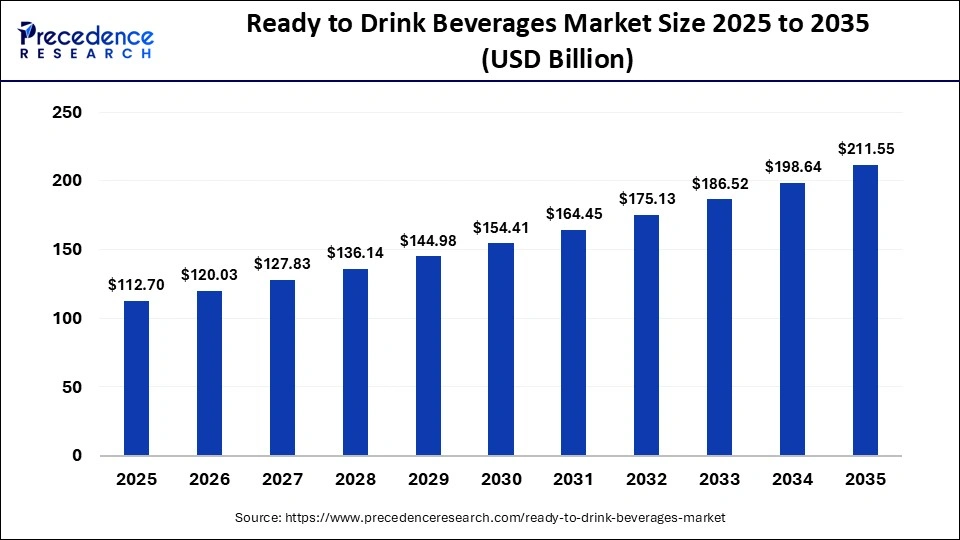
The global ready to drink beverages market is entering a dynamic growth phase, projected to rise from USD 120.03 billion in 2026 to an impressive USD 211.55 billion by 2035, expanding at a CAGR of 6.50%. This steady growth trajectory is fueled by the rapid shift toward convenient consumption, increasing health consciousness, and the rising demand for functional beverages enriched with vitamins, minerals, and plant-based ingredients.
The market, valued at USD 112.70 billion in 2025, is benefiting from evolving consumer lifestyles, particularly among urban populations seeking portable nutrition solutions. The growing influence of wellness trends, clean-label products, and sustainable packaging is further redefining the RTD beverage landscape globally.
Read Also: Robotic Simulator Market
Quick Insights: Market at a Glance
- The global RTD beverages market is projected to grow from USD 120.03 billion in 2026 to USD 211.55 billion by 2035, reflecting steady expansion.
- North America accounted for the largest share of 38% in 2025, supported by strong demand for premium beverages.
- Europe is emerging as the fastest-growing region due to sustainability regulations and clean-label demand.
- Non-alcoholic beverages dominated the market with a 75% share, driven by health-conscious consumption.
- Retail stores led distribution channels with 65% share, though online retail is rapidly gaining momentum.
- Major companies such as Coca-Cola, PepsiCo, Nestlé, and Red Bull are heavily investing in product innovation and geographic expansion.
How is the Market Structure Evolving Across Value Chains?
The RTD beverages market operates through a highly integrated value chain that includes raw material sourcing, processing, packaging, distribution, and retail. Manufacturers are increasingly focusing on vertical integration to ensure consistent quality and reduce costs.
The sourcing of ingredients such as natural sweeteners, plant-based extracts, and functional additives has become more strategic, as consumers demand transparency and clean-label products. Additionally, the adoption of advanced processing techniques like aseptic packaging is enabling longer shelf life without compromising nutritional integrity.
How is AI Accelerating Innovation and Market Responsiveness?
Artificial intelligence is becoming a core enabler of innovation in the RTD beverage industry. Companies are leveraging AI to analyze vast consumer datasets, enabling them to predict emerging preferences and develop targeted product offerings. This has significantly reduced product development cycles and improved launch success rates.
AI is also optimizing supply chain management by forecasting demand, reducing inventory waste, and enhancing distribution efficiency. Furthermore, AI-driven marketing strategies are enabling hyper-personalized campaigns, ensuring that brands can connect with consumers in a more meaningful and impactful way.
What are the Primary Growth Catalysts Driving the Market?
Is Convenience the Biggest Driver of Demand?
Yes, convenience remains a fundamental driver. Busy lifestyles, especially in urban environments, are pushing consumers toward ready-to-consume beverages that save time without compromising quality.
How is Health Consciousness Shaping Product Innovation?
Consumers are increasingly prioritizing health, leading to the demand for beverages enriched with vitamins, minerals, probiotics, and plant-based nutrients. This trend is driving innovation across product categories.
Are Technological Advancements Enhancing Market Growth?
Absolutely. Innovations in processing, packaging, and preservation technologies are improving product shelf life, taste, and safety, making RTD beverages more accessible across global markets.
What Emerging Trends are Reshaping the Industry Landscape?
Why are Functional Beverages Becoming Mainstream?
Functional beverages, including energy drinks, protein shakes, and immunity-boosting drinks, are transitioning from niche to mainstream categories. Consumers now expect beverages to deliver tangible health benefits beyond hydration.
Is Premiumization Influencing Consumer Choices?
Premiumization is a significant trend, with consumers willing to pay more for high-quality ingredients, unique flavors, and sustainable packaging. Craft beverages and artisanal formulations are gaining traction globally.
How is Sustainability Impacting Packaging Decisions?
Sustainability is driving innovation in packaging, with a shift toward recyclable materials, biodegradable options, and reduced plastic usage. Brands are aligning their strategies with environmental goals to attract eco-conscious consumers.
Regional Outlook: Where are the Growth Hotspots?
North America continues to dominate the RTD beverages market due to high consumer awareness, strong purchasing power, and a well-established retail infrastructure. The region’s focus on functional and premium beverages is driving sustained growth.
Europe is poised to experience the fastest growth, supported by stringent regulations promoting healthier formulations and eco-friendly packaging. The demand for organic and plant-based beverages is particularly strong in this region.
Asia Pacific is emerging as a lucrative market, driven by rapid urbanization, increasing disposable incomes, and expanding retail networks. Countries such as India and China are witnessing a surge in demand for convenient and affordable beverage options, making the region a key focus for global players.
Deep Dive into Segment Performance
Why Do Non-Alcoholic Beverages Dominate the Market?
Non-alcoholic beverages account for the largest share due to their widespread appeal across all age groups. The demand for hydration, wellness, and everyday consumption continues to drive this segment.
How are Distribution Channels Evolving?
Retail stores remain dominant, but online platforms are rapidly gaining traction due to the rise of e-commerce and digital payment systems. Subscription-based beverage delivery services are also becoming popular.
What Makes Cans the Preferred Packaging Format?
Cans are lightweight, portable, and recyclable, making them the preferred choice for both manufacturers and consumers. Their efficiency in storage and transportation further enhances their appeal.
Which Consumer Group Drives the Highest Demand?
Adults represent the largest consumer segment, driven by busy lifestyles and increasing health awareness. However, the youth segment is growing rapidly due to evolving preferences and social media influence.
Competitive Landscape: Who are the Key Players?
The global RTD beverages market is highly competitive, with major players focusing on innovation, sustainability, and expansion strategies. Key companies include:
- The Coca-Cola Company
- PepsiCo, Inc.
- Nestlé S.A.
- Red Bull GmbH
- Danone S.A.
- Keurig Dr Pepper Inc.
- Monster Beverage Corporation
- Asahi Group Holdings
- Suntory Beverage & Food Limited
- Unilever PLC
These companies are investing heavily in research and development to introduce new flavors, functional ingredients, and sustainable packaging solutions.
Recent Innovations and Strategic Moves
Recent developments highlight the dynamic nature of the market. In 2026, Halo Drinks entered the Indian market, recognizing its high growth potential. Similarly, Nestlé launched a new range of functional beverages in the UK, focusing on wellness and taste.
Such strategic expansions and product innovations underscore the industry’s commitment to meeting evolving consumer demands.
What Challenges Could Impact Market Growth?
Despite strong growth prospects, the market faces several challenges. Limited cold chain infrastructure in emerging markets restricts product availability and quality. Rising raw material costs and supply chain disruptions are also creating cost pressures for manufacturers.
Additionally, regulatory compliance related to labeling, health claims, and sustainability standards is becoming increasingly complex, requiring companies to invest in compliance and innovation.
Case Study: Premium Functional Beverages Gaining Ground
A leading global beverage company recently introduced a line of plant-based protein drinks targeting urban professionals. By combining convenience with high nutritional value, the product achieved rapid adoption in metropolitan markets.
This case highlights the growing importance of functional and premium offerings in driving market success.
Get Sample Link: https://www.precedenceresearch.com/sample/8278
For inquiries regarding discounts, bulk purchases, or customization requests, please contact us at [email protected]
