
The global marketing automation software market is undergoing a rapid transformation, fueled by artificial intelligence (AI), omnichannel engagement, and the growing need for personalized customer experiences. According to recent industry analysis, the market is projected to grow from USD 11.19 billion in 2026 to approximately USD 36.97 billion by 2035, expanding at a CAGR of 14.2%.
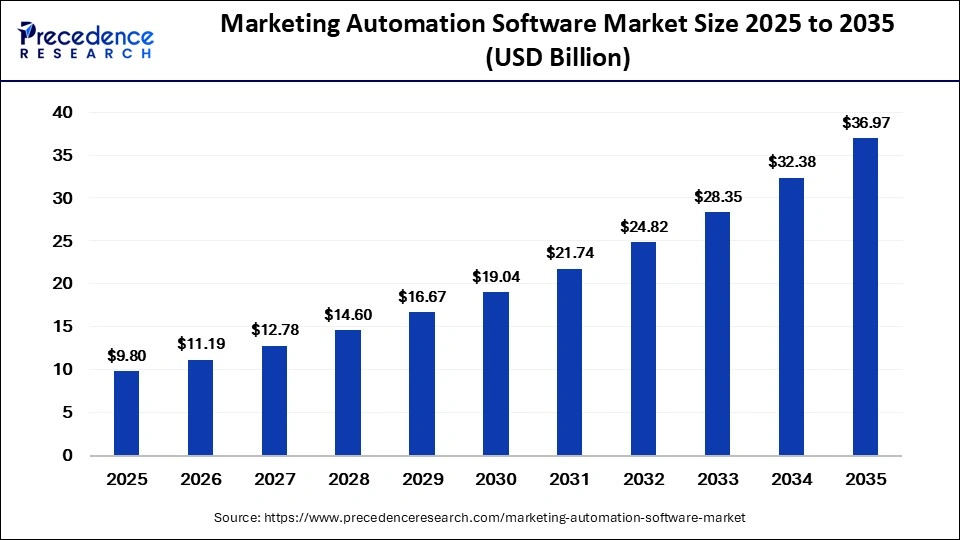
This strong growth reflects the increasing reliance on automation platforms to streamline marketing workflows, enhance customer targeting, and deliver measurable business outcomes across digital ecosystems.
Read Also: Data Center Chillers Market
From Automation Tools to Intelligent Marketing Ecosystems
Marketing automation has evolved far beyond basic email campaign management. Today’s platforms function as integrated ecosystems that unify customer data, analytics, and engagement channels into a single interface.
These solutions automate repetitive tasks such as lead scoring, segmentation, and campaign execution while providing actionable insights into customer behavior. By leveraging real-time data, businesses can create highly personalized marketing strategies that improve engagement and conversion rates.
As digital competition intensifies, organizations are shifting from manual marketing processes to intelligent, data-driven automation systems.
AI and Generative Technologies Redefining Marketing
Artificial intelligence is at the core of next-generation marketing automation. AI-driven tools enable predictive analytics, behavioral targeting, and dynamic personalization, allowing businesses to anticipate customer needs and deliver relevant content in real time.
The rise of generative AI is further transforming the landscape by automating content creation, campaign optimization, and decision-making processes. These technologies analyze vast datasets—including purchase history, behavioral signals, and real-time intent—to deliver highly targeted messaging across channels.
This shift is turning marketing automation into a strategic intelligence layer that drives both efficiency and innovation.
Key Growth Drivers
Demand for Hyper-Personalized Customer Experiences
Businesses are increasingly prioritizing personalized engagement across email, social media, and mobile platforms. Automation tools enable scalable personalization through advanced data analytics and AI-driven insights.
Expansion of Omnichannel Marketing
The adoption of omnichannel strategies is driving demand for platforms that can deliver consistent experiences across multiple touchpoints, ensuring seamless customer journeys.
Rising Digital Marketing Investments
Organizations are allocating larger budgets to digital marketing initiatives, accelerating the adoption of automation solutions that improve efficiency and ROI.
Emerging Trends Shaping the Market
Customer Journey Orchestration Becomes Central
Customer journey orchestration is emerging as the fastest-growing application segment, projected to grow at a CAGR of 18.5%, driven by the need for real-time, personalized engagement.
Cloud-Based Platforms Dominate
Cloud deployment leads the market with approximately 75% share in 2025, offering scalability, flexibility, and cost efficiency for businesses of all sizes.
Rise of Conversational and Real-Time Marketing
Integration with AI-powered chatbots and messaging platforms is enabling real-time, two-way communication, enhancing customer engagement and responsiveness.
Increasing Adoption Among SMEs
Small and medium enterprises are rapidly adopting SaaS-based marketing tools due to their affordability and scalability, with the SME segment expected to grow at a 17% CAGR.
Segment Insights: Platforms Lead, CX Orchestration Accelerates
Software platforms dominate the market, accounting for around 72% share in 2025, driven by their ability to automate marketing tasks and provide advanced analytics capabilities.
Lead management and nurturing remain the largest application segment, holding approximately 25% share, reflecting the importance of converting prospects into customers efficiently.
Meanwhile, customer journey orchestration is gaining momentum as organizations focus on delivering seamless, personalized experiences across digital and physical channels.
Retail and e-commerce dominate the end-use segment with about 30% share, highlighting the critical role of automation in customer-facing industries.
Regional Outlook: Asia Pacific Emerges as a Growth Powerhouse
North America currently leads the global marketing automation software market, holding approximately 38% share in 2025, supported by advanced digital infrastructure and early adoption of AI-driven marketing technologies.
However, Asia Pacific is expected to witness the fastest growth, with a projected CAGR of 17.5% through 2035.
This growth is driven by rapid digital transformation, increasing internet penetration, and the expansion of e-commerce ecosystems in countries such as India, China, and Southeast Asia.
Challenges: Integration Complexity and Cost Barriers
Despite strong growth prospects, the market faces challenges related to high implementation costs and integration complexities.
Organizations often struggle to integrate marketing automation platforms with existing CRM and legacy systems, leading to data silos and operational inefficiencies. Additionally, licensing and maintenance costs remain a barrier, particularly for SMEs.
Opportunities: AI Innovation and Predictive Marketing
The development of advanced AI-driven tools presents significant opportunities for market expansion. These tools enable predictive customer behavior analysis, automated decision-making, and optimized marketing spend.
Additionally, the integration of automation platforms with messaging ecosystems such as WhatsApp and mobile apps is opening new avenues for real-time, personalized engagement.
Competitive Landscape and Industry Developments
The market is highly competitive, with major players including Adobe Systems Inc., HubSpot, Inc., Oracle, IBM, and Microsoft focusing on AI integration, cloud-native platforms, and advanced analytics.
Recent innovations include AI-powered marketing copilots, hyperlocal marketing platforms, and automation tools that enhance real-time engagement and campaign optimization.
Conclusion
Marketing automation software is evolving into a strategic pillar of digital transformation.
As businesses increasingly prioritize personalization, real-time engagement, and data-driven decision-making, these platforms are becoming indispensable for competitive success. With strong growth projections and continuous technological innovation, the marketing automation software market is set to redefine the future of global marketing.
Get Sample Copy: https://www.businesswebwire.com/data-center-chillers-market/8353
For inquiries regarding discounts, bulk purchases, or customization requests, please contact us at sales@precedenceresearch.com